Re: Account

To have an account is one thing. To hold yourself or others to account is another. Like many words in the English language, a single word can have multiple meanings. This is what this word means to me. It may evoke different thoughts or even have different meanings for you. The fun is in the interpretation, not necessarily the dictionary’s standard.

Last week I was sitting in a parking space waiting for my bride to return with a bag of yummies from the grocery store. A car pulled up in the space beside me, a woman got out of the driver’s side leaving the car running. A man was sitting in the passenger seat with his window open. I was too far away to suggest he turn off the car without shouting and sounding aggressive. The fumes from the exhaust came through my open window. The woman returned a few minutes later and, to my surprise, stooped to look at the tire of her car which was just opposite my window. I quietly asked, “Why did you leave your car running?” Well, I was bombarded with all sorts of answers/excuses from both of the car’s occupants. In summary, they thought I was choosing something minor to “bitch” about.

The incident made me think of times when I try to be accountable for my choices. Holding myself to account is not easy in a complicated world. I am aware of making daily decisions about what is best for myself, my partner, my situation, and the world in general. Sometimes priorities are made that seem inconsistent with my own needs or the greater good. Small things, like leaving a car running, can add to larger things, like global warming. When and how we decide to practise our principles is not easy. I wonder to what degree do we have a responsibility to remind others to be accountable. Shouting at a politician seems easy but when our neighbour appears to be doing harm we might fear coming across as The Accountability Police.

When my sons were small I advised them on ways to be financially accountable. I taught them about bank accounts, credit dangers, and saving for a rainy day. My wife kept a monthly ledger to show how money comes in and money flows out. As banking technology changed they taught me about ATMs, bank cards, email transfers, and other online services. I was once a slave to doubt about whether I would ever have enough money for my needs or wants. But by taking things all into account, I slowly learned to balance the fears of loss with the reality of my good fortune.

Holding myself to account means I must judge my choices based on a variety of factors. Commenting on other’s behaviour is a potential minefield of explosive consequences. Everyone has had moments where they have wished they had said something. Who hasn’t glared at a parent of crying/misbehaving kids! Like it or not we are all accountants of our life experiences. No one can judge us better than ourselves.
Re: Fishes

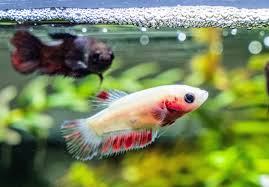
I kept an aquarium when I was in my early teen years. In several tanks in my bedroom I cared for neon tetras, gouramis, siamese fighting fish, angelfish, varieties of suckerfish and zebrafish. Those were the sorts of tropical fish available in the late sixties for someone on a limited budget like me. One of my friends had a saltwater aquarium which I envied for its exotic assortment. I made a deal with the local pet shop owner to provide him with the products of my fish breeding program in return for supplies. Most lucrative to sell were the Betta’s fry. I was able to coax this combative species to mate and produce eggs which were beautifully kept safe in bubble nets, not unlike the jelly masses of tadpole creatures, until they matured enough for market.

If something smells fishy, it probably is. The whole trade of popular aquarium species has a shady history. The practise of capturing and shipping constituted appalling loss to the local populations of fishes as well as contribute to habitat degradation in many parts of the world. I feel guilty to have been part of that capitalist agenda and yet through my exchange of home-grown fish I suppose I limited some of the need to get specimens from the wild.

During those years my hobbies revolved around fish. I spent endless hours during adolescence peering at my aquarium, cleaning the glass, separating the sick or pregnant fish to a hospital tank. I dedicated one tank to hold a collection of pond-life species that I captured from a nearby creek. I took notes, feeling like a young scientist, and later presented my findings to my high school biology teacher. This work and the resulting A+ grade was an encouragement to apply for university studies in Marine Biology. I also spent memorable leisure time sport fishing in rivers, streams, and lakes. I always had my rod and reel handy when the opportunity arose to hop in a boat or hunker on the shore. I felt a bit like Tom Sawyer on those occasions.

The natural resource industry is a big part of Canadian history. The early years of this country contain stories of greedy resource extraction of all kinds. For the famous fishers of Newfoundland this poorly managed industry would ultimately result in the great cod moratorium of 1992. This was a change of biblical proportions to a culture dependent on fish. Similar tales can also be told of other countries where the fishery was once never expected to be depleted. In the west coast current realities of salmon stock reductions due to over-fishing and poor habitat conditions make my heart ache for what bit of nature might still be left for my grandchildren.

I don’t earn money from working with fish like I used to, but I still go fishing when I need to change my lifestyle. Not fishing in the literal sense but as a metaphor for searching for possibilities. I’ll ask questions with baited subtext to see if the response brings a rewarding strike on my lure. Opportunities abound! It’s all how I cast my line.

Re: Cars

I took a mental inventory of all the cars I’ve ever owned: a VW Beetle, a Honda Civic, a Chevy Blazer, a Toyota Previa, a Toyota Camry, a Dodge Ram Roadtrek and finally a Toyota Yaris. I also enjoyed a decade riding a 50cc SYM Fiddle II. Each vehicle matched the times/needs of my life: youth, parenthood, facilitating, or adventuring. At one point I had the camper van, the Yaris and the scooter parked simultaneously in my carport. Coincidentally all modes of transport were coloured white. My youngest son was impressed, commenting, “You’ve got a fleet!”

My Beetle was second hand & red. It cost me $750. I drove to Maine and back home to Whitby. I outfoxed a policeman while driving it back from a barn-party. The Civic was my first brand new car, costing around $1500. I drove it to Timmins with my first wife by my side, excited about my first job. A new Blazer truck seemed the right thing to get for a growing family. It cost me $8,000 but it lasted me ten years and, one memorable summer, it took a family of five camping all over the East Coast of Canada. When I bought my Previa it was all the buzz in 1991. I took a test drive and I called it a shuttlecraft because it reminded me of StarTrek-TNG. My teenaged boys absolutely loved it. I checked the bank account and squeezed out the $21,000 MSRP. I shared the cost of two Camrys during a transitional stage in my life (one black and one gold which symbolically illustrated my emotional flow from darkness to heavenly days). My new bride encouraged me to get a used Roadtrek I had coveted for decades. Together we took to the road, enjoying the feeling of no-fixed-address.

Cars give us freedom and independence. My bride loves using the Yaris to get away, even if it is just an autonomous ride into the city. Being older, I notice I am becoming more tense while driving or in the passenger seat. I’m weighing the odds of having an accident (I’ve had 4). I’m finally realizing the impact automobiles have on our health and the environment. When I was in high school you could get away with drinking while driving. It took decades before groups like MADD convinced us of the folly of mixing alcohol and gasoline. Now we have climate change.

It’s still a car culture, big ass truck sales are on the rise. Joy rides are still a thing even though they may be shorter. In our community there’s a growing interest in making roads safer with designated lanes for cars, busses, and bicycles. Car owners are not happy about sharing the road that they have dominated for decades. With modern realities, we are all going to need to create a new culture, less dependent on fossil fuels.

Die-cast Dinky cars, easily imagined in the chubby hands of a kid in a sandbox, may soon be a sight only in story books. The environment must come first.

Re: Fish

I like the non gendered word Fisher; someone who fishes for their livelihood. Even Jesus must have preferred it to Fisherman/Fisherwoman since he extolled his disciples, “I will make you fishers of men.” I have been interested in fish for as long as I can remember.  My favourite bedtime story was McElligot’s Pool by Dr. Seuss. Pretend you’re a kid again, listen with wonder and you’ll see why I got hooked.  https://www.youtube.com/watch?v=yNH6i3KSYsk

When I got older, the first novel I read was about an old man who went out to sea and caught a fish as big as his boat. Once, when asked what super power I would like, I said I wanted gills like Aquaman. I kept several aquariums in my bedroom during adolescence. I have visited many large city aquariums including a beautiful one in Lisbon, Portugal. I learned how to use SCUBA gear so I could join my finned friends in their own habitat. I studied Ichthyology in university as part of my Bachelor’s Degree in Fish and Wildlife Biology. I spent one summer surveying lakes in Northern Ontario to help the government determine if there were viable areas to develop for a fishing tourism industry.

The watery world we live on fascinates me. I’m not alone, as a book by Laura Trethewey called ‘The Imperilled Ocean’ attests. I could find myself in these chapters devoted to how we all are personally linked to the ocean and its creatures. It brought back memories of idle summer holidays immersing myself in the tidal zones along Wells Beach, Maine. Now living in British Columbia I am very aware of the impact of the salmon fishery. I’ve just finished a great book about salmon by Mark Kurlanski. The controversies of salmon farming, hatcheries, fish ladders, commercial fishing, fish cannons, river habitat are discussed. When greed, politics and climate realities merge it’s clear something fishy is going on.

I remember the first fish I caught, a Sunfish, was barely bigger than my hand. It’s scales were coloured like a rainbow. I won’t forget it’s perfectly round eye, staring back at me. Everyone near me shouted congratulations yet I felt sad. I was surprised how its brilliant colours faded as its gills stopped moving.

Philosophically, I like using fishing as an analogy for life. I used to encourage my children to go out into life as though they were going fishing: “Cast your line son. You never know what might come to your bait.” Fishing in this broader sense requires amounts of patience, perseverance, courage and curiosity. When looking for a mate or a date it’s important to keep trying. My mom once tried to console me when I was crushed by an adolescent breakup, “There are plenty of fish in the sea.” Whether applying for a job, signing up for a course of studies, deciding on a purchase or looking for a new friend, fish around until satisfied. You never know, what you might catch could just be a new way of thinking.