Re: Cult

Some words contain words. Cult is part of culture in more than just structure. There are elements of cultism in every culture. Citizens of a culture make the decision to embrace what is practised, or not. The essence of a country’s culture is demonstrated by how resources are allocated to promote the larger values of the collective. Sometimes these tribal desires to belong can conflict with our individual wants, wishes, or needs.

When folks agree to do similar things together a connective thread is created. I like to think of that as the art of living. Defining a culture is how societal groups are formed. Individuals in families may often repeat to each other “This is the way we do things.” Teams often bond over the wish to be united so that literal goals can be achieved. After a tragedy, a city might suggest that the way forward would be by recognizing common values. I remember, after the bombing of marathon runners in 2013, newspapers promoted solidarity by printing headlines; Boston Strong! What fascinates me is the border between a healthy culture and a restrictive cult.

Throughout history people have collected into groups for protection, efficiency, or the pursuit of a shared experience. Religions are built on this desire to belong to something greater. Few of us want to be alone in our beliefs or occupations. Unions, fraternities, and sororities have been an essential part of the workplace so we can feel like comrades of industry. Military institutions have aspects of cult conditioning within their training. When you belong to any group you have to give up a bit of yourself for the greater good.

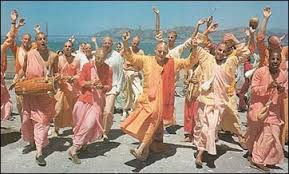
With the fracturing of our understanding of cultural mainstays comes doubt over what is important. Factions, sects, and brotherhoods become more important when traditional ideas of the common good are muddled. Cults begin to grow, fracturing the confidence populations once had for their society’s documents of legality, equality, and fraternity. When I read of organizations having a crisis of culture it worries me that fundamental values have been twisted to suit the needs of the powerful. Most people will think of cults with a capital C as those practising life on the fringe of religiosity. The rules of belonging in a cult-like setting are very oppressive of individual freedoms. In some cases you are coerced to deny your own history in order to begin life under a new set of guidelines. Life in some 60s communes was like this, and I have concluded that being involved with any religion is cultish.

Communal systems can get complicated when group and personal needs conflict. To some degree educational institutions are designed to indoctrinate our children to the ways of the national interest. In Canada, our ten provinces and three territories have their own policies, procedures, and legislation within the framework of the larger federation. All regions have their own priorities and practises (especially Quebec, and lately Alberta) yet we all call ourselves Canadian.

Cultures must evolve to survive. I would celebrate a global culture of peace as a priority.

Re: Loving

Verbs have power in any language. This part of speech can provide clarity by showing an active intent. I’ve written before of Love and what it means to me; love as a concept, as a value, or as a thing we sometimes wrestle with. Loving is different.

Some say that hope is inspirational: But only when we start actively hoping, does anything change. Kindness, as a word, sort of sits there. When we see displays of loving kindness then a visual comes to mind and a goal can be set for us to respond. Loving can become part of our lifestyle choice, if we let it. Working, parenting, studying, creating, jogging, reading, and praying are all part of a sustainable and healthy lifestyle. When it comes to loving, we get sort of shy even though we want it to be part of our daily experience.

I’m not necessarily referring to the skin-to-skin type of loving (though I won’t exclude it). No, I’m looking for signs that I know what love has to do with it. And by It, I mean life. I believe the act of living requires loving. Otherwise it’s just something we talk about or try to conceptualize. In other words, if Love is something we value then Loving is something we must consciously do.

Sometimes we may catch ourselves saying, “I’m loving you” to a partner or special friend and it is so much more present tense than the standard “I love you”. Hopefully the recipient of your declaration can understand that you aren’t suggesting that you didn’t love them yesterday or way before the modern era of your relationship. What you want to get across is that you haven’t lost that loving feeling, you are in fact loving this very second of time with whoever happens to be sharing it with you.

Perhaps that’s why people resist making love an active thing, because your revelations may be misconstrued. As with all feelings, in order to communicate them accurately the folks involved have to at least agree on the definitions. This is beautifully made clear in the television series Somebody, Somewhere. The writing for this show is all about loving. The dialogue around Love is not conceptual but flowing with feeling. Characters describe with little effort how they are loving (or sometimes hating) how an event or circumstance is making them feel. The situations are laid out in the active tense, if you catch my meaning. One actor is loving their ice cream treat, another is hating going to church, another is loving discovering she can feel love again.

When I can hold space for loving thoughts my breathing changes. I become calmer, knowing that my loving attitude stops me from dismissing an idea, or an individual, out of hand. Likewise, if I can see that someone is loving me, it changes my perspective and makes me feel safer somehow in that given situation. Loving is a performance in this way, not a fake attempt to get along, but a horizon to keep in mind while navigating life.

Re: Usual

I’ve often thought it would be cool to have a place in the community where you could walk in and say, “I’ll have my usual.” Someplace where everyone knows your name. A casual place where things usually just flow, where you can expect to drink from the cup of kindness.

https://www.youtube.com/watch?v=7KtAgAMzaeg

Usual is a cousin of Normal. There is a calm we get from familiar situations. My middle son and his lovely wife are building a beautiful life with my grandson. Before they were married, their relationship was stressed by long distance realities. Both had busy lives in two different countries. An ocean separated them! There were Skype calls and flight arrangements to be made. Even a language barrier to overcome. Their love grew despite all the challenges. When talk turned to choosing Canada as their place to live together, I remember asking them what they were looking forward to about their decision. They answered simultaneously, “Just to feel normal!”

A usual existence isn’t necessarily boring. The regular parts of your life can be anticipated with excitement, especially when you get to choose what those parts contain. Some couples thrive on weekly date nights for instance. Any routine that you can look forward to will add spice to your life. Several teachers I worked with in my career in education actually looked forward to September when they could ‘get back to normal’. I didn’t share that perspective but as a planner, I could appreciate the need for a structured lifestyle after the randomness of the summer months.

My sister often lived on the edge of chaos. Her unpredictable nature often made me nervous, but even her active personality needed times of surety. Like her mother before her, my sister counted on holidays to be just perfect. Perfection in this case meant that Christmas, for example, had to be exactly the same as last year. Variation would ruin the expectation and the expectation became the reason for the season. After my sister’s death, her only child made a wonderful decision on the following Christmas. My niece went on a trip to Thailand. From my viewpoint it was a reset: A very unusual and courageous way to declare her independence.

We all need our touch points of normalcy. My mother-in-law, at 94, cannot envision a week ending without her Fish Friday meal. She hasn’t worked for decades, and she is not a devout Catholic yet a dinner without fish as the main course on a Friday would throw her equilibrium out of whack. Likewise, James Bond must have his martini shaken, not stirred.

Thankfully, I don’t need a bar to go to at the end of a hectic day. I’ve enjoyed the regularity of family life despite those times when I would have liked to get away. When my existence gets too ‘same old, same old’ I count on my wife to suggest something that might mix it up a bit. I have found that contentment lies in the natural rhythms of being. Cheers!

Re: Place

I think that education (formal or otherwise) has a primary purpose: To help us discover our Place in the world. This is vital to the creation of a fulfilling life.

There are examples in history where this idea of finding one’s Place can be manipulated by leaders of companies or governments who need classes of people in order to bring about their own vision. Japan once went to extremes by using training regimes with children in order to build a warrior class. Every country has educational training methods that indoctrinate individuals with the intention of building valuable citizens. Companies often require employees to loyally take certain tests so they can be placed in a productive position within the corporation. I personally find these methods of manufactured placement rather creepy. For example the hand placed over the heart while standing for the U.S. national anthem symbolizes loyalty to a national vision while reminding me of the raised hand of Hitler’s Nazi salute.

Finding our own place in society is an extension of familial roles. For example, we can start out being a son or aunt; a rigid place holder dictated by birth. Geography can be a factor in your place view almost by definition and time/space also has an impact. For example, at some points in my life I have identified with another time period, figuring I might have enjoyed a place beside Charles Darwin on the Beagle. Whenever I travel in the present, the time zone can make me lose my place as much as the country’s subway map or its language.

My place in my family was structured by my mother. My functions were clearly defined under the headings: son, brother, student, society member. She had role expectations. I rarely challenged my place in her world. I sought other places where I could experience change: First by going to university, marriage, moving for a job and a taking a chance to build my own family.

I ponder the nature of Place using a simple question, “Where do I fit in?” The talents I developed in my life have provided a sense of place and redefined how I interact with my family or the community. I have wondered, “Once I find where I am in this place how can I best enjoy life?” Most people don’t like to have this question come up too often. There are people who have never moved from their home town, always voted the same political party, never changed their job, or always bought the same products. There is satisfaction in knowing one’s place, so rarely is there a need to question your choices. In fact, to question your choices can be unsettling. While the risk may be worth it.

The search for one’s Place starts with an understanding of one’s self. It’s knowing how it feels when you ‘fit in’. It’s learning to recognize when you are ‘out of place’. Sometimes life is like being in a play. You wonder what your role is. Without a script your world tips. Suddenly you recognize your part.
All is well and the show goes on.