Re: Sacrifice

On Remembrance Day, every year, we hear about the ultimate sacrifice. It’s one of the mythologies we practice religiously in hopes of feeling comfort within our cultural choices. Every holiday in my history has had collections of clichés over which I’ve puzzled while searching for meaning. I’ve wondered if my quest for understanding could be considered a sacrifice; as in a waste of time.

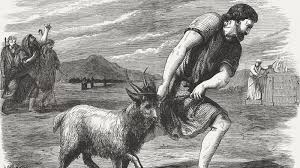
Giving of one’s self can be seen as a sacrifice if a life is lost. Many societies have rationalized the offering of the vestal virgin, the first born son, the sacrificial lamb, or the oath of allegiance to signify a desire to please the gods or confirm the relevance of the greater good. Jesus (or any other innocent soul for that matter) didn’t die for my sins, but because of them. I think it is pathetic that Abraham (if he ever existed) would ever be asked to kill his son as a gift to a god. Some of these old notions were based on ignorance regarding the movement of the planets, the changing of the seasons, who represented the accepted deity, or who was in charge at the time. In our modern world, I can’t accept unconditionally that one must die before their time so that another may live.

To give our lives in war is a death sacrifice. Honour, tradition, and cultural correctness play a part here. We reward, in memory and ceremony, those who have given so others may carry on. I’ve just rewatched the classic 1939 anti-war film The Four Feathers. The main character chooses not to go to war and his former friends and lovers give him a white feather (a symbol of cowardliness) as a rebuke for his choice. He goes on to prove what courage and sacrifice really look like.

In an economical sense, citizens are often asked to make sacrifices when times are lean. I think this can be called a living sacrifice. Parents providing for their children first, seems natural. Looking after our elders need not be legislated. In just societies I would hope that government provides support for those who choose to put others’ needs first, before their own. In my perfect world the innocents would be protected rather than be the first to feel the sting of want. Alas the wealthy and powerful are often the last to sacrifice even a tiny portion of their abundance. Indeed, it is those in power who persuade us to sign-up for the good of all. Their propaganda hides them from their own accountability.

On Christmas Day, every year, we are invited to hope for goodwill towards others. Most folk are examples to me of living-in-sacrifice: they give parts of themselves generously in work, play, and care. I learn by these examples of altruism. I am moved when this comes naturally, as part of being human. The reward for such behaviour doesn’t come in heaven (as some might preach). I believe it’s up to all of us to see service from others as a personal sacrifice, freely given, and needing acknowledgment right this very minute.

Re: Refuge

My uncle is aghast that in his country, refugees who travel across the English Channel are “put up in hotels”. I’ve long since given up on his rants about the injustices of the immigration system. The reality of finding a place of refuge for millions throughout the world is a reminder of global inequity. Privileged folks, like my relative in the UK, just don’t see past their own need to protect their borders with walls or fences.

Poets like Robert Frost would disagree. From Mending Walls: “Before I built a wall I’d ask to know/What I was walling in or walling out/ And to whom I was like to give offense.” Perhaps artists are the first to lend sympathy to those forced from their home environments by war, persecution, climate change, or lack of employment opportunities. No one who wasn’t suffering hardship of any sort would make a choice to go to a foreign land. When I read of refugee camps, I consider my mustard seed of related experience and feel great empathy for these wandering nomads.

“Are there no workhouses…” is a line spoken by the miserly fictional character Ebenezer Scrooge, as he brushes off a plea for Christmas charity. Those humans who seek refuge from the pains of the world are of no concern to this wealthy man. The billionaires continue to profit from playing with their money while the 99% struggle on with the results of bottom-line focussed corporations and ostrich politicians. Mother Nature has no voice yet the signs of her woe are everywhere.

We had a storm in our spot by the sea yesterday. Trees swayed in the gusts and heavy autumn rain fell. I revelled today as I looked up to see flocks of birds appear out of some mysterious hidden location further up our street. I walked gingerly, stepping over branches and mounds of leaves, and wondered where they had found a place of refuge. Reading the newspaper later I discovered ferries had been cancelled, power lines downed, and op/eds were shrieking over the lack of attention being paid to climate change.

Where is refuge to be found from the onslaught of depressing news. From my perspective as a media consumer, I often feel myself to be a refugee trying to stay balanced in this modern era of deliberately manufactured discord. I feel history will look back on the 2020s as an equivalent to the horrors of the two previous world wars. The idea of a current definition of WWIII would include; cyber insecurity, polarization of states, economic irregularity, resource misuse, widespread inequity, global human migration, climate instability, religious intolerance, military expansion, and pandemic unpreparedness. The list reads like the side-effects, in fine print, found on the package for the latest cure-all medication.

Some sort of prescription is certainly needed if humanity is to make it out of this century alive. Veterans of past wars sought shelter where they could and helped their neighbour when they could. Time for us to do the same.

Re: Gracious

Grace is the highest form of being human. If I were tasked with choosing a single goal for living I would select the act of being gracious. I believe graciousness to be a key element of societal connection. Seeing an act of grace, and being gracious ourselves, creates a peaceful worldview.

Being kind to another is an act of grace. My 96 year old special mom recently required professional emergency service. When ambulance crew came to our door I witnessed first responders providing healthcare concurrently with abundant grace. In an intense situation, if you are the caregiver, it’s an expectation that you put yourself last. In a selfish world that can be seen as saintly, but it is very human to give and very rewarding too.

I went downtown to do some errands. My first stop was at the licensing bureau so I could renew my health card and driver’s ID. The line-up at the agency was a long one. As I waited my turn, I heard a service clerk make one customer after another feel heard and valued. When my number was called and I was shown the same respect and attention, I complimented the employee for his gracious manner under pressure. He smiled in gratitude and said, “When I help people I feel better about myself.” The old axiom that a customer is always right is not lost on this fellow. On hearing this awesome response, I wanted to exclaim, “Goodness gracious!”

Art in all its forms can remind us of our humanity. In the television series The Tattooist of Auschwitz many acts of grace under fire are depicted. In one profound scene a prisoner takes the place of another in full knowledge that the gas chambers will be the consequence of their gesture. On the spectrum of unselfish-ness, this type of self-sacrifice is the ultimate expression of graciousness. “You live while I die”

I can only imagine what strength of character this moment would require. I may come close when I say; “Here, you go first.” Or “You take this last seat.” Or “I will wait.” Showing or telling someone that they matter more than you, may be an anomaly in our time. In the 21st century selfishness is sexy: We get told in advertising that we are worth it. That we count. That we’ve earned it. After that messaging we can conclude that being gracious is for suckers, losers, or saints. Showing grace isn’t carrying a cross. It isn’t a burden at all—merely an offering of help.

If grace is the highest level of being human, then by acting gracefully you have found a way to connect with your own soul. The body is then secondary and you fully recognize the infinite within all humans. Helping to provide eldercare has taught me much about letting myself be a smaller part of the Big Equation. I can feel of value, by giving value. As in childcare, the needs of an elder may never be quenched yet I’ve come to know that giving has a higher priority than getting.

Re: Crime

I watched the film A Real Pain and came away with many thoughts related to how we make judgements in our modern world. In this movie people are taken on a tour that examines historical trauma. The characters visit sites in Poland where atrocities were committed; human against human. Some of the tourists in the film are seen experiencing the ongoing pain of dealing with the circumstances in their own lives. Judgements are made.

The morning paper brought more news of conflict, this time in Ukraine and Gaza and Lebanon. I read the headlines recalling the dialogue from last night’s dramatization of conflict and I struggled with the notion of crime. It was an aquarium experience: I was looking at events, both historic and current, as if through a barrier of glass. My looking only gave me a visual. I tried to understand the feelings of the other side but I couldn’t because I lacked immersion. A scuba diver can swim amongst dangerous fishes, an astronaut can experience inhospitable space and a soldier can merge with the horrific realities of war, but to enter these unknown environments you need protective gear. The world beyond the glass of this metaphorical aquarium holds uncertainty at the very least, and terror at worst.

From this vantage point I could observe the pain and suffering of crimes committed against humanity but seeing without Being, just dulled my understanding. I couldn’t draw any conclusions, let alone make judgements. Our judicial systems are set up to evaluate crimes, categorize their depth of destruction and apply a suitable punishment. I am neither a lawyer, nor a criminologist but some things I know to be true: Murder is wrong, Revenge is wrong, Despoiling our planet is wrong, Abuse is wrong.

Criminology holds a fascination for me: Motives for criminal behaviour, prerequisites for becoming a criminal and reasons why some areas of the world are more crime ridden, make me wonder about what it means to be human. We are not animals in fancy linen. Humans are imperfect. Religions have debated, conflated, obfuscated, excused and hidden sins of their institutions and of the societies they profess to protect. Israel, as a state, has to answer to the world court for its abuses in Palestine and Lebanon. Russia abuses politics when it suggests that Ukraine isn’t even a country. Crime cannot be justified. Crime exists separate from what came before and what is yet to come. Crime cannot be allowed to beget crime.

I believe some form of restorative justice is the peaceful way out of repetitive crime. Grace can be an antidote to the sadness of the human condition. This isn’t dream-scaping. It’s aspirational to plan for healing the pains that come with Being. While there is a comparative depth of pain, if we judge pain to be less or worse then we risk committing the crime of not caring. The suffering in Hitler’s Warsaw ghetto is no different from Netanyahu’s Gaza Strip. Both are crimes against humanity.

We must do something positive when we reach a conclusion, not create a new problem.

Re: Opposite

War is the opposite of art. In the midst of compelling, heart-wrenching photos of the current wars in Gaza and Ukraine, art is being dimmed just as surely as lives are being extinguished. Art creates, while war is nothing but destruction. Art defines the best in humanity, while war denigrates mankind with every rocket launched, with every bullet fired, and with every anti-personal device exploded.

To be opposite is to be opposed. Opposition plays a key role in incidents of unfairness. When one side dominates it is right for the minority to speak up in rebellion. A call to arms is required if dialogue is downplayed, demonized, dismissed or otherwise disparaged. Everyone has a right to be heard and understood. Systems must be in place to protect the vulnerable, not trample over them. I get upset when I have to take a side: Life is nuanced, not black and white. Looking within the fold and shades of an issue, I see promise in the act of negotiation. Capitulation isn’t necessary when the shared goal is accommodating humanity.

War rhetoric is divisive. People on the opposite side of the line drawn in the sand are referred to as Nonpersons; humans devoid of respect or legal protection. They are “human animals”, as described by current Israeli Prime Minister B. Netanyahu when he speaks of the enemy Hamas. All sorts of words have been used through the ages to delineate the opposite side, whether in war or debate. The opposing team is the foe, the work of the devil, the pagan, the unwashed, or the undeserving. The pronouncement is made, thus the enemy is not requiring compassion. The slaughter can begin.

Some say that the opposite of war is peace. Others know that the only thing you need for the seed of war is indifference. I will play devil’s advocate by suggesting that intolerance begins the process of creating The Other. Making a contrary statement, even if it’s a lie, will get the argument going. Currently on social media sites, those who wish to incite disharmony are using AI Bots to spread discord. One small distortion, strategically used by Influencers, can cause havoc. Consider the folks in Springfield, Ohio who had to battle the abuse from folks who believed that its residents were stealing cats & dogs for food, after Trump said he had heard this on TV.

Debates are often seen as being an example of opposites not attracting. The recent Trump/Harris debacle showcased clearly for me that you can’t have a debate when one party is unwilling to discuss issues. Solving the issue of the day is looking at the double edged sword and trying to minimize the damage done to a course of action. Having a respectful debate, in my mind, is about seeing two sides of the same coin, then figuring out what to do when things flip heads or tails. Often the two sides can be complementary, even if we can’t be complimentary of that person on the other side of the arbitrary fence.

Re: Evil

Like most people, I choose to hear no evil, speak no evil and see no evil. But it’s hard these days not to at least ponder the use of this word. Evil seems to be all around us right now. It’s written about in our newspapers, it’s demonstrated on our nightly news, it pops up on our social media sites. I think evil holds some kind of attraction yet I am puzzled as to why.

One genre of film or book I least like is horror. I shy away from tales of the bad deeds that humans do onto others. My recreational viewing and reading is a search for the best we humans can be while overcoming the restrictions of existence. Stories of evil are prevalent in any historical age and no nation is immune from showing inhumanity in policy or deed. Sometimes we Canadians get sanctimonious when it comes to our presence on the world stage yet one only needs to turn to our government’s record regarding the treatment of indigenous populations to put us in our place.

Evil lives in people’s minds. Ignorance can be manipulated by someone to promote and nurture an evil intention. Evil is present whenever I think I can use someone else to attain my goals. Use can quickly turn to abuse if the result of a personal or professional transaction is not satisfactory. Beyond the individual, entire community power structures can be created to maintain the status quo. Society quickly becomes a Them against Us scenario. The abusive power invokes fear through threats and intimidations. An evil power thrives when the community is uneducated. Even majority populations can be cowed into believing things that are not true. False narratives become integral to the structure of Evil.

Prejudice forms part of the root of Evil: That creeping thought that enters the mind suggesting that you, or we, are better than those others, over there. Evil grows. It’s an egregious event to see and hear folks suddenly turn against each other. Sides are chosen by leaders spouting rhetoric that fans the hatred. If you are not with us then you might be considered stupid, or worse, like animals. The road to expressions of indecency towards our fellow creatures is not winding, nor is it as short a distance as we might wish to believe. Thoughts of defence, turn to acts of revenge, turn to denial of the very existence of the other, all too quickly.

Blame is cloaked evil. Many could be named as prophets of hell: Hitler is often invoked yet there are others who have taken a leadership role in acts of inexcusable terror throughout history. Measuring the severity of the crime against humanity gets us a list of who to blame but doesn’t absolve those who clapped, who made deals, who saluted, who perpetrated the policy, who cast their vote. Few can say they had no role. When the finger pointing is done we are still not absolved of responsibility.

Ideologically, we are no better than our neighbour, even if someone tries to convince us it’s true.

Re: Gun/Bullet

A twitter friend and I recently had a quick back and forth related to the phenomenal number of shooting deaths in the United States of America. I expressed exasperation with the number of multiple deaths. I was especially unnerved by the statistic that showed that the victims were often children and even more alarming, children were becoming more common as the perpetrators of these killings.

The head shaking and regular doses of thoughts and prayers are not enough to reduce the frequency of death by gun or bullet. When I think of solutions I start with the connection between the gun and the bullet. The two are inseparable. A gun’s only purpose is for killing. A gun is useless without a bullet. There is no point in making or buying ammunition if a gun is unavailable to create the effect desired. Target practise aside, the only effect will be death.

The U.S.gun lobbyists like the National Rifle Association have long frustrated reformists who see the continual rise in gun violence as a sign of a sick society. Even in countries that don’t have the debatable protection of a constitutional 2nd amendment, hunters & farmers will speak up when legislation is proposed to rid them of their weapons of choice. One Australian I spoke with told me he couldn’t imagine life without his rifle. “How would I kill the vermin on my property?” We had a conversation about the term ‘Responsible Gun Owner’ which didn’t end well because I called the phrase an oxymoron and he took that word personally.

One of the most chilling films I’ve ever watched is called The Deer Hunter. It has a scene where a crazed character, played by Christopher Walken, points a revolver to his temple in a sick game of Russian Roulette. Violence always disturbs me, particularly when man’s inhumanity to man is clearly on display. War is all about guns of various sizes or which team is packing the most firepower. The war of attrition which is the Russian/Ukranian conflict, boils down to which supportive countries can crank out the most destructive munitions. Millions & millions of shells pound the ground, regardless of who might be walking there. Tanks, rocket launchers and now aerial drones are used to deliver a range of ordinance on a largely innocent populace.

When I was a teen I got a job in a general store that had a sporting goods section. One Saturday I got to work behind a counter where handguns, hunting rifles and boxes of bullets were sold. It was the only time I ever held a firearm. I remember feeling a mix of excitement and worry. I remember the elder salesman laughing at my timid manner.

Agendas that are prepared for meetings can have bullets. Weightlifters can parade their guns. My peaceful yet practical twitter friend admitted he viewed his gun as a tool. He did agree with my point that it was a very exclusive one: designed for one function alone.

Death dealing guns and bullets are weapons of mass destruction.

Re: Be

I woke from a dream in which I was playing the role of Romeo, and I had forgotten my lines. I substituted massively funny ad-libs. No one in the imaginary audience was laughing, neither were my acting colleagues. I had acted shamefully on this subconscious stage but my ego felt healthy as I chuckled myself awake. I got up and shaved humming the Gillette ad; “Be the best a man can be.” These quirky thoughts sent me into the day wondering what it means; To Be.

In some ways we become a being through our doing. Our actions, behaviours and creations enable us to define ourselves in a world filled with other individuals. The person we are, starts with our organic self, but when you factor in our ability to think and feel we open a spiritual plane. These soul thoughts will help us to become our true self. Being a human being carries a responsibility beyond our biological nature.

In another play by William Shakespeare, Hamlet mused; “To be or not to be, that is the question.” In my interpretation the titular character is filled with existential angst. On the surface he is trying to choose between life or death but I hear, “Who am I anyway?” Hamlet may profess to know Yorick very well yet he struggles to know himself. Just what is the essence of being, is the better question. Much to my sadness, my sister had a hard time being satisfied with a meaning behind life. To her, life was simply hard with intervals of manic pleasure. When those pleasures dried up she ceased to have a reason to carry on. Being requires meaning.

Books are part of my being to be sure. I have not always been a reader, boys tend to come to the joys of reading late. I truly have become better through reading. My library keeps a record of the books I’ve checked out. The list astonishes me in its quantity and variety. It’s a reading rainbow of authors’ views on ways to be a person. Life is a journey to discover who we are, where we fit in and what we stand for. In the film ‘Against the Ice’ the main character, an arctic explorer, is asked why he continues to put himself at risk. He confides that it is because he is good at it, that he plays the part well.

“All the world’s a stage, and all the men and women merely players” is a line from Shakespeare’s ‘As You Like It’ Many people, men particularly, define themselves by their job. Military life is toasted as the be all and end all of purposeful employment: Become a man while seeing the world. I’m all for travel as a learning tool, but there’s that expectation of killing/dying for your country that puts me off.

Here’s a toast to your future, to our future:

Be still and know that I am everywhere

Be still and know that I am

Be still and know

Be still

BE

Re: Dismiss

In the digital dating world the act of swiping left is an example of dismissal. The social media apps and sites are primed to get you what you want in the impulsive twitch of a finger. My eldest son is not happy with this form of meeting people yet it is the sign of our times: We want immediate access. In general, we’ve become dismissive of one another’s point of view so profoundly that we seek shelter within our tribal connections. Our thoughts are comforted by the wishes of the flock. It’s easier to disregard the outsiders when we are on the same page of groupthink.

I watched an episode of Star Trek:Enterprise that was streamed on television the other day. Disclaimer: I am a trekkie rather than a Star Wars fan so don’t dismiss me out of hand. May the Force be with you. In this particular episode the captain tells three separate crewmen that they are dismissed. The meetings take less than a minute each. All three had more to say but the head officer was done with gaining feedback. Space army language, it was clear, is perfunctory. The script in this case was obvious; we all have a job to do, so do your duty.

Imagine life in the armed forces on Earth, where being dismissed is a regular occurrence. I can’t imagine what that does to your self esteem to appear so individually inconsequential. Someone decides what’s best for the many, while the individual is always expendable. Soldiers are tools, militarized human beings, trained to function for one purpose, discarded when expired, honoured once a year. Attention! Eyes front! You’re dismissed.

Dismissal is a failure to accommodate even more than it is a case of poor communication. I was a career teacher, with a daily requirement to hear a room full of students’ thoughts and feelings. The class management component was always a challenge for me, since I have a more one to one communication style. Many lessons would involve a debate of some sort, either over content or perspective. I was never a ‘My way or the highway’ educator, which sometimes made me an easy target for a persistent dissenting voice, calling out, “But why?” If I’m being kind to myself, I can’t ever recall saying, “Case dismissed” as a judge might, while ruling over a controversial situation. I never wanted a student to feel that their opinion had been lost in the translation. However, at the end of some very long and eventful school days, I was very pleased to pronounce, “Class dismissed!”

Strangely, we can be dismissive of good things too. Consider when we wave off a compliment from a colleague, family member or friend. Humility has its place, yet acceptance of someone’s regard for us is important to acknowledge. Likewise when we neglect to give praise or take goodness for granted we dismiss the nectar of life. The value of another soul is precious. We gain so much by pausing, by paying attention, before moving on with our own lives.

Re: Murder

The board game called Clue invites players to find out who committed murder. The box says it is a family game for ages 8 or older. My sister sent a colour videotape version of the game to my family of three boys years ago. I had just purchased a modern VHS player but still owned an old black and white television set. Colonel Mustard was hard to identify.

Killing someone is deadly business and sometimes grotesquely profitable, yet we are fascinated by tales of murder and mayhem. I grew up watching The Three Stooges swearing they’ll murder someone, “I’ll moidelize ya!” ‘Murdelize’ comes up in old cartoons too. It was all just meant to get a laugh from a five year old, I guess.

https://www.youtube.com/watch?v=6xsch0xj7lU

During my last years of high school I chummed around with a fellow who introduced me to CO2 gas pistols. They were loaded with harmless metal pellets. We used to walk the creek in our neighbourhood aiming at signs and stray tin cans. Pop bottles were best to hit because of the shattering glass special effect. On one of these ramblings my buddy aimed at, and killed, a pigeon that he spied innocently cooing at a railway crossing. Later the next year when I was away at university I learned that he was in a bar fight, murdered a guy and went to prison.

As an adult I wonder how there are classifications for murder. Surely there isn’t a rational reason for creating a spectrum for murderous intent. It’s one of the few areas in my personal philosophy when I won’t accept a shade of grey. I guess you have to be a lawyer to understand the degrees between accidental homicide and mass murder. In between those two extremes I could put manslaughter (the strangest of terms), but where would institutional execution fit, or war even? I don’t distinguish a difference between war and murder on a massive scale. War is murder. And murder is war at the personal level.

In the U.S.of A., we read of people getting away with murder on a regular basis. From my bench it appears as if money, connections or a crack legal team can get you off from pretty much any crime. White folk seem to win their case in court a greater percentage of the time. In the city where I live there is a fellow, by my reckoning, who has got away with two murders. Both of his victims were fringe members of society. A blind eye was turned.

‘Thou shalt not kill’ is only in the middle of the list that Moses reported was important to God. Those holy tablets rank kicking a ball on Sunday as being more consequential. I bring up God since he/she is often used as justification for state sanctioned killing. Yes, I get that sometimes you must defend yourself but the whole ‘God is on our side’ is used to rationalize even Genocide!

“Why?” you may ask. Now, I haven’t got a clue.