Re: Theatre

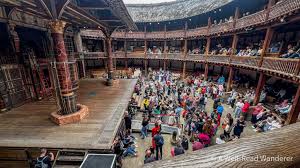
“Don’t go into theatrics.” my mom would say when I tried to explain why I did something she had thought was outrageous. Both my parents had local community experience on stage, so references to theatre popped up often during my childhood. My mom and dad met in a Social Club (which was a popular institution in pre-WWII England). These clubs were run by youthful members who planned dance-nights, sports events, card parties, and cultural festivals. Much later, in Canada and the USA, my parents organized successful amateur productions of traditional drama, musicals, and participatory community theatre.

My mom had plans for her son and daughter to go into showbiz. My sister and I performed on union hall stages and auditioned for television amateur shows. We didn’t like the spotlight. We didn’t dedicate ourselves to honing our talents. We were content with the theatre of our own lives. What we extended into our adulthood was our love of musical theatre, particularly as produced for the cinema. I knew many songs from these shows enough to sing heartily in the shower, or someplace private. My sister, once drunk, belted the lyrics out with enough gusto to convince me she knew them by heart too. Theatrically, our own paths diverged only slightly: She acted out on the karaoke stage while I joined voices with others in church choirs. My mother always referred to us as the devil and the angel. Pity us both.

That symbol of theatre; those masks of joy and sadness, are evident in personal lives as well as behind the curtain. There is an element of pretending in our behaviour. Some might refer to it as, “Fake it ‘till you make it.” I have to say I have tried to be genuine in my approach to life. Others have expressed that I am a man of even keel. I suppose I have tried to act that part whenever I can, being the guy everyone can count on. However there was one time in my early forties where I forgot my lines. In fact I totally went off-script and let others take the responsibility for life’s big play. Those days lacked the lift found in a musical production.

I relate closely to films that examine the complexity of the human condition. Recently I was transfixed by the television series Mare of Easttown. The titular character played by Kate Winslet, was disturbingly close to my memories of my sister. Within the gentle comedy of Ted Lasso I found that title character, played by Jason Sudeikis, to be as close to what I would like to be in my world. Self perception is often inaccurate and we may wish to deny the associations we deem fit to define us. Within the theatres of our mind we have had directors, script writers, costume designers, and singing coaches all trying to make our performance be spectacular.

A life’s work is finding the song we can sing, or the part we can play that will bring us to the red carpet knowing we’ve earned the recognition.

Re: Account

To have an account is one thing. To hold yourself or others to account is another. Like many words in the English language, a single word can have multiple meanings. This is what this word means to me. It may evoke different thoughts or even have different meanings for you. The fun is in the interpretation, not necessarily the dictionary’s standard.

Last week I was sitting in a parking space waiting for my bride to return with a bag of yummies from the grocery store. A car pulled up in the space beside me, a woman got out of the driver’s side leaving the car running. A man was sitting in the passenger seat with his window open. I was too far away to suggest he turn off the car without shouting and sounding aggressive. The fumes from the exhaust came through my open window. The woman returned a few minutes later and, to my surprise, stooped to look at the tire of her car which was just opposite my window. I quietly asked, “Why did you leave your car running?” Well, I was bombarded with all sorts of answers/excuses from both of the car’s occupants. In summary, they thought I was choosing something minor to “bitch” about.

The incident made me think of times when I try to be accountable for my choices. Holding myself to account is not easy in a complicated world. I am aware of making daily decisions about what is best for myself, my partner, my situation, and the world in general. Sometimes priorities are made that seem inconsistent with my own needs or the greater good. Small things, like leaving a car running, can add to larger things, like global warming. When and how we decide to practise our principles is not easy. I wonder to what degree do we have a responsibility to remind others to be accountable. Shouting at a politician seems easy but when our neighbour appears to be doing harm we might fear coming across as The Accountability Police.

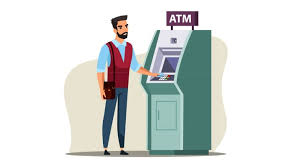
When my sons were small I advised them on ways to be financially accountable. I taught them about bank accounts, credit dangers, and saving for a rainy day. My wife kept a monthly ledger to show how money comes in and money flows out. As banking technology changed they taught me about ATMs, bank cards, email transfers, and other online services. I was once a slave to doubt about whether I would ever have enough money for my needs or wants. But by taking things all into account, I slowly learned to balance the fears of loss with the reality of my good fortune.

Holding myself to account means I must judge my choices based on a variety of factors. Commenting on other’s behaviour is a potential minefield of explosive consequences. Everyone has had moments where they have wished they had said something. Who hasn’t glared at a parent of crying/misbehaving kids! Like it or not we are all accountants of our life experiences. No one can judge us better than ourselves.

Re: Shadow

My mom would sometimes answer my persistent childhood questions with, “Only the shadow knows.” She would say it in a spooky voice that gave me the creeps. It was much later that I learned it came from an old-timey radio program, The Shadow, about a vigilante and his female sidekick. I think my mom saw herself as a detective. She even worked part-time with a private eye on divorce cases involving suspicions of adultery. Dark serious stuff.

Shadowing someone sounds sinister. In the modern lexicon it might be described as stalking. But in business settings to shadow someone suggests a new employee watching and learning from someone more senior. As an experienced elementary school teacher I was asked to support newly graduated teachers in a mentorship role. One year I was assigned a policeman who gave up his career due to burnout (he had the grim job of taking crime photos). We had great conversations as he learned the ropes in the sometimes stressful arena of education. When he got a full-time position he honoured me with a poem describing how he had been “a shadow of his former self” before I helped him create a more satisfying work/life balance.

While in a playful mood with my young children I have used my fingers to create shadow puppets on a wall. One son helped me build a sun dial in our back garden to catch the movement of a shadow telling us the time of day. Another son loved how I read an abridged version of Peter Pan. We would playact the scene where Mary stitches a shadow onto Peter’s heels in an effort to ground the never/never boy to reality.

In the film Perfect Days there is a delightfully scene between two drunken middle-aged males playing a game of shadow tag. They exhaust themselves, trying to stamp on each other’s silhouette, then they get philosophical wondering if each other’s grey profile, when overlapping, would produce a darker shadow. It doesn’t get blacker as they hypothesized, which causes even more confusion. Directly and subtly, this intriguing film explores the shadows we cast as we move through our lives. We are led to build our own backstories of the characters in this film, from the brief shadowy references to their past. I love the way we are invited to consider time as fluid, moving gently from sunrise to sundown, until next time becomes now.

When I was a baby I giggled lots when my mom pushed my pram under the dapple of trees. The Japanese word for this speckled shadow from leaves is Komorebi. There is joy in this translation. For me this phoneme suggests the sound of a breeze through branches. It is hard to take a realistic picture of this mysterious play of lightness and shadow. A camera can distinguish light from dark and pick out the hues and tints of colour, yet our eyes measure more. The brain is reacting to what the eyes see as fact, yet life is about shading that perception with our constantly evolving selves. Perhaps answers can only be found amidst the shadows.

Re: Fishes

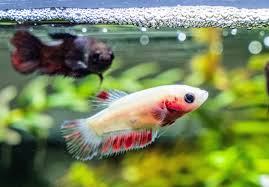
I kept an aquarium when I was in my early teen years. In several tanks in my bedroom I cared for neon tetras, gouramis, siamese fighting fish, angelfish, varieties of suckerfish and zebrafish. Those were the sorts of tropical fish available in the late sixties for someone on a limited budget like me. One of my friends had a saltwater aquarium which I envied for its exotic assortment. I made a deal with the local pet shop owner to provide him with the products of my fish breeding program in return for supplies. Most lucrative to sell were the Betta’s fry. I was able to coax this combative species to mate and produce eggs which were beautifully kept safe in bubble nets, not unlike the jelly masses of tadpole creatures, until they matured enough for market.

If something smells fishy, it probably is. The whole trade of popular aquarium species has a shady history. The practise of capturing and shipping constituted appalling loss to the local populations of fishes as well as contribute to habitat degradation in many parts of the world. I feel guilty to have been part of that capitalist agenda and yet through my exchange of home-grown fish I suppose I limited some of the need to get specimens from the wild.

During those years my hobbies revolved around fish. I spent endless hours during adolescence peering at my aquarium, cleaning the glass, separating the sick or pregnant fish to a hospital tank. I dedicated one tank to hold a collection of pond-life species that I captured from a nearby creek. I took notes, feeling like a young scientist, and later presented my findings to my high school biology teacher. This work and the resulting A+ grade was an encouragement to apply for university studies in Marine Biology. I also spent memorable leisure time sport fishing in rivers, streams, and lakes. I always had my rod and reel handy when the opportunity arose to hop in a boat or hunker on the shore. I felt a bit like Tom Sawyer on those occasions.

The natural resource industry is a big part of Canadian history. The early years of this country contain stories of greedy resource extraction of all kinds. For the famous fishers of Newfoundland this poorly managed industry would ultimately result in the great cod moratorium of 1992. This was a change of biblical proportions to a culture dependent on fish. Similar tales can also be told of other countries where the fishery was once never expected to be depleted. In the west coast current realities of salmon stock reductions due to over-fishing and poor habitat conditions make my heart ache for what bit of nature might still be left for my grandchildren.

I don’t earn money from working with fish like I used to, but I still go fishing when I need to change my lifestyle. Not fishing in the literal sense but as a metaphor for searching for possibilities. I’ll ask questions with baited subtext to see if the response brings a rewarding strike on my lure. Opportunities abound! It’s all how I cast my line.

Re: Pivot

We seem to be living in pivotal times. It’s not that these days are necessarily more dangerous than in the past but judging by headlines, bylines and frown lines there is a lot of distress washing up on our shores. Canadians can be thankful the turmoil hasn’t been violent in our country. Perhaps gratitude comes easily when there is food on the table and a roof over the head.

Chaos and catastrophe aren’t necessary for a shift in direction. Change in leadership can bring about a country’s world view, or maybe it’s the other way around. I will ever be puzzled by the strength of Trump’s following in the United States. I breathed a sigh of relief back in 2020 and now here we are on the cusp of the unthinkable: another four years of head shaking pivots of policy.

Times like these make me even more introspective, if that’s possible. There have been moments in my life where I have pivoted. Sometimes I have strayed from a self-prescribed course of action. At those moments it feels like I’m making a personal choice but now, looking back, I wonder how much free will I really had. On several occasions I have had change inflicted on me and I’ve had to react, adapt or just resign myself to go down that lazy river. We are all soldiers in our own way; sometimes confined to barracks, sometimes told to carry an extra pack, in the rain, through the mud. And sometimes we get to do an about-face and go elsewhere.

In 1954 I was brought to Canada at age two (obviously very little choice with this pivotal event). In 1974 I chose to marry the woman with whom I created a beautiful family. In 1994 my life took a turn for the worse as I fell ill with depression. Returning to health, assisted by excellent medication and an accompanying shift in attitude, I set out to steer my ship into more enjoyable ports of call. In 2004 there came a miracle that felt like a second lifetime: A lovely woman danced me into a new relationship, with new possibilities and a future filled with dream-come-true moments. It’s now 2024. I don’t have the full value of hindsight here, but I do know that thinking of myself as an author has created a pivot in my daily activities. There are many labels I could use to describe me. This new one of ‘Author’ has a pivotal feel.

When I wrote these dates down I was struck that they occurred every twenty years. I score!  Amusingly, I had a vision of my life carrying me another score of years, befitting the pattern. In this positive frame of mind I confidently forecast that I shall survive until 2044. For the next two decades I shall dedicate my life to the things that bring me joy. It’s like a New Year’s Resolution but only over twenty years of daily happiness, pivoting as needs be, to bring an equal dose of joy to those I love.

Re: Claudia

In any journey to understand words, in whatever language you use, I feel that emotion often supersedes meaning. For instance, some of us might have trouble even saying a word like Love, let alone trying to define it. The word Love is rich with meaning within the context of a sentence and exquisitely profound when used to understand the depth of a relationship. Let’s face it, some words are utile only. Other words are magical enough to carry a spirit.

Proper nouns are amazing in that regard. The naming of someone immediately makes the qualities of that person unique. Claudia is a Spirit Grandma to three beautiful grandchildren who were born after she died. I love the way her being is honoured with this evocative title. Claudia was once my best friend, my wife and a mother to three precious sons. She and I shared a quarter of a century together before she succumbed to a quickly spreading cancer. To the very end, Claudia was resolute that she had had a good life; one filled with activities, challenges and people who mattered.

Claudia is an uncommon name, befitting a woman unusual for her time. She loved things that resonated with the past. In a time when being a homemaker was losing its efficacy, even looked down upon as a career choice, Claudia enrolled in a University program focussing on Home Economics subjects. In the early seventies, the Macdonald Institute at Guelph University was often derided as leading to a Mrs. Degree. One of the first things that fascinated me about this woman with an old fashioned name was that she made her own clothes. She had been doing it since elementary school, won several contests, entered many fashion shows and was now specializing in the textile arts. I met her at a party, hosted by her friends, where she told me all this as I fell in love with her. Later, when we were planning our marriage, she stated emphatically that she aspired to being a homemaker. I couldn’t have asked for a better mate in that regard. Our house was a very, very, very fine house.

I wonder when a word becomes more than a word. A person’s name is an extraordinary use of a single word. It’s when a noun becomes a proper noun, almost giving it more value. When parents struggle over what word to use to describe their child no wonder there is much to debate and decide. Claudia is indistinguishable to me. Probably because I loved the person attached to that name. I’m sure there are other folks with the name Claudia, but none come to mind when I think of that word.

On paper, in text, Claudia is just a word. It is hard for me to type this word without all sorts of sights, sounds and feelings tumbling out of my brain. Before her death at age fifty, Claudia told me that she had lived the life she wanted, however short. Others, who knew of this particular Claudia, could tell you their own marvellous stories.

Re: Dad

Some words stand for a lot of stuff. To me, Dad is exclusive. Well, he was also a dad to my sister but they’re both dead now. In my memory he is the man who led the way. My dad was my elder: The one who made me ponder, made me proud, made me bashful, made me silly, made me ashamed. He patterned me in ways I’m still trying to figure out.

Like sons everywhere, I looked to my dad first as a protector. My first recollection of him is when he came looking for me because I was late for dinner. I believe I was still in diapers, at least I remember my pants were very wet from playing in a puddle, where he found me. He wasn’t angry. He took me by the hand and led me back to the house where my mom would surely give me a talking to. I don’t remember her lecture only that Dad changed my clothes and sat me down at the table in front of something hot to eat.

I rarely think of my dad as a father. There are many words in many languages for the patriarch of the family. Others may call out Pere, Papa, Papi, Apa, Vader, Tati, Baba or other words unrecognizable to my English speaking ears. My Polish born daughter-in-law sometimes calls me Tato. My own son is called Po by his son. My niece used to call my dad Popop when she was little. The word father is very generic sounding to me; as in everyone has a father. It is also religious sounding; as in ‘Our Father’. That father is always in heaven, far away and out of sight.

My father was a busy fellow during my growing up years. He was a shift worker at a factory so I rarely saw him until dinnertime. On weekends he often had another job which brought our family of four enough money to make ends meet. Those ends came together for me during our annual camping trip to the ocean. Dad became a different character altogether during these adventures: More playful. More thoughtful. With up to two weeks to play, my dad would not de-stress so much as re-create. Here at beach side I would learn more of his past life, his dreams, and his wonderings. He had a life before me? As I got older, I discovered I was only part of the timeline for this man I called Dad.

I’m still puzzling over the meaning of my dad in my life. Biologically, I believe there may be a genetic connection when it comes to my curiosity and creativity. I’ve been told I have a calm disposition and that comes from my father too. He demonstrated a love of nature, art and an optimism regarding his fellow humans. I can’t say he actually taught me much other than to be careful who I chose to be my wife.

My dad died alone, on a distant shore. I hope his final thoughts were happy ones.

Re: Wallet

I’ve never lost my wallet, but I’ve thought I had lost it many times. I check for the presence of my wallet frequently, sometimes obsessively. When I’m on holiday it is always on my mind. I’ll pat my back pocket and check the drawers or shelf of the room I’m staying in. When I am secure in knowing its presence I’m calmer. On occasion, I may even kiss it for luck to ward off evil spirits.

My son lost his wallet while moving his belongings to a new apartment. In the busy-ness of loading and packing he put it gingerly on the car’s rooftop. The obvious happened when he got behind the wheel and merged with other traffic. The shock of picturing what he had done wrong must have been numbing. He went back through his trip, in a futile attempt to rescue his wallet from the road where it must have fallen but to no avail. His credit cards had to be cancelled but luckily he had only $40 in cash. A couple of week’s later he got a call from his local police department saying the wallet had been turned in! Much to his amazement the wallet’s contents were intact! When he shared this story with me, we both commented on how our faith in humanity had been enhanced by this simple act of unselfishness.

Some folk say the cell phone has become their most highly valued object to carry everywhere. When I told others of my son’s mishap they related by saying how they had lost their phones and had been bereft as to what to do when a record of their identity had gone AWOL. Indeed, when you consider what is loaded onto our devices they become a veritable code to who we are in this world. Comparatively, the wallet with its old timey paper access cards, wrinkled photos, bills, receipts, bus passes, loyalty IDs & embossed business cards becomes a relic you might see on display at a museum of not so modern culture.

I made my first wallet when I was nine from a craft kit I got for Christmas. It came with pre-cut leather and strands of gimp plastic lace. When constructed it looked a bit like a folding moccasin with a side gash for paper cash (I never had any of that), a snap pouch for coins and a cool slit for bus tickets. There was a single clear plastic window under which I put my library card and my swimming pool registration card. With this wallet, fully loaded, I could get access anywhere.

Throughout my life other wallets have not lived up to the level of self confidence given to me by that first homemade beauty. However I still choose each new wallet by giving it a smell test. The leather scent knocks me out. A wallet has always given me a sense of importance. It contains a bit of my past and present and some assurance that my future is secured. A cell phone seems cold in comparison.

Re: Coat

My dad owned a heavy dark camel hair overcoat when I was a teenager. During those times of pride and prejudice, he cut an impressive figure. He once came to give me a message while I was in the school cafeteria. My friends murmured, as adolescents do, when he walked towards me looking very official. To this day, I regret feeling embarrassed by his presence; when I chose to exchange only the necessary few words of acknowledgement with a man deserving of the distinguished aura he created. 

Reality can’t be disguised with a metaphorical coat of paint. But we try don’t we, with the things we go into debt buying, with the ways we choose to adorn ourselves, with the people we fawn over while ignoring those who matter most. Charades. Facades. A bit of bunting might hide the pretence. What we wear is still considered an indicator of ascendence. The clothes still denote the wealth of the man/woman who wears them. We all strive for and feel we deserve our own coat of many colours.

There was a folky English tradition amongst my parent’s generation to acquire a family Coat of Arms. You would send your last name and any details you could remember of your ancestors to some company. Weeks later you would receive a fancy printing of a heraldic emblem befitting your royal station. We four Thompsons of Canada, newly immigrated from the mother country, were distinctly lower class. Any chance to raise our status, to coat us with a veneer of respectability, was a challenge to be accepted. My dad accomplished this by behaving in the ways of a kind British Gentleman. My mother sought to climb the social ladder in ways that made me doubt her sincerity and question her motivation. 

These two hosted many parties. When my sister and I were young we lived in a small two bedroom apartment where our folks found space to entertain hoards of scary adults in various states of revelry. The noise would keep us awake, so we would wander between the legs of dancers in the living room. We might venture onto the balcony to find people kissing or saluting the moon. We saw frowns, heard swears, and recognized tears from the serious ones talking dramatically in the kitchen. My sister had the ability to fall asleep curled between guests on the couch. I would venture wearily down the narrow hallway to find my parents’ bed, covered with a mound of coats. Predictably, in the absence of adequate closet space, coats were tossed here at the moment of greeting. Fur coats, trench coats, leather jackets, satiny shoulder wraps, knitted, woven, quilted and stitched items smelling of tobacco, perfume and sweat, all flung in a heap and mysteriously reclaimed at the end of a night’s celebrations. I would squirrel my way into this fragrant mass of fabric escaping the mayhem while finding comfort in the arms, collars, buttons, pockets and belts. I would wake in my bunk next morning wondering of the magic of adulthood.

Re: Crush

The emotion of love has many synonyms but crush is my favourite. I’ve been in love with the female gender for all my life. I sat in the grade two row of a one room school house in rural Ontario when I was so overcome with infatuation that I blew a loud kiss to a beautiful girl in the sixth row. The much older girl had helped me make awesome structures out of piles of fragrant leaves during recess. I was smitten by her giggles. The teacher caught my love gesture and made me come to the front of the class where I was made to kiss the length of the blackboard. I sat back in my place, lips all chalky and feeling the blush of shame.

Later, now a student in a suburban school, I chose to share brown bag lunches with a gorgeous brunette. She was in my grade but in the class across the hall. We both sat at the back of our room so when the doors were open we could wave to each other. She was my one and only valentine. When my mother expressed alarm at a Parent/Teacher meeting about my crush, she was told not to worry as it was only puppy love. I think she thought I was obsessed for a while but it was really, singularly, merely a friendship. We liked teaching each other card games. I cheered her on at hopscotch or while she dazzled me with double dutch skipping. When I stepped up to the plate in baseball I could hear her calls of encouragement. I went to her house on fireworks day but felt regret later for missing our family’s traditional balcony extravaganza. I remember the pang of ending our relationship, whatever it was. My heart wasn’t broken. I felt relief that summer’s freedom was within reach. A shrug seems cruel.

Interesting how the word Crush seems apt for the unexplainable emotions connected to the first blossoming of romantic feelings. When we are older we may get a crusher of a headache or feel the crushing weight of responsibilities. In our youth holding hands can be enough to send our thoughts to the moon and back, smashing all thoughts of school projects/tests or parents’ demands to clean our rooms. I can see why some cultures are afraid of the notion of adolescent crushes. Kids are still kids in many ways, yet the maturation process is an uneven thing.

I don’t recall any connection to my sexuality with my crushes. One gal broke up with me because I didn’t want to take things “to the next level”. Phewff, she was aggressive. I was a late bloomer that way and was likely naive to any girl who showed physical attraction towards me. When I look back through grade school my connections were about friendships, first and primarily. In adulthood too the intensity of my love for another is of the steady beating kind; not necessarily measured by explosive fireworks but like the consistent lap of waves upon a shore.