Re: Sorry

I don’t say the word Sorry very often. Not because I refuse to own up to my mistakes. It’s just that I seem to have a specific view of what Sorry means.

I’m too formal for my own good sometimes. I have had complaints that I don’t say sorry often enough, or quickly enough. Trouble is I don’t understand the concept of saying the word as a balm, so I bomb. I can come across as being cold as a result of my reluctance to say sorry as a soothing agent.

“Love means never having to say you’re sorry.” This is a phrase from the early seventies that is senseless. Likewise at a funeral when I hear someone say, “We are sorry for your loss.” I’m baffled. These people may be showing they care but surely they don’t mean they’re responsible for the death? I picture myself trying to explain this use of the word to an alien being, fresh from some distant planet. They keep nodding their head, not in understanding but in bewilderment. Just like me.

I’m not much good contributing to a woe-is-me sort of conversation. I can’t joke about it or fake feeling sorry either. There are many stand-up comics who riff on the difference between the sexes when it comes to the word Sorry. Men will joke that it’s probably best to wake up and start apologizing to your partner just to cover any contingency. That’s insensitive but I can’t help but laugh. Sometimes I think it might be good advice. Trouble is, I can’t make an apology sound sincere if I don’t feel responsible. In the same way I’ve never been a good liar, my face shows my guilt. Weaselly politicians and ferret-like corporate CEO’s may get away with statements such as, “If we have caused any harm we apologize.” This as a way to suggest that it’s somehow YOUR fault for being aggrieved.

If I say sorry I want to mean it. I remember one time feeling so badly I had screwed up that I actually went on bended knee to plea for forgiveness. I’ve never used flowers or gifts to apologize. I want the words I use to redeem me, since it is likely that words got me into that awful predicament in the first place. I used to discipline my sons by saying that if they really mean the apology they had to make a full sentence. ‘I’m sorry’ never cut it in my house. “Sorry for what?” I would ask. I would suggest a sentence starting with, I’m sorry for…, then maybe adding a question such as “How can I make it better?” They could never cop-out by saying, “I’m sorry IF I hurt you.”

I can be extremely sad that someone is going through some trial. I can sit patiently and listen to the story of anguish. It’s hard to find words that will show compassion. But that doesn’t make me want to apologize. I’m sorry for being such a stickler.
Re: Maybe

I came back from a protest gathering yesterday filled with confidence that the youth of today can lead the way. They have the energy that some senior people find lacking. Maybe I recognized myself from an earlier time, in their eager, earnest faces.

The next morning I awoke wondering what word I would write on a protest poster. I could picture myself printing MAYBE in bold letters. I guess I wanted to acknowledge that the world is mostly shades of colour and shades of grey. Sometimes we need a passionate enthusiastic YES, equally we need to be able to say NO without guilt and then we must have room for MAYBE.

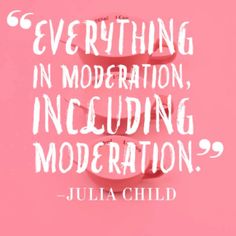
That soft place between the lands of extremism: You’ll make up your mind but hey, what’s the rush? Saying maybe is not like Hakuna Matata, saying maybe doesn’t leave you worry free for the rest of your days, saying maybe is not even a philosophy (unless you say maybe to everything). Noted Chef Julia Child and Singer/Songwriter Paul Anka are both credited with the phrase, ‘Everything in moderation, including moderation.’

MAYBE is a comfortable cousin to PERHAPS. In my childhood it used to drive me nuts when my parents would tell my sister and me that our weekend adventure ‘might happen’. As a kid it’s hard to understood that there could be extenuating circumstances to any parental promise, so it’s best to live in the land of PERHAPS until you actually get in the car.

DEPENDS is also related to MAYBE. I can easily picture a person with shrugging shoulders admitting that the situation was not black or white but dependant on a multitude of ifs. As a brand name for adult diapers DEPENDS is brilliant. We realize as elders that we may be far from a washroom while out adventuring, so perhaps it is best to be prepared. This gives new meaning to the concept of ‘covering your ass’ doesn’t it?

The notion of MAYBE is also about context. It’s not necessarily meh to say MAYBE and it’s certainly not fair to leave people hanging while they await your decision. MAYBE can be a tease though: As an adolescent I recall a girl at a locker who would often use the word, maybe to confound me. Developing a MAYBE attitude is more about being aware of your own limitations as well as recognizing the value of patience.

When I first heard Bohemian Rhapsody by Queen I immediately loved the line, “Nothing really matters to me.” https://www.youtube.com/watch?v=fJ9rUzIMcZQ
Nihilism is perhaps the closest bit of reasoning that might explain the middle point between yes and no. If I’ve got the philosophy right, which I probably don’t, the idea of MAYBE is wrapped up in this Nihilistic song. ‘Anyway the wind blows’ can be a MAYBE point of view. Once I wet my finger and hold it aloft, then perhaps I’ll have enough information to decide. With the right info I may be able to give you a more definite answer.

Time will tell. Maybe.

Re: Polyglot

Some words are so weird you don’t know what you are hearing. When I first heard this one I thought someone had made it up just to be funny. And silly is my favourite style of humour. In the tradition of the party game Balderdash, let’s do some guessing. Polyglot is: A) a rare breed of goat, B) a bunch of discarded plastic, or C) someone who knows three or more languages. Who knew that C was the right answer? I didn’t when it first came to my attention so I did some research and voila!

To my ears Polyglot still sounds like something you might read in a Dr. Seuss children’s book. That aside, I have an enormous amount of respect for someone who has mastered a poly amount of anything. I may aspire to the notion of being a Jack of All Trades, but that generally signifies I’m a master of none.
A dentist I saw for regular checkups told me all about his life while I was wired, probed, drilled, filled and/or dental dammed. My teeth may be in good shape but I couldn’t help but feel diminished by this one man’s list of supplementary skills acquired over his lifetime; Orchestral Trombonist, Black Belt Karate, World Bridge Federation Member. Not to mention, he was also a Polyglot; fluent in Polish, German and English.

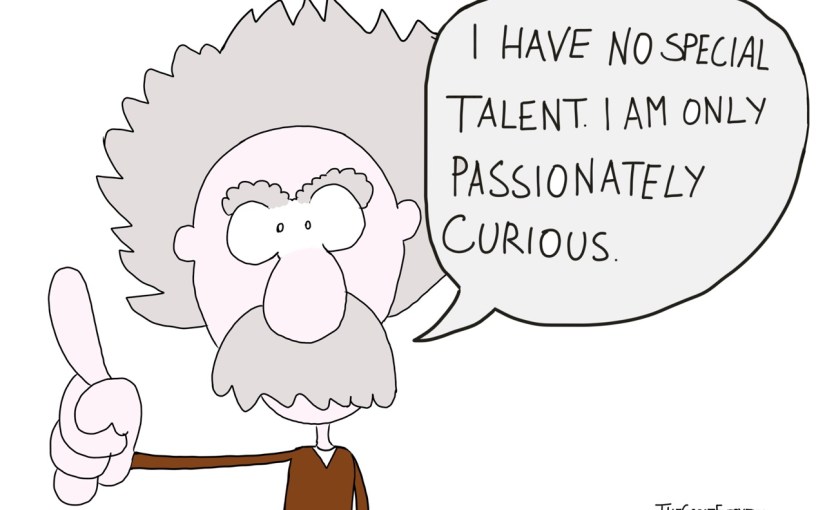
Hanging out with members of my home town symphony orchestra made me very aware of people who exist in a multi-hyphenate world. Many of these highly talented individuals work as doctors, lawyers, accountants or professors during the day and compose or interpret music in their off hours. As a teacher I was familiar with research that suggests there are many examples of areas where a crossover of skills is complementary and not necessarily layered. The music-math crossover is often touted as an example in people who may be considered of genius intellect. Einstein comes quickly to mind, yet so does Steve Martin the comedian/banjo picker/writer/director/actor/producer/magician.
Is Mr. Martin a genius or a polymath? Phewff! Take a bow already.

I enjoy watching artists challenge themselves in different media or venues. You must have talent to skip around artistic disciplines for sure. You also have to make the time to do it. Imagine being able to say you have won an Emmy, Grammy, Oscar and Tony award. Only fifteen multitalented artists have been able to accomplish that laudable goal. As of the posting of this blog page the following are in the esteemed EGOT Club: Richard Rogers, Helen Hayes, Rita Moreno, John Gielgud, Audrey Hepburn, Marvin Hamlisch, Jonathan Tucker, Mel Brooks, Mike Nichols, Whoopi Goldberg, Scott Rudin, Robert Lopez, Andrew Lloyd Webber, John Legend, Tim Rice.

Someone once flattered me by calling me a Renaissance Man. That compliment as much as I loved the taste of it, made me embarrassed. If I cut out television, reading the newspaper, tweeting about stuff and staring lazily out the window I may discover the time I need to be better. Another Leonardo Da Vinci, I’m not.

Re: Fado

Don’t you wish there was a word that exactly described the way you were feeling at its moment of intensity? Right now I’m feeling a sense in my chest of heaviness but not really heaviness. It’s a sadness or melancholy, but not really. I’ve a yearning for something I can’t quite put my finger on yet I know I’ve felt this way before. I don’t really need anything and I’m not wanting anyone to worry about me. Indescribable! In Portugal these feelings might be defined as saudade. In France maybe the word ennui comes close. I’ve been known to use the word angst to describe these rainy day feelings. Yet I’m not glum.

Feelings are inevitably hard to express because our words come from our thinking brain and often the emotional brain denies us access to its word bank. When emotions overcome us, people might ask what is on our mind and we’d be at a loss to describe it. That’s one reason art is so important. Through artistic expression we are able to show our feelings without needing words. We may sing the blues in the shower, redecorate a bedroom, go for a walk to commune with trees or read a book to allow the words of others to light our way through the mystery and misery of the unexplainable.

As a young parent I used to ask my children, when they were in an emotional spin, to take a crayon and show me how they were feeling on a piece of paper or cardboard. Sometimes they just scribbled through their tears. After calmness entered, we sat together looking over what had been created. The effort to represent something beyond words provided an opening for dialogue and deeper understanding.

In Portugal a musical form called Fado is an attempt to capture the feelings of saudade.

It’s difficult to listen to a Fado singer and not feel moved to tears. I’ve felt a yearning coupled with a realism. It is a musical genre that can awaken things that we may wish to keep hidden.

Strangely I felt this same feeling of saudade while talking to Newfoundlanders. Particularly if the topic turns to cod fishing or maritime rescues. Maybe it is a common awareness of those who live by and from the sea. The salt air finds a way into the souls of these men and women.

My most recent saudade has come from my experience with Canada’s observance of Remembrance Day. This year I took part in a gathering of two dozen individuals from age twenty to ninety who chose to wear a white poppy. https://peacepoppies.ca/
I wore my white poppy because it came closest to describing my feelings about war. https://globalnews.ca/news/4550164/white-poppies-remembrance-day/

My lapel poppy pin expressed for me, without words, why I attended this Nov. 11 service and therefore reduced my angst. Perhaps I’ll write a Fado song next year.

Re: Naïve

I enjoy how language can evolve. New words are coined. Words from other languages are kidnapped and tossed into our vernacular. The English Language has always been good at borrowing from other tongues. Words can be usurped and become so familiar that we just assume that they have always been ours. Naïve is such a word that started from Latin and moved through the French before being inserted into regular English discourse.

There are many synonyms for Naïve. I hear people use this word when wanting to disparage an individual. The implication being that they need to grow up, be realistic or just stop being so stupid. I think of myself as Naïve and I don’t like it when someone calls me that, when they really mean I am ignorant. I am ignorant sometimes because I don’t know everything; can’t possibly. My naïveté comes from being trusting; which I try to be.

Certainly naïveté can be ridiculed. You are considered a fool if you are too trusting to the point of being duped. Someone who is naïve is a target for a predator. That innocence can be picked up like a scent to someone who enjoys manipulating others.

The levidrome match for naive is Evian which I find amusing. A character in the film Reality Bites discovers this in a charmingly naive way. https://www.youtube.com/watch?v=SQVw58aDt3Y
I can’t help but wonder if the naming of this product is a sly wink at the consumer who is paying for essentially something they can get for free, from a tap. I have no doubt we are living in a time when corporations encourage us to trust them over mere flesh and blood humans.

If trust is a value we still hold dear, in who/what or where can we place our trust? Many people put their trust in a deity. Faith in God is all about trust. Have corporations become the new god simply to help us mortals who are bombarded by so many competing choices? When we get worn down from so much decision making it’s easier to go with the label that looks familiar.

In politics we are massaged into putting our trust in the candidate who says they have our best interests at heart. Before we cast our ballot, we must separate the rhetoric from the appearance. We must wade through the issues and pick the values or ideas that are presented before we can honestly and objectively decide amongst the candidates. This is tough work!

Some of us worry that we will make the wrong choice in our naïveté. We might err on the side of caution, reluctant to commit because of our doubts. We might choose the lesser of two evils. We might follow our peers, blindly, in an effort to fit in. At the end of the day we must trust that things will work out and hope that we haven’t been conned as individuals or as a society.

Yet voting still matters. No matter the cost, your view matters. Stand tall.

Re: No

No is a small word with powerful connotations. It can be used to send a message of finality, of desperation or of resolve. It is incontrovertible. It does not mean maybe. This is not the time for coaxing, bullying or cajoling. This is a word that must be respected.

When I am angry, the word No comes to mind quickly. My mental dictionary translates the feeling and I may end up shouting “Stop!” I never feel well after I have lost my temper. The emotion behind the thought of No is strong. It comes when you find yourself backed into a corner. You must quickly demonstrate that what is happening is not to your liking. Retreat is the order of the day. You are not deserting the field, only choosing to live on so that you can fight another day. No can be an active word in that it leads you to reshape what will happen next. Paradoxically, sometimes before getting to Yes we have to say No.

No is a levidrome. Its twin is On. Herein lies an amusing puzzle: In the binary world On would represent the opposite of No. So from analog to digital we have a yin/yang mystery. No implies that we have turned off, turned away, or maybe even turned ourselves inside out. We need a rest from decision making for a spell. The lights are out. The Off switch is engaged and taped down. Please leave us alone while we go into shutdown mode. Processing. Processing.

There was a time after the death of my first wife when my decision making circuits were shut down. Every time my brain came to a choice intersection, I would reflexively turn off. For a while I even forgot how to engage the On switch. Did it go up or down? Saying No outright was way easier than risking another foreign situation. I didn’t feel lazy so much as squeamish. My biological cyber security was in question. The passage of time helped. At some point I remember making a conscious decision to say yes more often. I spent less time weighing the options presented and more time engaging in the invitation. I recalled a mentor once saying to me that there is often a good reason why someone invites you to do something.

My new granddaughter is almost two and the only word she uses consistently is No. It makes me smile when I hear it. I wonder what awareness of the situation she has when she says it. She seems to know her mind and I act accordingly. For adults, in some situations it takes courage to say No. We may not want to let someone down. We don’t want to be misinterpreted. We don’t want to be labelled a poor sport or a Debbie Downer. We don’t want to turn people off. The fact remains that sometimes the word No needs to be said.

Even though No is a valid answer to a question, my life feels somehow better when I can get to Yes.

Re: Freak

My intention with this blog is to puzzle through, while writing, what a word signifies to me. As I get feedback I’m finding I’m not alone in being confused by the different interpretations of a word. I find it interesting how some words produce an emotional reaction. These triggers can send our thoughts rushing to unintended conclusions. We lose sight of the original intent of the conversation and dialogue ceases to be productive.

I sent a Twitter message recently, saying that I was ‘freaking out’ about an upcoming event. It was interpreted in a negative way. Often, that is the way it is for me: I find myself exclaiming (out of wonder or joy) and someone is always there trying to explain my wonderment as a way to cover for me. I suspect some fail to understand why anyone could just be enthusiastic about things. I get that context matters, but funny why we so often jump to the negative connotation as a matter of course.

A headline in my city’s newspaper described our Prime Minister as ‘Freaking Out’ over a heckler’s comments at a political event. Watching the video clip in question I didn’t find that he behaved extraordinarily freaky but he was sure passionate about his desire for an inclusive immigration policy.

Everyone can name some classic bad words that we are taught not to use. Usually they have a racial, religious or body part implication. For example the N-word is clearly a mistake racially speaking. The C-word is particularly disturbing to women. In Quebec I wouldn’t use the T-word. Even in our progressive age it’s considered impolite to drop the F-bomb.

I taught a student whose surname was Freak. She never got teased about her name that I was ever aware of during her time in my classroom. It would be great to ask her about her perception of this word now that she has grown. A male named Richard must guard the long form of his name carefully as the shortened version is cringeworthy. As with any word, particularly if it’s your name, you must make amends with yourself. Any perception of our difference is often considered freakish, yet we all have oddities within us. I tend to like the freaky part of me even though I am shy to show it. This positive value of respecting diversity is a regular theme in the Arts. Two examples:
On Broadway; Shrek, The Musical https://www.youtube.com/watch?v=nSDetuag6zU
On Vinyl; CSN&Y ‘Deja Vu’ https://www.youtube.com/watch?v=4Lk2KHajp4Y

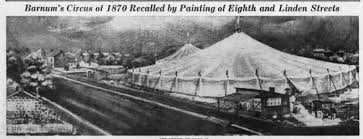
I’m old enough to have gone to a circus to see odd people. One of my favourite movie musicals of late is The Greatest Showman. P.T. Barnum hires “freaks” to be put on display to a paying audience. https://www.youtube.com/watch?v=CjxugyZCfuw

The characters in this film found a common connection and some felt that within the circus they had a place they could finally call home.

Embracing our freakiness might actually save us.