Re: Robot

I read last month that a robot crushed a man to death. No reporter asked if it regretted its actions. One would hope that this is not the first scene of the latest instalment in The Terminator series of films. Danger Will Robinson!

Stories of robotic inventions fill media sources as we lurch from one computer/techno advancement to another. Such speed of development would alarm any Luddite. While I am not against the notion of progress I have felt daunted by examples of increasing robot dominance in my environment. Take self check-out lines for example. I try to avoid these ‘help yourself’ zones in stores because: A. I’m a fumbler, often taking too much time fiddling with wallet, keys, coupons, cards & such. B. I don’t respond well to screen choices and get flustered that I will press the wrong menu icon and C. I’d rather talk genially to someone I recognize as another human being trying to have a nice day.

I’m currently typing this blog entry on a new MacBook Air. An older version kept giving me alarm messages to upgrade. (heck it was only 6 years ago when I bought that one, which the IT guy at the store said was ancient, even old fogey-ish, in computer terms). Fortunately, I could transfer some of my ‘ancient’ apps over to the new format which brought me some solace. I can guarantee that what you are reading is coming out of my own head, not some version of ChatGPT. (That word processing application is apparently the wave of the future and will revolutionize the process of reading/writing/editing/publishing). Oh dear!

AI can be used to imagine different scenarios so that test runs can proceed much faster than normal human-driven research. Imagine medical checks of potential life saving drugs (maybe a several year trial can be compressed safely into a few months). Automated labs, robotic taxi cabs. Auto-reader books, and home central info kiosks like Siri or Google Assistant have made a set of encyclopedias seem quaint.  Forgotten in all this artificial intelligence discussion is that we still need to instruct the humanoid device. Back before the turn of this century IBM invented a computer called Deep Blue, a computer force-fed all the known chess moves. It beat the reigning grand master of the game because of superior input, not creative thinking.

Robot Thinking is a form of intelligence that relies on data. Machines are designed to do our bidding, not think for themselves. If there are hints of foreknowledge it is due to the content of the programming not a clairvoyant attitude of the microchips. A moral robot is more in the realm of science fiction. An automaton named Hal or Data must continue to perform at a human’s behest, keeping prime directives active in its operating systems. A robot must always defer by essentially asking ‘What Next?’ then choosing from a defined menu. They/It/Bx can’t refuse to comply unless the information is unavailable.

If robots start apologizing then we will have something to worry about.
Re: Yes

The YES/NO binary fascinates me. When I went to university computers were a becoming thing. Beginning science students at my college had to take a basic programming course. We used punch cards, stacks of them. We talked Fortran to a whirligig machine the size of a classroom. The best thing I got out of the course was learning Flow Chart methodology. I still use this principle to make personal decisions.

Life is not always a matter of a yes or no decision. A yes answer to a question can mean you agree, and when it comes to a contractual understanding I believe it shows strong character to commit to the outcome. On the other hand, saying yes can also be a process to finding out. I always told my young sons when they were out with others that if things went south and they started to feel uncomfortable, they could always call me for a pick up. Deciding yes doesn’t mean there is no turning back, yes doesn’t mean you are stuck. There is always something else you can do; it’s quite fine to change your mind.

When we are in autopilot we probably don’t think too much about our Yes/No response rate. Most of our lives we just flow along. I’ve said a resounding Yes to marriage twice in my life. Choosing teaching as a career was a fateful Yes. I’ve chosen affirmative responses to life changing questions when folks have shown confidence in me even when I have doubted my own ability. I once chose to question the YES of life in the midst of some dark days.

Back when I was coding those punch cards, the computer could only determine between one and zero. Like an On/Off switch the pathway to an answer flowed like an electrical current until a solution was found. As we move closer to AI robotics I wonder if we’ll be able to program something like a shrug into a SimBot. A simple yes or no is restrictive to creativity. A Maybe thrown in, once in a while, can stimulate imagination.

I love saying Yes. But it’s not always a practical answer. My wife says I’m a very emphatic person. I joke with her sometimes that life would be more fun if there was a limit to the negatives; Don’t, Not now, Not really, Never! M’Eh is the worst: That response combines a dismissive attitude with an apathetic outlook. Nothing is ever accomplished with a M’Eh. Unfortunately my reflex response, whenever we are out shopping, is No! I hate being a spoilsport. I can make firm and relatively quick decisions because I know myself well but my mind is not suited for a black or white rigid existence either.

My mother-in-law showed me her wedding pictures yesterday. She’s been saying her final goodbyes to her husband of 68 years. It took him nine years before he agreed to the union. I watched her smile like Mona Lisa as these memories played about in her head. Her lifetime started with a Yes.

Re: Web

When I was a teacher, one of my students’ favourite outdoor chase/tag games was based on the food chain. Carnivores ran after herbivores who ran after the plants who had to wait within the boundary marked by a Hula hoop. A game for every personality type in a classroom. I never liked the predator/prey aspect to the activity but at least it started a discussion later in the classroom on the weblike nature of the environment.

The way that all species interact in a complex manner of energy transfer is becoming evident to all of us as we share information about climate change consequences. We are becoming educated to terms like keystone species. We are learning through shocking experience of the close knit connections along the web of life. We are not the top of some theoretical pyramid. All creatures, great and small, are important to sustaining a healthy planet. We have for too long viewed out earthly presence as if we were entitled to be lord and master of all we survey. We have tricked ourselves and lied to others about the interconnectedness of our existence.

“Oh what a what a tangled web we weave, when first we practise to deceive.” Was a quote from a poem by Sir Walter Scott that my mom used on me whenever she suspected I was lying to her, then I had to be careful not ‘to protest too much’ hence she would definitely know I was lying about something. I remember having a guilty conscience a lot of the time. My mother had a stout heart yet she was deathly afraid of bugs in general and ‘creepy crawly’ spiders in particular.  If webbing ever contacted her face she would shriek for mercy. My mom was not alone; Arachnophobia is on many people’s fear list. Me? I’m an Athazagoraphobe.

In my early adulthood I related to the existential wanderer, Silver Surfer, but my childhood comic book favourite was Spiderman. I liked the way he didn’t use a weapon that hurt, just an unbreakable passive/aggressive net. As a teen I was drawn to the cartoon Spidey, from the popular television series by Grantray-Lawrence Animation. The catchy theme song; “Spins a web, any size/catches thieves, just like flies” was by Paul Francis Webster and Bob Harris.

https://www.youtube.com/watch?v=wl90tt4newk

What’s not to like about the World Wide Web (best invention in my lifetime). I depend on it for communication and researching, I spend a lot of time crawling/scrolling through digital threads. It can be a time suck but mostly it works like a mental butler. I definitely see the benefits to the  hammock-like inner world of pixillated Web Design. I might volunteer to be a test subject for the first WWW cranial implant.That way I wouldn’t be bound to my computer, I’d become one! I can see the ads for the procedure: “Enhance your memory! Win Debates! Be a trivia Titan! Get a prothesis to pontificate!”

Cyber Humans? Seems like a natural evolution.

Re: Watch

Long ago, in a land far away, some shepherds stood watch over their flocks by night. Others watched for a light in the distance. Some are watching still; for a saviour, an answer, a way out, a bit of truth at least. We all get comfort from a good story. We watch for ways that the story can help us in our fragile existence.

Many years ago I watched over my wife who was dying of cancer. I wasn’t the only one. Palliative care is a draining exercise. During the hours that I set off to work I had asked several friends to spend some time caring for my bride’s needs. One member of this collective took charge and organized a weekly calendar of visitations. I dubbed the 12 member group, ‘The Watchers’. A month after her death, we all gathered to reflect on our experience. We ate cake and posed for pictures. Many voiced that the job of being an active witness during a chapter of life was profoundly moving. 

Yesterday I was standing outside a store waiting for it to open. Two others of my age were also watching to see if anyone was coming to open the door. I commented, “It must be close to ten.” “Sorry, I don’t have a watch,” came a synchronous, stereophonic reply. We three wise men chuckled. We collectively wondered if anyone owned a timepiece anymore. I haven’t worn a wristwatch for years. I have a fake Rolex that my wife found for me in a rummage box. I’ve worn it a few times feeling expansive. I took it on a cruise holiday once and I felt overly watchful of it. Regardless of my attention, I dropped it, cracking the crystal dial. It became a heavy burden on my wrist and my mind. I resigned myself to fixing it, now I keep it in a bedside drawer. I don’t want to watch the watch any longer.

Today I talked to my son who reported he had just bought a Fitbit. He wears it on his wrist so he can monitor his health. He can program the device to watch his heart rate, his REM sleep patterns, his daily steps and to remind him when it is time to get up from his chair. He feels it’s helping him to be more active. I felt comforted by the news of this purchase. Perhaps I was pleased that the digital device was watching over him, since I no longer can with such regularity.

Watching signs of the passage of time is a very watchable activity. I like looking out windows. I can be transfixed by the slow lengthening of shadows as time moves towards dusk. The sight of logs bobbing in rounded waves, then getting beached by the receding tide can tell me it is time to go home. The slow rise of an orange moon makes me wonder how many times I have witnessed the fullness of a complete day with someone I love.

Re: Phone

Change is exasperating. It’s never just one thing that changes. Dominoes will fall! Lately my three year old phone failed to do what was expected. Being a smartphone made it a smart aleck. The problem seemed to be that it refused to communicate with other digital devices in my home. I tried password changes, account changes and rebooting (an old fashioned term?) But it was all for naught. By using the word naught I guess I’ve firmly placed myself in the pre-computer era. And that, despite my best efforts to remain tech savvy, is the problem with my general attitude concerning The Phone. I rant. Yet really I stand bewitched by this technology.

My dad would send me off on adventures when I was barely in my double digits with these instructions: Do you have coins in your pocket? Have you got your handkerchief? Call home if you have trouble. Calling home in those days meant finding a phone booth, which I learned how to use quite early in my life. Any call from a booth could connect me with the home phone, and if I was out and about someone was always home. Safety assured.

Safety is the number one reason parents in the tech era buy phone plans for their children. Safety is also the top reason adults cite for switching from home phones to cell phones. The phone was a lifeline for me in the late fifties and is truly a must-have for Generation Alpha. Needing a phone for emergency use is one thing, but now it is clear phones are so much more. The term smart phone is apt; mini computers they are indeed. With storage capacity, links to other digital devices, connectivity with more than just your mom is assured. The camera capability of a smart phone has changed communication; we can send a text of our meal, or hold police to account for their actions. We can start a Movement.

I’m in awe over how it has changed our culture, and I’m also intimidated. I’m trying. I’ve come to terms with the need to regularly update my device. I still talk English on my smartphone even though it has gone through several iterations of operating systems. My smartphone has regular conversations with my other digital devices so that things can continue to function. Somehow that doesn’t make me feel more secure. For old folks, being hacked has taken the place of falling down as the number one anxiety. Forgetting a password is tantamount to losing our wallets.

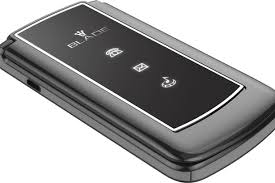
And yet we soldier on. I was one of the first on my block to buy a computer. I’ve had an early Star Trek phaser-like flip phone. I no longer have a land line. I know how to Facetime, Skype, Zoom and Tweet. I’ve just installed a new device that makes my television smarter so that I can stream new entertainment catalogues. My old phone will have to be replaced with an updated version. Like a little lost ET, I still need the comfort of knowing I’m able to call home. https://www.youtube.com/watch?v=6xZif3WmG7I

Re: No

No is a small word with powerful connotations. It can be used to send a message of finality, of desperation or of resolve. It is incontrovertible. It does not mean maybe. This is not the time for coaxing, bullying or cajoling. This is a word that must be respected.

When I am angry, the word No comes to mind quickly. My mental dictionary translates the feeling and I may end up shouting “Stop!” I never feel well after I have lost my temper. The emotion behind the thought of No is strong. It comes when you find yourself backed into a corner. You must quickly demonstrate that what is happening is not to your liking. Retreat is the order of the day. You are not deserting the field, only choosing to live on so that you can fight another day. No can be an active word in that it leads you to reshape what will happen next. Paradoxically, sometimes before getting to Yes we have to say No.

No is a levidrome. Its twin is On. Herein lies an amusing puzzle: In the binary world On would represent the opposite of No. So from analog to digital we have a yin/yang mystery. No implies that we have turned off, turned away, or maybe even turned ourselves inside out. We need a rest from decision making for a spell. The lights are out. The Off switch is engaged and taped down. Please leave us alone while we go into shutdown mode. Processing. Processing.

There was a time after the death of my first wife when my decision making circuits were shut down. Every time my brain came to a choice intersection, I would reflexively turn off. For a while I even forgot how to engage the On switch. Did it go up or down? Saying No outright was way easier than risking another foreign situation. I didn’t feel lazy so much as squeamish. My biological cyber security was in question. The passage of time helped. At some point I remember making a conscious decision to say yes more often. I spent less time weighing the options presented and more time engaging in the invitation. I recalled a mentor once saying to me that there is often a good reason why someone invites you to do something.

My new granddaughter is almost two and the only word she uses consistently is No. It makes me smile when I hear it. I wonder what awareness of the situation she has when she says it. She seems to know her mind and I act accordingly. For adults, in some situations it takes courage to say No. We may not want to let someone down. We don’t want to be misinterpreted. We don’t want to be labelled a poor sport or a Debbie Downer. We don’t want to turn people off. The fact remains that sometimes the word No needs to be said.

Even though No is a valid answer to a question, my life feels somehow better when I can get to Yes.