Re: Manage

Once I was responsible for the care of my dying partner. Over the course of nine months, from diagnosis to death, I attended to her medical, emotional, psychological, physical, and incidental needs. Folks who have had similar trials will tell you how hard it is, yet somehow we all manage, because we have to.

Manage is a brother to Cope; yet coping has a big sigh attached to it. Related words like supervise, oversee, or control can sound overly dramatic. The act of managing is not just a technical thing requiring lists, deadlines, deliverables, outcomes, and client satisfaction. A good management scheme recognizes the elements of emotion found in doing the task.

To manage our own life might be best if we could just rely on logical thinking. But thinking only of the reasons why you want to keep your life on a positive track precludes the examination of your emotional response.

My bride and I were once Resident Managers at a newly built downtown condo tower. We were at the beck-and-call of almost one hundred owners in this modern structure of 15 stories. And boy were there stories! Each owner had his/her/their unique reasons for buying into the property. Each had personalities that required personal attention or group instruction. My wife and I tried to build community, while managing the demands of the job. We had to respond to residents who had decided their problem had become unmanageable. Consequential incidents such as; robberies, fire, flooding, vehicle accidents, equipment failures, births, or escaped animals were a few of the managerial complications that were part of our five year commitment to this post-retirement, self-directed, and amusing vocation.

Then came eldercare, which is a whole different can of worms. Management stresses here centre around ensuring the elder is feeling valued, even while declining in their faculties. I find the hardest part of this responsibility is managing my own feelings around caring for another. As an elder loses ability to manage themselves it’s easy for the caregiver to feel resentment, fatigue, frustration, and isolation. I find responding to another’s dependency is a challenge. Respect is hard to maintain when a relationship loses its two-way-street understanding. Ideally, I would like to only manage myself. But that’s not a reality since I impact others, just as they have influence over my life.

All three of my grown sons are in career management positions. They also manage themselves and their relationships quite well. Like me, they have a strong desire to be independent. My employers sometimes told me that I was ‘management material’. I believe that to manage one’s life is, by itself, a measure of success. I have felt blessed by the times when governments, agencies, neighbours, friends, family, co-workers, and lovers have helped me to manage my affairs.

Back when I provided end-of-life care to my first great love, there were many times I felt overwhelmed. Near the end of my ordeal a friend named Jaakko visited the depressing scene and said, “I don’t know how you manage.” I gasped at the comfort these acknowledging words provided. Then and now, I carry on.
Re: Claudia

In any journey to understand words, in whatever language you use, I feel that emotion often supersedes meaning. For instance, some of us might have trouble even saying a word like Love, let alone trying to define it. The word Love is rich with meaning within the context of a sentence and exquisitely profound when used to understand the depth of a relationship. Let’s face it, some words are utile only. Other words are magical enough to carry a spirit.

Proper nouns are amazing in that regard. The naming of someone immediately makes the qualities of that person unique. Claudia is a Spirit Grandma to three beautiful grandchildren who were born after she died. I love the way her being is honoured with this evocative title. Claudia was once my best friend, my wife and a mother to three precious sons. She and I shared a quarter of a century together before she succumbed to a quickly spreading cancer. To the very end, Claudia was resolute that she had had a good life; one filled with activities, challenges and people who mattered.

Claudia is an uncommon name, befitting a woman unusual for her time. She loved things that resonated with the past. In a time when being a homemaker was losing its efficacy, even looked down upon as a career choice, Claudia enrolled in a University program focussing on Home Economics subjects. In the early seventies, the Macdonald Institute at Guelph University was often derided as leading to a Mrs. Degree. One of the first things that fascinated me about this woman with an old fashioned name was that she made her own clothes. She had been doing it since elementary school, won several contests, entered many fashion shows and was now specializing in the textile arts. I met her at a party, hosted by her friends, where she told me all this as I fell in love with her. Later, when we were planning our marriage, she stated emphatically that she aspired to being a homemaker. I couldn’t have asked for a better mate in that regard. Our house was a very, very, very fine house.

I wonder when a word becomes more than a word. A person’s name is an extraordinary use of a single word. It’s when a noun becomes a proper noun, almost giving it more value. When parents struggle over what word to use to describe their child no wonder there is much to debate and decide. Claudia is indistinguishable to me. Probably because I loved the person attached to that name. I’m sure there are other folks with the name Claudia, but none come to mind when I think of that word.

On paper, in text, Claudia is just a word. It is hard for me to type this word without all sorts of sights, sounds and feelings tumbling out of my brain. Before her death at age fifty, Claudia told me that she had lived the life she wanted, however short. Others, who knew of this particular Claudia, could tell you their own marvellous stories.

Re: Attachment

My son watched aghast as Prince Harry was asked yet again if he misses his mother. I understood how he could relate to the royal, having lost his own mom to cancer twenty years ago. We both wondered why some people maintain such strong attachments.

“Hang on tightly, let go lightly” is a wonderful line from the film ‘The Croupier’. I’m proud that my sons and I have found ways to detach ourselves from events that have caused us sorrow. We have learned to say goodbye without forgetting. In our own ways we continue to practise the meaning of living in the present. I love my sons not because they are mine, but because of who they are. When I learned the value of loving detachment I made a committed step towards a more mature attitude to life in general and other people in particular. I feel safer knowing I can detach from my own ego, from unhealthy situations, from the pressures of conformity. I will not blindly wave a flag nor join a parade.

I’m learning late in life not to be attached to an outcome. I wished I had had a clearer sense of this when I had sought out opportunities in the past. Perhaps a desire for something is closely linked to our wish for attachment. Sometimes our singularity compels us to seek the security of group membership. Even a kite needs to be tethered by guiding hands before it can soar. Admittedly, this analogy falls down when you consider that your individuality risks being constrained by an idea, a process or a brand. An obligation can also be an attachment that holds you back from discovering what’s best for all concerned. Truth can be the scissors that cut through those tethers that prevent us from experiencing a healthier personal reality.

Getting over ourselves can often mean stepping from the centre of our web of connections. Detaching from some filaments and letting go of the security of the collective is frightening but necessary to growth. I was clinically depressed five years before the death of my wife. I look back in gratitude that I had that span of time to sort myself out. In hindsight, I needed those years to be a better person for my dying spouse. I found ways to be more responsible for myself so I could be of greater assistance to my loving partner.

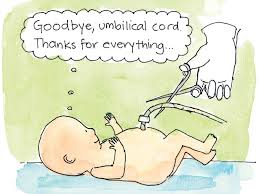
It isn’t an easy journey but I believe it begins with the cutting of the umbilical cord. To me that marks the start of one’s life, when you know you are truly alone. From that moment there are varying degrees of dependency, agency, and clarity regarding who is really in charge of your existence. Calling the shots means knowing when to seek help, receive help and provide help.

These days I’m attaching myself to the joys of life using a lighter thread enabling me to feel less bound by convention: More tuned in to the slightest breeze of welcoming change. I wish to fly higher and see further.

Re: Mate

I told someone the other day that I was a one woman man. They recalled that phrase as the title of a song by country music legend George Jones.

Being a person that has spent time getting to know himself has made all the difference to my selection of a mate. I’m guided by what I see in another and what I see tends to be a reflection of me. By that I mean I am drawn to people who hold similar values, have similar interests, in short, get life in the same way I do. I’m not looking for a clone of me, but there has to be enough similarities so that we can relate, as mates. I have to feel a friendship, a kinship, before I can settle into a long term relationship. I need to recognize this person. From that comes the security of familiarity and then love, a very hard word to define. I’m a birds of a feather kind of guy. I don’t relate to the opposites attract theory. https://www.youtube.com/watch?v=xweiQukBM_k

In the wild kingdom we often describe an animal mating for purely instinctual, procreational reasons. Some animals are known to mate for life, but it is rare outside the human species. I belong to the tribe that values exclusivity in mating, even while I was dating I could only manage one woman at a time. While my relationships have been one on one, I can admit I might fantasize but, oh my, polyamory?

I saw in my first mate a mutual desire to build a loving family. She caught my attention as a true friend, growing into a confidant, then a loving partner. A strong bond was formed. We had so many mutual ideas about how we saw life unfolding. We planned continually. We eyed the future as a promise. When cancer took her away from me it was hard to recalibrate my thoughts on life, what to do next, or who I might wish to spend time with. The very idea of a life mate had changed in me. Surprisingly I found someone quickly, she appealed because she was more a colleague. We both worked in education, loved reading and were writers in our spare time. It seemed like a match. However, our differences soon overcame our initial connection. Thankfully, she changed her mind and left. However, I was alone again. https://www.youtube.com/watch?v=D_P-v1BVQn8

Finding myself in the world of digital dating, I considered my options, gingerly. Could a computerized approach to finding a mate bring me the woman I dreamt of? Quickly intimidated by online choice, I decided a party was in order. Lucky me! My fantasy woman magically appeared. She had the image I desired and the substance I admired. She shared my passionate adventuring view of life and was brave enough to take risks with me. We both continue to believe in the importance of the singular moment. Check. Mate. On with life. Together. Eyes forward. Hands clasped. We are mated still. Love is beautiful.

Re: Write

I am a writer. It took me a while to say that, to myself, before I could proclaim it to the world. I grew up with the notion you had to BE, before you could claim to be. There was something in my mother’s teaching that made me reluctant to attest to something about myself unless someone else, officially, had acknowledged it first. Even when I became an adult and wrote for my daily newspaper, my mother continued to think; ‘a Writer is someone who writes Books.’

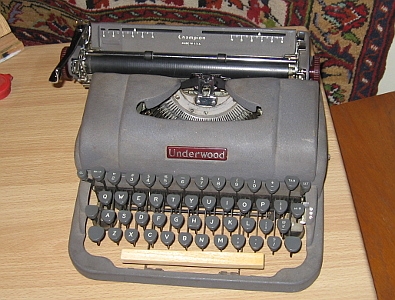
I have mixed feelings about the drive to be a writer as my father spent almost every spare moment during my pre-teen years clacking on his Underwood. Having gone through my own mid-life crisis I can recognize now, what was going on with my dad. He was at a crossroads and he thought sending off manuscripts, with rejection slips inevitable, just might bring him the fame he was after. My mom kicked him out of the apartment for his ‘writing obsession’ and only let him back after he promised to write no more. These were very stressful days for me. The house was suddenly very quiet after he took his typewriter and left. To this day I will feel heartache whenever I see one of these antique word processing machines. The departure scene became forever connected to WRITING. To venture into the land of career writing became filled with the prospect of following in my father’s failed footsteps. Nothing pleasing to picture with that scenario; move along please.

What a negative space I occupied; Being unable to write because it didn’t feel right. Thankfully I recognized that this attitude was largely self-imposed. As my teaching career wound down I approached our local daily newspaper with an idea for a weekly column. It felt like a rite of passage when I got hired. The Daily Press even used me as a roving reporter covering the arts scene on the weekends. I tapped away on the keyboard of a new Bondi Blue iMac (much quieter than my dad’s machine). I discovered that the more I wrote the more I wanted to write. I had tapped into an artistic side of me that had been hungering for release. I wrote editorials. I wanted to be a righter of wrongs. I kept poetry diaries and trip journals. During my last few years of teaching everyone in my classroom wrote lots of stuff. We shared the results together with delight. We played with homonyms, synonyms and antonyms. We made up nonsense words and made them into cartoon characters. Sometimes it only takes one person to read your work to make you feel accomplished.

One year, to honour the passing into the new millennium, I wrote a full page of thoughts for each day of 2000 thinking it would be a curiosity for my grandkids someday. My wife was diagnosed with stage four cancer in January 2001. For the next 288 nights she asked for a bedtime story; either Winnie the Pooh or a page from my Millennial Journal.