Re: Manage

Once I was responsible for the care of my dying partner. Over the course of nine months, from diagnosis to death, I attended to her medical, emotional, psychological, physical, and incidental needs. Folks who have had similar trials will tell you how hard it is, yet somehow we all manage, because we have to.

Manage is a brother to Cope; yet coping has a big sigh attached to it. Related words like supervise, oversee, or control can sound overly dramatic. The act of managing is not just a technical thing requiring lists, deadlines, deliverables, outcomes, and client satisfaction. A good management scheme recognizes the elements of emotion found in doing the task.

To manage our own life might be best if we could just rely on logical thinking. But thinking only of the reasons why you want to keep your life on a positive track precludes the examination of your emotional response.

My bride and I were once Resident Managers at a newly built downtown condo tower. We were at the beck-and-call of almost one hundred owners in this modern structure of 15 stories. And boy were there stories! Each owner had his/her/their unique reasons for buying into the property. Each had personalities that required personal attention or group instruction. My wife and I tried to build community, while managing the demands of the job. We had to respond to residents who had decided their problem had become unmanageable. Consequential incidents such as; robberies, fire, flooding, vehicle accidents, equipment failures, births, or escaped animals were a few of the managerial complications that were part of our five year commitment to this post-retirement, self-directed, and amusing vocation.

Then came eldercare, which is a whole different can of worms. Management stresses here centre around ensuring the elder is feeling valued, even while declining in their faculties. I find the hardest part of this responsibility is managing my own feelings around caring for another. As an elder loses ability to manage themselves it’s easy for the caregiver to feel resentment, fatigue, frustration, and isolation. I find responding to another’s dependency is a challenge. Respect is hard to maintain when a relationship loses its two-way-street understanding. Ideally, I would like to only manage myself. But that’s not a reality since I impact others, just as they have influence over my life.

All three of my grown sons are in career management positions. They also manage themselves and their relationships quite well. Like me, they have a strong desire to be independent. My employers sometimes told me that I was ‘management material’. I believe that to manage one’s life is, by itself, a measure of success. I have felt blessed by the times when governments, agencies, neighbours, friends, family, co-workers, and lovers have helped me to manage my affairs.

Back when I provided end-of-life care to my first great love, there were many times I felt overwhelmed. Near the end of my ordeal a friend named Jaakko visited the depressing scene and said, “I don’t know how you manage.” I gasped at the comfort these acknowledging words provided. Then and now, I carry on.
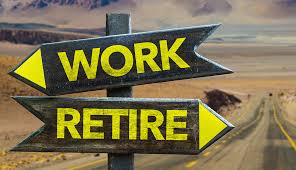
Re: Retire

I’ve been retired from a career in teaching for seventeen years. I’m not tired of it. Back in 2006 I had reached the magic formula that gave me a full pension so I embraced the moment to call it quits. I told my friends, family, students, whoever would listen. During one of my last recess duties a six year old came up to me with her friends in tow. “You’re not going to be a teacher anymore?” asked one kid. I nodded. “I told you he’s retarded.” stated another little scamp. I reminded them all that the R word wasn’t polite and that I would be retired after Christmas. “See!” one student shouted as they scattered through the playground. I still miss the children, but not the job.

I wonder what the word retire really means. After a working life in education, I took a job with my wife in joint resident management of a condominium. During those five years in a new community I also did a lot of volunteering. I wasn’t as idle as the designation of Retired might suggest. I wasn’t even technically a senior citizen yet. I had relocated, reconnected, reestablished, renewed, reconsidered and revamped my life. Those labels don’t appear on drop down menus from online surveys of employment status. My life didn’t end when I halted my career. Some of my most active years were still ahead.

Workers are being slammed/shamed by some employers these days for being selective about how they see work after Covid19. There is a workers’ revolution underway and it’s about a quality labour environment. Union membership is on the rise again as a reflection of employees wanting a greater stake in their workplace choices. Consideration of preservation and equality of retirement benefits is part of the negotiation demands. We are currently living in an age of record profits for companies and share holders and yet workers, who create the wealth, are being scorned for wanting better employment conditions. Labour must be honoured.

Life long learning is a banner slogan and a quest that I take seriously. It used to be that some folk might be called ‘retiring’ in attitude or behaviour. I’m not someone who is reticent about revealing my feelings. I consider myself to be an introvert in general, yet I will never retire from standing up for a just cause. Education is key to my continuing to feel that I have a place in my community and my society. Right now I am doing lots of reading; a great activity during one’s retirement years!

There were times during my full time working days when I wanted to sing out and declare to my boss ‘Take this Job and Shove it!’. When I was on the countdown to my last day of teaching I cut out a large ad from a local furniture store; Don’t Pay Until 2006. I pinned the reminder to my cork board behind my desk. Children in my classroom may have had trouble with the concept of being retired, but I sure didn’t.

Re: Job

Job is another word for purpose. A job can be a mission. It can be a task. It is a moment when you create something or serve a function. I have thought of my responsibilities to my family, especially when my boys were younger, as my primary concern. Philosophically and faithfully, I see my inner circle, blood relatives or not, as my first occupation.

Lucky is the person who can find a job that matches his/her personality. For example, an empathetic person would do well to search for a job where caring is the main requirement. I like the idea that a job can become a proper noun, a title even! In the olden days folk were actually named for what they did. Mr. Fletcher would be the bloke who made arrows, Mr. Cooper would be known because he was skilled at making barrels and casks. And of course every village had to have a Mr.Smith. What we consider our job is an integral part of who we are in the small community or the larger world.

A decade ago when people asked me what I did after retiring from a career in teaching I would think of myself as a Witness or a Volunteer. For a while now I’ve called myself a Writer. My wife has a full time caregiving position looking after her dependent mother. It’s a privilege and a challenge attempting to meet the needs of someone with disabilities. Our health care system might do a better job supporting these homecare efforts.

My late wife used to complain that the title of Homemaker wasn’t recognized in a financial way. At gatherings she’d be asked the classic cliché “And what do you do?”  To which she’d stand tall and say, “Looking after my family is my job.” The decision for one member of a partnership to work at making a home has incredible tangible benefits for those who can financially manage such a proposition. The roll you take on in a family dynamic can be very much like that of an employee in a progressive nurturing company and could be recognized financially through a form of guaranteed income supplement.

We live in a Gig Economy where workers have been encouraged/conned into believing they are independent contractors, letting employers off the hook for medical, insurance and other employment related responsibilities. In my father’s day these folks would be called jobbers, essentially someone who does piecework, taking on random assignments to make ends meet.  My dad often worked at multiple jobs throughout his lifetime, much like my eldest son does now. Both men discovered that hard work is no ticket to prosperity and getting a job that satisfies AND pays the bills is most often a matter of luck. The Silhouettes got lucky.

https://www.youtube.com/watch?v=tANdsZW_vY4

The biblical Job is written as having lived a cursed existence through no real fault of his own. Perhaps if God had arranged for him to have a better job, things would have worked out better.