Re: Quest

Back in the day when I wrote for my local newspaper, The Timmins Daily Press, I would often make a request of my readers to take time to wonder. My column was filled with questions about life and all of its curiosities. It was my writerly responsibility, I pompously thought at the time, to encourage some mental adventuring amongst the Tim Horton’s coffee crowd.

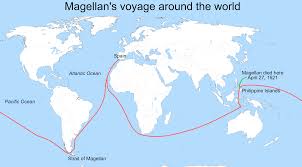
In my youth I thought often of going on quests. In school I loved to learn of the seafarers who cast off the mooring lines of their home port to seek out riches in foreign lands. Education in the fifties and sixties was all about studying heroes who cruised the oceans looking for new found lands where resources were just ripe for the taking. I loved looking at reproductions of the maps used and routes charted by Prince Henry the Navigator, Magellan, Vasco de Gama, Drake and Cook. Textbooks of my time as a student contained scant information regarding the indigenous folk whose presence would be dismissed by these European explorers, as one might swat a bug while sipping Pina coladas at poolside.

We only learned about the upside to adventuring in history. Kings and Popes suggested that our Earth and Seas were a place to play, to conquer, to dominate. The world was ours for the taking and if anyone else was on the beach when we landed they’d better step aside unless they wanted to be part of the servant class within our colony. White English folk were good at this questing for things that already were part of another’s culture. But the swarthy Portuguese and Spanish had their say in their day. French and Dutch also sought the resources of distant lands without questioning whether the indigenous had an opinion. Early Norse folk were romanticized as Vikings in tales of discovery but their questing objective was also narrow; land was the prize! Those inhabitants with foreign coloured skin were merely chattel to be enslaved.

The fictional character Don Quixote as written by Miguel de Cervantes went on a quest; an impossible dream to right the wrongs of man. I feel his mission was more about searching for his inner compass than vanquishing evil but the idea may be the same. Watching a documentary on rock climber and media sensation Sasha DiGiulian made me wonder what motivates some folk to do risky things. Questers have always desired to be the first, the fastest or the most innovative. Creatives also can be defined as testing the boundaries of mental and physical forms.

I hope all my grandkids become adventurers. I want them to be brave and explore the limits of their world, perhaps expanding the realms of existence for all humankind. When I was a teacher I used to love it when one of my students discovered a fresh way of thinking or doing or being. Questing can be a wondrous pastime. Life is about finding a place for yourself, not a specific geographical location or a plot of land, but discovering your unique purpose.
Re: Mission

“Your mission, should you choose to accept it.” Says the self-destructing audio tape given to agent Jim Phelps at the beginning of the television show, Mission Impossible. https://www.youtube.com/watch?v=0TiqXFssKMY. It was one of my favourite shows as a kid. I loved all things relating to adventure. I loved drawing detailed maps in elementary school of early explorers: Magellan, Vasco de Gama, Shackleton, Cook. I remember being fascinated by the twin tales of Stanley and Livingston: Reporter Henry Stanley was sent on a mission by his newspaper, The New York Herald in 1871, to find the presumed missing missionary David Livingston.

In the Kama Sutra of sexual positions, ‘missionary style’ (male dominant facing female) is reported to have been promoted by white African missionaries as the acceptable way for natives to procreate. This sexual act offers the promise of creation; a mission by two people to provide an individual to further the continuation of humanity. A lofty mission that has had many motives and several potential outcomes.

Most corporations, of the business sort, have well defined mission statements. The intention of the mission mantra is to focus investor imagination and provide a set of achievable goals. I worked with school principals in the eighties when societal managers were hungry to adopt a business model of operations. We were advised to see an educated student as our product so therefore could create a mission document focussed on that outcome. I fear our children’s education will become even more like an assembly line process as we move ever closer to the merging of biology with AI technology

During my career, I met many colleagues who considered education as their mission in life. For me, however, my job was not the singularity of my life. I would never have referred to my work in schools as a calling. Some people do seem born to do what they do. Recent films about Fred Rogers suggest that his teaching about love and acceptance rose to the level of a mission. In the final scene of A Beautiful Day in the Neighbourhood, Mr. Rogers is shown at a piano while other crew members of his children’s show are packing up to go home, their job finished.

Missionaries bring a message to the world. Their prophet-like work needs support and accommodation from the rest of us. Many individuals throughout history have been heralded as innovators; their missions lauded yet doomed to fail when public opinion has swung the other way. I don’t believe that any individual with a creative vision can succeed alone. I’ve been supported when I’ve had an idea. I suspect those who support great leaders feel their role is to enable the mission: They become Sanchos to their Don Quixottes.

A timeless film, The Mission, tells the story of several characters on personal, political, military, corporate and religious quests in eighteenth century South America. Their chosen missions come into serious conflict. They discover for themselves how missions are huge burdens that come at great cost. https://www.youtube.com/watch?v=Ui91q7Y9xPk