Re: Art

Re: Place

I think that education (formal or otherwise) has a primary purpose: To help us discover our Place in the world. This is vital to the creation of a fulfilling life.

There are examples in history where this idea of finding one’s Place can be manipulated by leaders of companies or governments who need classes of people in order to bring about their own vision. Japan once went to extremes by using training regimes with children in order to build a warrior class. Every country has educational training methods that indoctrinate individuals with the intention of building valuable citizens. Companies often require employees to loyally take certain tests so they can be placed in a productive position within the corporation. I personally find these methods of manufactured placement rather creepy. For example the hand placed over the heart while standing for the U.S. national anthem symbolizes loyalty to a national vision while reminding me of the raised hand of Hitler’s Nazi salute.

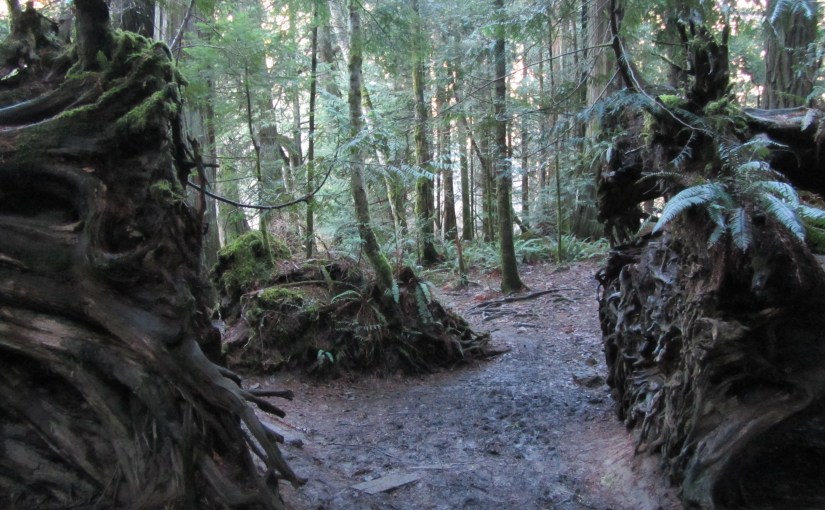
Finding our own place in society is an extension of familial roles. For example, we can start out being a son or aunt; a rigid place holder dictated by birth. Geography can be a factor in your place view almost by definition and time/space also has an impact. For example, at some points in my life I have identified with another time period, figuring I might have enjoyed a place beside Charles Darwin on the Beagle. Whenever I travel in the present, the time zone can make me lose my place as much as the country’s subway map or its language.

My place in my family was structured by my mother. My functions were clearly defined under the headings: son, brother, student, society member. She had role expectations. I rarely challenged my place in her world. I sought other places where I could experience change: First by going to university, marriage, moving for a job and a taking a chance to build my own family.

I ponder the nature of Place using a simple question, “Where do I fit in?” The talents I developed in my life have provided a sense of place and redefined how I interact with my family or the community. I have wondered, “Once I find where I am in this place how can I best enjoy life?” Most people don’t like to have this question come up too often. There are people who have never moved from their home town, always voted the same political party, never changed their job, or always bought the same products. There is satisfaction in knowing one’s place, so rarely is there a need to question your choices. In fact, to question your choices can be unsettling. While the risk may be worth it.

The search for one’s Place starts with an understanding of one’s self. It’s knowing how it feels when you ‘fit in’. It’s learning to recognize when you are ‘out of place’. Sometimes life is like being in a play. You wonder what your role is. Without a script your world tips. Suddenly you recognize your part.
All is well and the show goes on.

Re: Spectrum

In high school physics class I learned that light comes in a spectrum based on wavelength. Red has a longer wavelength than violet. Red is like soft, gentle swells while violet waves are the choppy ones. On a sunny day these visible electromagnetic waves come through the cut glass in my front door and spread the familiar colours red, orange, yellow, green, blue and violet in that order, over my entrance wall.

Spectrums can be found or made in our imagination. I find thinking of spectrums useful when I’m searching to understand the range of possibilities in my world. It’s fun to play the game: ’Where are You on the Spectrum?’ For example, with Point of View: Are you more a tree or a forest person? Socially: Are you Introvert or Extrovert? Risk: Averse or Bold? Energy: Mellow or High Strung? Most personality tests are based on determining the answers to questions like these, then sorted to find your ‘type’.

I suspect fewer people are at the edges of any spectrum you can dream up in this game of finding out. Most of us will have personal qualities or preferences that put us somewhere to the left or right of the mid point. That doesn’t necessarily make us dull, just balanced. But strangely, most of us get nervous when it comes to diversity within the spectrum of humanity. We like to have things all the same and we often attempt to keep the outliers in boxes of our creation.

I belong to some online survey groups. The opening questions are intended to sort me into categories. I find myself unable to answer some of these questions because, like most people, I don’t easily fit into a binary world. In the modern marketplace, companies would love to find out who we are on a spectrum. If corporations can determine your likes and dislikes then they can create an algorithm that can match you to one of their products. To me this is another example of profiling. Police departments have been accused of racial profiling as a way to narrow their arrest protocols and Big Business regularly tries to get a handle on their customers, so that they can get easier access to their wallets.

Recent Gay Pride events highlighted the spectral nature of sexuality. The rainbow is a fitting symbol as it suggests that humans, collectively and individually are varietal. On the sex spectrum I feel more masculine than feminine and I appreciate members of the gay community stepping up and out to remind me that we are all a blend of hormones and attitudes. We all need to feel free to express ourselves in ways trivial or universal. I like yelling at ball games as much as I do crying while watching musicals. I try to vote responsibly and I have marched in solidarity for causes that acknowledge diversity. I am grateful that I live in a society that recognizes the value of inclusion.

Many colours make up the light that streams through my window. That light animates all life.

Re: Retarded

There are some words that you are not supposed to say. Some are mildly frowned upon, while others are clearly restricted to just their first initial. These culturally unsanctioned words are found offensive for several reasons, the most powerful being that they can be used as a slur directed to intentionally hurt another human being.

I’ve used the word Retarded regularly. As a youngster it just flew from my mouth without thought, as an emotional indicator. Those were days when it seemed permissible to put down minorities, although recent events in the United States under President Trump suggest a return to these norms. Anyway, I remember getting a comedy book for Christmas as a nine year old that included in its title, ‘100 Newfie Jokes’. On a recent trip to Newfoundland I was surprised to see books like this in tourist shops. One was straightforwardly titled, ‘Newfie Joke Book’ and is available online with the subject matter promoted as being part of “our Canadian culture” and that Newfoundlanders have a “good hearted ability to laugh at themselves.” Really?

Back in 2011 two cast members Jane Lynch and Lauren Potter, of the television show ‘Glee’, ended a public service announcement titled ‘It’s Not Acceptable’ with a powerful appeal to end the use of the word Retarded and others that demean or degrade. (Youtube: https://www.youtube.com/watch?v=T549VoLca_Q )
In March 2018, Special Olympics Canada produced a dynamite ad about the abuse of this word to support a campaign on Twitter called #nogoodway.
(Youtube: https://www.youtube.com/watch?v=kcPv2Ruiuu4 )
And Netflix recently aired a special by comedian Hannah Gadsby called ‘Nanette’ that beautifully addresses the practice of put-downs in stand-up routines. She speaks with much grace about how she will no longer play along with this ethos. I can’t imagine her telling a Newfie joke or saying the word Retarded.

Why have I been reluctant to shed the word Retarded from my vocabulary? Maybe it’s because I feel strongly about censorship, but that’s no excuse. As a teacher of special needs children I often had the opportunity to be a cheerleader for those of differing abilities. A close colleague of mine bore a Down’s Syndrome child, whom I enjoyed watching grow into healthy adolescence. I used the television program, ‘Life Goes On’ as a parenting tool with my sons and Corky (actor Chris Burke) would come up in conversations around our dinner table.

My resistance to ending my relationship with this word has taken years of erosion. A cousin of mine once chastised me for using the word Retarded. At the time I didn’t want to follow her reasoning because I didn’t trust her opinion. I told her that she lacked a sense of humour and was being overly sensitive. I feel differently now.

I’ve been gradually persuaded that there is no good purpose to say the word Retarded. Thinking differently starts with changing one’s perspective. I am making a conscious effort to filter my thoughts more effectively to use a more appropriate word. I’m sorry it took me so long.

Re: Gratitude

There are many ways to show gratitude in our culture. My preference is to be direct, make eye contact and say, “Thank You!” To me, showing gratitude orally returns the favour immediately. Someone has provided me with something and I wish to return, in kind, by offering the gift of gratitude. I’ve found most people like being thanked while others are quick to fluff it off by saying things like “Not a Problem!” or “No Biggie!” I used to live in a francophone community and my “Merçi!” would often be greeted by “De Rien!” Somehow that has made my gratitude feel less meaningful. That dismissal of my thankfulness used to hurt until I heard their response as, “I like being able to help you.”

I don’t enjoy tipping, with money at least. Many countries consider it insulting to tip. I feel it is unfortunate that financing your gratitude has become so expected in our culture. That leaves a lot of people with less money, like me, with fewer acceptable options to show appreciation when dining out. If tipping is viewed broadly as a form of gratitude (like the old fashioned tipping of one’s hat) then I prefer to write a stellar Trip Advisor review of the restaurant or hotel. Smile if you will, but before the internet opened the door to online appreciation, I used to write letters of thanks to places or people who had provided me with service above and beyond the expected.

Linking Gratitude and Grace can be a topic you might hear when you visit a church. When I am in a state of grace, I can give and receive gratitude more easily. Grace is what I hear when someone says Shalom or Namaste. The film Avatar had its alien characters saying, “I see you.” When I can see another person for the things that make them unique, then I see them for their gifts rather than be fearful of how they might be different from me. When I can be truly grateful for their presence, not just for what they might provide me, then gratitude can inform my response to others. I can be grateful for everything, no matter how small or seemingly insignificant. There is a wholeness in giving and receiving, a deep understanding of each other’s importance in the universe. Grace makes us more grateful.

When the big world seems in a state of turmoil (and I feel I am spinning out of control as a result) I find it important to be grateful for things I too easily take for granted: fresh water (from my tap no less), electricity, well stocked food stores, reliable sources of information, restful sleep, clean air, companionship, help when needed.

My young sons used to laugh when I did a happy dance, saying, “Dad must be grateful.” I recall it was something I did first in imitation after watching the cartoon character Snoopy lightly skip about with ears flopping and nose reaching toward the sky.

I’m going to practise my happy dance more often.

Re: Parent

This word can be used in various places in a sentence and in public. Everyone has an opinion, whether they are a parent or not, about what constitutes good parenting. I have seen a lot of changes in people’s views of parenting during my lifetime. The proverbial pendulum has swung from letting your kids go free range to hovering and now there is a return to a more loosely guided parental approach based on reasoning that includes plenty of dialogue between the elder and the growing child.

Most people my age can tell tales of being out in the world at an early age. I lived my formative years in Scarborough, Ontario. From grade three onward I was what some have called a latch-key kid: Apartment door key tied to a shoelace around my neck, I left before eight in the morning to walk the two miles to school, making it safely back home in time for dinner. No, the journey wasn’t uphill both ways. On weekends I would play outside all day at a nearby urban creek until my dad would come calling for me. When I was nine I was allowed to go to the annual end of summer Toronto Exhibition for the first time on my own. Mom checked my wallet for bus tickets, free entry pass and a two dollar bill and some coins. She gave me a pat on the bum and told me the usual, “Be back before dark.”

In today’s culture, I wonder if my parents would be put on charges. I can say I felt they were both good parents. I can’t say my mom was a stellar role model (especially for my sister) but both she and my dad gave me the essentials. My mom had a ‘Do as I say, not as I do’ style of parenting and I generally obeyed whereas my sister used my mom’s contradictions and absences to full benefit. Both my parents worked (my dad had three jobs for a stretch) so I was often expected to be the guardian older brother to my only sibling. That role gave me parental insight, but mostly I felt saddled by unwanted responsibility at too young an age.

It’s commonly said there is no such thing as a ‘parental handbook’ and there is no sure way to predict if your particular parental approach is going to deliver the perfectly well adjusted child. Yet everyone seems to be watching and providing a critique on how you are doing.

I used to lead a series of parenting workshops with my late wife. First we were asked by other folk in our church congregation to play host to circle discussions on child rearing. Word spread of our apparent success as facilitators and soon we got a gig with the city to run a series of night classes. Our qualifications? Parenting three sons and having a willingness to learn with others.

Two of my sons now have babies. Time for me to watch and learn some more.

Re: Science

I was a science geek in high school. I loved the natural sciences in particular so I chose that stream of study that eventually gave me the prerequisites to attend university where I initially enrolled in a Marine Biology program. Jacques Cousteau was my idol during my teenaged years and I could think of no better goal in life than to sail the seven seas with him as my mentor.

I ended up being an elementary school teacher, but that is a story for another page. My early study and appreciation of Science, however, persists to this day. Science is my discipline, a way of seeing the world, a methodology and a category under which I can sort problems. It fits me.

The scientific method can be summarized as testing an idea, observing the results, drawing a conclusion based on those results and then allowing others to check those findings. Faith is not required, neither is hope, nor is belief. The experiment will either answer questions or not. This method doesn’t have to be applied in a lab setting, although it’s often easier to control the variables in that enclosed environment. I can relate to the character Data on Star Trek; The Next Generation when I am using Science to solve a problem in my life. I know I can come across as cold, even android, when I am being so Captain Obvious.

To some people Science is more like a religion. They might reference our current Global Warming crisis by saying, “Science will save us!” Scientists would reject this association, as the work of science is empirical; it must be tested and tested again. It is not something that you can believe in. Science is measurable and it can be frustrating when the data doesn’t make sense. There will always be inexplicable things in our world but I believe there is pleasure to be found in the search for truth. For example, we know that gravity is a fact: Isn’t that why we are careful, or thrilled, when we walk near a precipice?

Our chemical makeup is also obvious. Changes in our bodies are often the result of atoms and molecules behaving in response to certain external or internal forces. What we eat or drink affects us, how we move about, what we breathe and even how we sleep, affects our chemistry. We can take medicine to alleviate symptoms or do drugs to bring on a self imposed perceptual shift. Our chemistry doesn’t define us yet it certainly affects who we have become.

In a social setting, if you come across like Star Trek’s Spock you may not make many friends. Other imaginary humans like Sherlock Holmes become more relatable when you discover that they too can appreciate beauty and form bonds with other humans. In real life we are not scripted. The truth is, it’s not always easy to find balance before making a decision.

However, the artist and the scientist dwelling within us all, can create a beautiful dance. Maybe finding the right music is the problem!

Re: Massage

I like to massage my mind with quiet moments spent reading or writing. While the left side of my brain is digesting the vocabulary, the right side is creating wonderful pictures. These images in turn cross my midline and activate a basketful of homonyms, synonyms and antonyms. Crossword puzzles tease my cerebral cortex with clues that reveal facts and help me recall information that I thought was long gone.

A body massage can work in a similar way. When I get a massage I feel my cells communicate with each other. I think of the body as a whole world unto itself with transportation systems, electrical systems, support systems, security systems, waste management systems and communication systems. Your body, like the world, needs these systems to function effectively. The instant my massage therapist lays hands on me my cells become aware of each other and start processing shared knowledge. My toes are appreciated by my pelvic muscles and my ears are aware of vibrations in my intestinal tract. I see humour in this admission but the sense of oneness I feel is nonetheless profound.

I like the spelling of the word massage: It’s one letter away from message. Whether my brain or body is getting massaged, I am experiencing a state of inner communication. I am sending and receiving messages. Advertisers know this connection well and use it to sell products and/or ideas. “The medium is the message” is a phrase coined by Marshall McLuhan. I say the medium can also be a massage. We become vulnerable to suggestion and manipulation. We can be massaged into believing we need a product. We are sometimes manipulated to see a candidate in a certain way, to feel soothed by voting for someone based less on fact and more on promises.

Massage is often made fun of in the way that North Americans tend to be uncomfortable with any notion of touching. Massage is often associated with sexual experience rather than therapeutic practice. We live in a time when touch arouses suspicion. Boundaries are being declared. Consent is being redefined. Privacy issues are becoming more important as we acknowledge that almost everything in our life is being recorded. We are being massaged into believing that everything is going to be all right. Yet we have doubts. We wonder if we can trust others when we are not quiet sure if we can trust ourselves.

We need to be touched. Baby massage has been promoted for some time now as a way to help the infant relax and to strengthen the bond between parent and child. I remember how my dying mother responded to someone who massaged her head while cutting her hair. Humans respond instinctively to the warm message that a touch can provide. When I am being massaged by my trusted practitioner I can relax for a spell. In quiet contemplation I can focus on a few singular things and not run headlong into a future that is uncertain. My mind and body can feel in harmony.

Re: Escape

As a young boy I watched the film The Great Escape several times. I felt sadness when my favourite characters were recaptured, or worse, killed after they had executed such a magnificent plan to flee their prisoner of war camp. Taking inspiration, I once hastily plotted my own escape from parental tyranny. I stuffed an old Boy Scout rucksack with supplies and tiptoed to our apartment door only to be confronted by my mother standing with a bag of garbage in her arms. “I see you’re leaving,” she said. “Drop this down the furnace chute on the way out.” I walked to the end of the corridor, dumped the bag down to the incinerator and walked back home, head hanging, resigned to my fate. So much for that impulsive idea, I thought.

In the natural world escape is all about running away from predators. When you can’t fight, you must take flight or be eaten. Prey species are in a constant state of nervous tension, looking over their shoulders for the enemy, sniffing the air for signs of danger.

Yet fleeing isn’t always that dramatic. We can make a decision to ‘get away from it all’ by taking a vacation. Time or finances permitting, separating ourselves from regular routine can provide rest or a new perspective. We can return to our everyday lives refreshed. After retirement, I wanted to go on an adventure with my new bride. I felt like something or someplace was called for that stretched us both into a new day, so we planned an extended stay in New Zealand. For three months we were nomads, living out of a camper van leased from a company aptly named Escape Rentals. Leaving careers, family, friends and our sense of place behind was liberating and challenging.

Environmentally, economically and politically our home planet is challenged right now. Many are trying to hold it together by advocating for a healthier stewardship of the resources our Earth and its people can provide, while others are working on an escape clause: Habitation of space.
Some have even entered lotteries so that they can be the first to colonize Mars! These contestants may feel exhilarated by poetic concepts of escape, like those written by John Gillespie Magee Jr. in High Flight; “Oh! I have slipped the surly bonds of Earth…”

In my youth, I used to think space exploration was a continuation of humankind’s adventurous spirit. Now the cynic in me sees only corporations proving they are after the money to be gained from such ventures. I believe we’re being fed lies about the imminent possibility of human habitation of lifeless planets.

To live life we must have air, at the very least, yet some choose to stop breathing. Suicide is the ultimate escape. It is a cause of death that we are uncomfortable acknowledging; as individuals or as a society. When we hear of someone who has fled life we wonder why. Perhaps pondering those times when we, ourselves, have wished to escape, might provide enough insight to begin a conversation.

Re: Poignant

I love the sound of this word as I speak it.

For me it does not evoke sadness as much as curiosity. I have a strong sense of wonder about the world and our place in it. The word poignant suggests a duality; a bitter-sweet quality perhaps of the reality found in the passage of time. I can almost smell the emotion found in this word. It is the scent of an old homestead, a field at the end of summer, sunset on a beach.

To Kill A Mockingbird by Harper Lee is a story of poignancy. It is one of the few books that I have read more than once. I have watched the film of the same title starring Gregory Peck many times and each time I come away wondering about the yin and yang of life. Seen through the eyes of young Scout the world is a curious and wonderful place while under the protective embrace of her father Atticus Finch. Yet as the story unfolds there is a discomfiting feeling that makes one draw in the covers closer. I wonder can the light and the dark aspects of life co-exist in harmony. Do we need to see the dark before appreciating the light? Poignancy can bring me to a place emotionally where I feel I can clear my attic of stored up thoughts and feelings.

In the sixties there was a series on television called Mr. Novak. It was about a high school teacher played by James Franciscus. His character was an English/Drama educator, as I recall. During one of the episodes he gave his students an assignment to tell a story that would define the word pathos. One of his students wrote of her grandfather who was nearing the end of his life. In her story, she described him as a collector. Today we may conclude that he was a hoarder. When he died she found herself in his attic space, helping her parents sort through his stuff. She came across several large balls of twine that had been wound using knotted pieces of assorted string of variable length. Near this collection she found a shoe box filled with smaller bits of string. On the lid of the box, in careful printing, was the label, ‘Pieces too small to save’.
I remember weeping over this scene as I watched the program. It taught me, even at such an early age, of the power of drama and that there are two sides to this gold coin of life.

Some days, weather wise, the sky is a bright blue. But most days the sky is cloudy or overcast, maybe even looking poignant. When I was married to my bride on the beach of a Caribbean Island the sky was a creamy white colour. It was a moving ceremony and afterwards we lingered by the surf edge as a photographer recorded our bliss. We were touched by the circumstances that had brought us together.

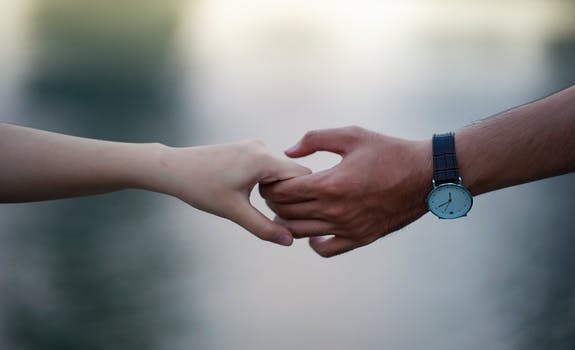
We reflected on the meaning of time, us two, holding hands, barefoot in the sand.

Re: Influence

Sometimes we have to wait until our funeral to find out if we have positively affected someone else’s life.

We like to think we have an influence on others but usually all we can hope for is a chance to submit input. I once heard someone say, “My authority ends at the tip of my nose”. I took that to mean he did not seek influence over others. I believe he was afraid that he might be perceived as manipulating. I can see that because I never wish to be coerced. I am often on my guard when it seems someone wants to sell me on their particular way of living. However, while we may not seek to be influenced or influential, it happens nonetheless. We reveal our desire to have input when we recommend a book, film or play. It’s not pushing your agenda when you offer a suggestion or preference. Our friends, family and fellow citizens take note of how we are in the community. Our behaviour can have a huge impact on their lives. We don’t have to be a person of high profile to recognize and value our own potential for influence.

Fictional characters can be influential. I find myself relating to the behaviours exhibited by Data and Spock in the Star Trek films. Which came first I wonder; me wanting to be like them or seeing myself in them? Our local library holds an annual Free Comic Book Day where young ones are invited to stop by the main branch where they can, among other things, get an autograph from one of several costumed superheroes. Influence is at work here as well as decisions regarding what to wear when Halloween rolls around.

A teacher colleague who had risen to become a Superintendent of Schools was asked if she thought anything had changed with her promotion. She said, “I have to be careful what I say now because everyone is listening.” This statement made me feel happy for her but at the same time sad for all those who have had an opinion, on anything, but did not get an audience for their view.

Sports figures are often quoted as saying they want to be a positive role model. I trust their intent, but some of that motivation may be due to keeping their eye on product endorsement contracts. Other brave souls who have stepped forward to bring awareness to a cause proclaim they can now be the voice for those who are disregarded. We live in community and that requires a recognition that others may have a different world view. We all have a voice that needs exposure. Waiting for the right opportunity can help. Having the courage and confidence to believe you have a part in this play of life, like none other, is a responsibility.

When I recognize that another has helped me see things differently I find a way to acknowledge that fact. That they had an influence on my life is something I need to reveal before they can no longer hear me.