Re: Story

I’m thrilled that my three grandchildren are being read stories to. I have yet to have that task assigned to me, what with COVID19 keeping my little ones from scrambling up on Grandpa’s lap. For now I have enjoyed the sight of them tumbling for access beside their parents while we long distance chat though the magic of the internet. The young ones’ smiles and squeaks of glee fill my ears and heart as cardboard pages are turned beyond the screen that separates us.

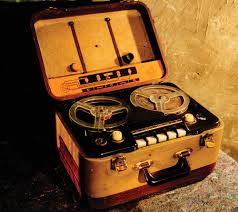
My father, who loved to create his own stories, once had to work night shift when my younger sister was in her prime bedtime story time. Unable to share tales with her to settle her to sleep, he crafted yarns on a reel to reel tape recorder. He left the cumbersome machine on a stool by her bed, asking me to press the start button. His voice would quickly work its magic spell on her anxious soul. Once down, she was a deep sleeper. I sometimes surrendered to sleep, as I sat on my bed nearby, only to be jolted awake by the flap, flap, flap of the tape’s end. 

Stories have always bound us together. Ancient ancestors recited tales around the campfire. Today we create blogs. When we travel and meet others we might share a meal together and ask, “So, what’s your story?” Our stories are our lives: Interpreted so that we may understand ourselves. Told, so that others may know us. The character Tyrion Lannister in this scene from The Game of Thrones speaks well of the power of stories. 

History is really a series of stories, retold, written down, debated and repeated. Unfortunately, men have generally been the arbiters of HIStory, with women’s roles often being left as footnotes. Societies are slowly coming to realize that the truths of our lives have only been half told and that HERStories cannot be left unrecorded. A woman is not the ‘better half’ of a partnership story anymore than her past can be lewdly considered ‘storied’ as in pulp fiction novels. All human beings contribute to the narrative that is OURStory.

When I witness a large crowd of people I’m overwhelmed by the thought of all those stories: Globally almost 8 billion! The story of one can seem as simple as choosing yes or no. Now I add an extra to my circle. Then I add those who are close to me, then those who I work with and others I’m only vaguely familiar with. Like rain drops on a quiet pond, I picture a vast collection of Venn diagrams; spaces where stories overlap, large arcs where stories are still unfolding, and along the edges there are stories I can only imagine. My story is only complete when it’s placed within the context of this vast community.

I don’t know how to comprehend the many stories of humanity but sometimes I have a Eureka moment when I experience poetry. https://www.youtube.com/watch?v=Ws5klxbI87I
Re: Chips

I’m always on the lookout for great fried potatoes. At least once a week my mom used to cook up a dangerous mess of chips in a stove top pot. She used lard which she kept in a container in the fridge. This fat was never thrown out to my knowledge; she clarified it regularly through a strainer, then cheesecloth. The hand cut potato slices were chilled in the fridge overnight then put in a wire basket which could be clipped to the side of the hot fatpot to drain. The chips were slippery with the oil and ever so tasty with salt, vinegar or ketchup.

When someone refers to fried potatoes as ‘fries’ I immediately think of the McDonald’s variety. However, they are not the ‘chips’ I remember from my childhood. Fast food fries are usually pasty, dry and unappetizing to me. They are probably a long way from the Belgian pommes de terre frites that WWI American soldiers were reported to love. I’ve ordered steak and frites in a fancy restaurant and was underwhelmed with that fried potato version. I’m particular about my chips.

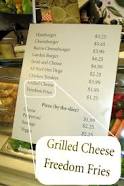
In 2003 there was an amusing international kerfuffle involving the term French fries. A politician in the United States named Bob Ney got himself in a knot over France not agreeing to the Iraq War and took exception to French fries being offered in his cafeteria so he had the item relabelled on the menu as ’Freedom fries’ to make a childish point. Mr. Ney is clearly an example of someone who might walk around with a chip on his shoulder. Here is Lera Boroditsky showing how language and this coined term was used to politicize the event. https://www.youtube.com/watch?v=YL8cZ6nmWPg .

What I love about the English language is the variety of ways I can use the same word. Wood chips don’t elicit a watery mouth (except perhaps if you are a beaver) yet those kind of chips conjure a smell of resin and the damp basement where my father would create carvings out of pine logs. I’d like to say I’m a chip off the old block but I don’t carve or make potato chips. I content myself with ordering the popular side dish when I’m checking out a dining spot. It’s hard to not think about chips, and get a craving, because the word is used in so many ways. Children of my generation laughed at the adventures of Chip&Dale. https://www.youtube.com/watch?v=wlmdWP0Y8e4 . Go to a casino and you need a supply of chips. Better keep a chipper attitude because your friends might accuse you of being too ‘chippy’. I try not to let what others think of me to get me down so I just let the chips fall where they may. I even had a childhood friend whose nickname was Chip.

The frequent use of the word chip, in many contexts, makes me hungry. Lately I’ve found the best chips from food trucks, but they’ll never match the batch from me mum’s fryer.

Re: Work

Work is forever in a state of flux. In the past three hundred years we’ve gone from farming/market communities, through industrialization, to the technological revolution and now the gig economy with the challenges of AI on the horizon. In the past a boy might only follow in his father’s footsteps, career wise, or he might pursue a calling and enter a religious order. Girls were further restricted in occupational choice. For some a life’s work is one of service with little or no remuneration, other’s may pursue professions that provide financial rewards.

I viewed my work as a teacher as employment that enabled me to have job satisfaction, a wage that afforded me a comfortable living as well as time for my family. This workable arrangement allowed me what is now commonly referred to as Work/Life balance. I rarely thought of my work as a chore, more like a practice that I continually improved upon. I knew some colleagues and friends whom I would call workaholics. Any workplace can have those types who seem to be singularly focussed on pleasing the boss, getting it perfect, climbing the ladder, making money or retiring early. I was never wanting to sacrifice my home time in the name of professional ambition.

Life at home was not without its work component. My partner at the time revelled in being called a homemaker, a position without pay but one of considerable value. It was easy for me to contribute to the home-work since she had managed the job so well. Working from home means something different today, but my jobs back then were helping to raise three boys, being a home handyman, and chipping in on daily household chores. This may sound like Leave It To Beaver, https://www.youtube.com/watch?v=sgtiPOk83Ek . I would say all five of us had a very solid working relationship. As my lads got older, they found their way to contribute to the labour that is necessary within a family environment.

The COVID-19 pandemic is giving the world pause to rethink its cultures of work and play. I was amazed at my ignorance regarding a news bite from Northern Italy where people in a certain village were always without a regular paying job. The reporter referred to this arrangement as ‘informal work’. With the coronavirus lockdown they could no longer go about their town and scrounge for temporary tasks to provide cash, as was their custom. Would we all not feel safer as a society if governments could recognize the value of a guaranteed income? I feel lucky everyday for the pension my career has provided.

With my working life behind me I can play. I sometimes need a guide. My grandchildren wake each day knowing how to play naturally. They step from their beds and explore their world without inhibition. Their bodies move almost continuously. As they absorb their surroundings each touch and sniff brings them awareness and learning. Their young minds work intuitively at building relationships between their inner and outer environment. Work & Play in harmony.

Re: Price

During the sixties, my parents scrambled to make ends meet. The price of everything made everything priced just out of their reach. I would help my mother with the weekly chore of coupon cutting. The clipped ads would be arranged in an envelope according to shopping aisle. This package was presented to the check-out lady along with the cash from my dad’s pay envelope. My parents were too random to keep a budget so their mantra was simply, ‘Go Easy’. We rented an apartment, bought our car on time, took out loans for Christmas and a week of summer vacation. Bills piled up, most were paid. We did things when the price was right or if Mom had had enough penny pinching.

And Mom knew her prices. She once appeared on a local TV timed grocery dash in a neighbourhood food store winning a shopping cart load of meat and non-perishables. She rarely missed the television show, ‘The Price is Right’, once applying to be on as a contestant. I guess she got good at price guessing from all the catalogues she would thumb through with a far away look in her eyes.

We were brought up in a lower class environment, my sister and I, but some of our experiences were hard to put a price on. My father had an art book collection. Each volume contained pictures of beautiful works of art. From them I learned the difference between pricey and priceless. When my folks weren’t working, they spent time with us. Some of my fondest memories are around the kitchen table working on a school assignment, my mom chatting away with a pair scissors in her hand and my dad suggesting edits for my narrative. In a subliminal way, I was learning that there is the difference between price, worth, cost and value.

While watching gangster movies I also learned the notion, ‘everyone has a price’ or be careful not to ‘price yourself out of the market’ or even more sinister, ‘there’ll be a price to pay!’ Outside of this black market bargaining hopefully we can determine our own value and be safe in any transaction. Like it or not though, we sell ourselves everyday. Our body, our organs, our skills, our education all have a value and we can trade that value for a price, paid by some individual or some corporation who wants us. Hopefully we don’t sell ourselves short.

Chemically, our bodies (our ashes really) after death, are currently valued at approximately $160. Apparently most of that price comes from potassium. So unless you have some gold fillings or precious metal implants you are not worth much dead. All the more reason to regularly consider your worth when you are alive.

The price of stuff can’t be only consumer demand. Works of art are considered priceless yet fetch millions. Housing has become unaffordable for many. Cost and price are distractingly manipulated. Wealth is the new religion. I dream of a world where we get what we deserve not what we pay for.

Re: Motive

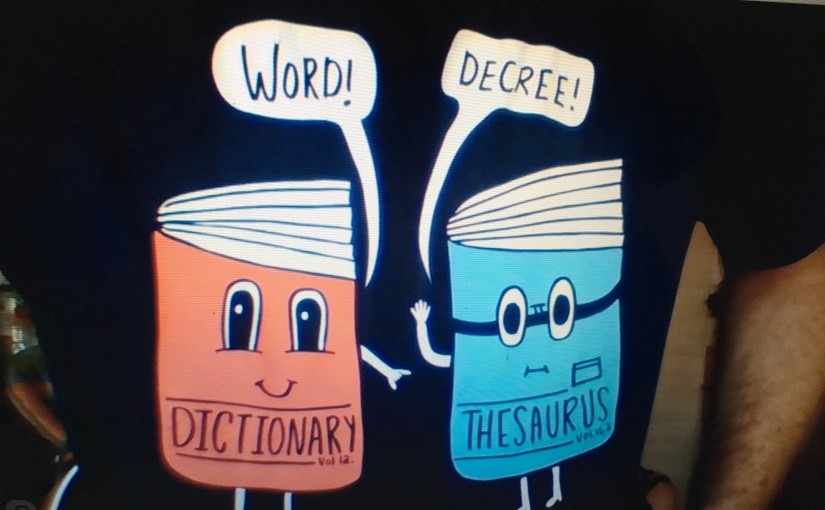
Motive is a cool word that can grow with the addition of syllables. Motive, a noun, can blossom into Motivate, a verb, then growing again to Motivation to become Motivational. It’s fun to see how flexible a word can be with a prefix or suffix. Like LEGO but with letters! So many different permutations eh?

My mother used to work for a busy private detective in Toronto. She picked up on some of the undercover language at the time; “That sounds like their MO. Just give me the facts. I wonder what their motive is.” It was one of many reasons I felt fear and love for my mom. She would often use her training and natural instinct to find out a reason behind my sister’s or my misbehaviour. We resented it. “You don’t know me!” I can still hear my sister yell after being accused, analyzed and sentenced almost in a single breath by our mother in a rush of anger. I’ve long past given up trying to sleuth out someone’s motive for a particular behaviour.

If we work at it we can come to know ourselves. I’ve concluded my own prime motivators are Fear and Love. Burrowing down into those two headings I find I can relate all my motivation to either Waste, Cost or Loss. Fearful mode is not where I wish to spend a lot of my time, yet fear of losing things makes me put things away carefully and therefore like all OCD individuals I get joy, pleasure, even loving feelings when I have ordered my world.

Some motivational speakers are making money helping us reduce, or cope with loss. FOMO (fear of missing out) is an acronym I just recently learned. If you feel FOMO you may become motivated to be involved. You might be worried about your time being squandered. No one wants to lose time when there is only one lifetime to live. When I graduated from University I was strongly motivated to get a job. I had met a woman I wanted to start having kids with and that was going to cost money, lots of it. Once I got a job I enjoyed the paycheques. I loved earning money and supporting my growing family. In the early days of employment I was fearful that I would lose my job.

Lately it’s Waste that has become a motivating force in my life. I’m motivated out of love for the planet to use less, waste less and make my efforts more kind, more respectful. I make servers in restaurants smile when I ask for a doggy bag. I used to do that because of the money I had spent, now it’s more about the thought of food being thrown out that motivates my request. Cost doesn’t urge me to action like it once did; I feel confident I can get by. I’ve seen and felt the loss of loved ones and precious things so I am less motivated to worry about this inevitability.

Perhaps wasting less can become a more universal motive for saving our precious planet. We can always hope.

Re: Sandbox

For part of my childhood I lived with my parents and sister in a small two bedroom apartment. I spent a lot of time outside. In winter I would pretend to be Ernest Shackleton trekking across the vastness of Antarctica. In summer I would kill ants in the community rock garden or hang out at the large sandbox nearby.

With just two Dinky cars and a few plastic army men, I could occupy myself for hours sitting in that pile of sand. There were often several children playing in this simple rectangular structure. As I remember the apartment’s sandbox had four partially buried perimeter walls made of 2X10 lumber. Each corner was topped with a small triangle of plywood providing support for the structure and handy as a seat. To have a corner spot was a coveted position in what I came to learn as the hierarchy of the sandbox.

First child to arrive could claim a corner seat. If a parent came with their child, the adult got a seat. The centre of the sandbox usually had a small hill that kids who liked to play together occupied. If a parent was present things were quiet and order existed. I clearly recall being banished from the sandbox one day because I loudly said that a new kid had ‘big ears’ before realizing her mother was sitting nearby.

Without an adult, any group larger than two children required negotiations. Lines were drawn in the sand. What was learned in the sandbox never just stayed in the sandbox because the lessons remained with you for a lifetime. Allies were made. Bullies had to be dealt with. I learned kindness when someone uncovered one of my favourite Tonka trucks which I thought I had lost forever. I learned to share space with complete strangers. When no one was around I learned how to enjoy my own company.

When I bought my first house and was expecting my second child, I built a sandbox in anticipation. I chose a square shape to suggest the closeness I wished for my children. My wife insisted that I make a cover for it so that the neighbour’s cat wouldn’t think it was for his use only. I made the corner triangles a bit larger than I remembered to better accommodate my larger size. I loaded beach sand, which I raided from a nearby lake, into the back of my Chevy Blazer, making several trips before I was satisfied I had enough for my boys’ sandbox.

I became the father of three boys who, like their dad, learned how to take care of their toys, look after each other, use their imagination and value time alone. Eventually they helped me add to their backyard play area by constructing a ramshackle collection of wood bits, bicycle parts and lengths of rope they called ‘The Climbing Thing’. Jumping off the top of the structure into the soft security of the sandbox became their funnest activity.

Re: Stubborn

This word’s structure is smile worthy. Two syllables; stub and born. In a quick dictionary search I found the word is listed as having no origin. I take this to mean that someone blindly made it up during a swearing tirade after having born the pain of a stubbed toe. Anyways, that’s what I would go with, if it came up while playing Balderdash.

I’m a person who admires perseverance, the sweet cousin of stubbornness, even if I lack it in some situations. I once quit a Bronze Level Red Cross swimming program after the first session. I neither had the mental stick-to-it-ness nor the physical stamina required to be a life guard-in-training. An Olympic level athlete has to be gold medal stubborn. Just like striving for the podium however, an unbending position comes at a cost, or at least a consequence. I try to take my time developing an opinion. Once it is set in stone it’s more difficult to retract. Most often in a conflict of interest situation, when my idea isn’t part of the groupthink, I will retreat and find my own ship to captain. Passive/aggressive stubbornness?

The value of stubbornness and its costs is depicted well in the film, ‘Sometimes a Great Notion’. Here, a hard scrabble west coast family owns a logging operation during a state wide strike. In a gasping portrayal of our environmental times we see several scenes of the rape of the planet for profit. Lives are altered, even extinguished in the dogged quest to fulfill a contract. The family motto is; “Never Give a (sic) Inch”. There is added tension when the prodigal son, a hippy, returns home. We watch and wonder if he will bring change. Alas he joins the foolishness of exploitation. The final scene gives us a literal middle finger from the patriarchal arm raised as the family’s tugboat pulls logs to market. The human multitude, following on the banks of the river, only shout and wave their fists at the injustice. I saw a parallel to today’s industrial titans, continuing their wasteful and polluting ways in the name of profit, stubbornly never giving an inch.

Being bull headed or stubborn as a mule can make you as immovable as a rock. Yet a rock can be covered in Rock,Paper,Scissors. A rock can erode over time. A rock can even be sold as a pet. To some, stubbornness is a manly virtue, where you stand tall, face to the wind, unbending until you crack, never backing down. https://www.youtube.com/watch?v=nvlTJrNJ5lA

Being a stubborn force in the world can make you an oak, a rock, an island or a wall. There’s unfairness here in amongst the stubborn, foolish pride of going it alone. The barriers you put up may close in on you as readily as they keep others out. Paradoxically, in my own stubbornness, I feel the greatest need to touch and be touched. https://www.youtube.com/watch?v=JKlSVNxLB-A

Re: Excuse

English language words can be hard to teach. Some words may be spelled the same yet have different meanings depending on pronunciation. Take Excuse for example: I may be excused for certain behaviour yet I may decide to make no excuses. In the former there is the Canadian zed sound for the letter s and in the latter Excuse you hear the es sound clearly.

The mental shift that comes about as one hears the word in context can be confusing for an ESL student. I somewhat shamefully admit that the challenges inherent in learning another language frighten me. My other excuse, lame though it may be, is that I am lazy. Language, of course, is more than just vocabulary. Language is a force in communicating culture.

When I was growing up it would be pretty common for someone to say, ‘Excuse my French’. Maybe this xenophobic phrase is still used as someone’s less than polite way of excusing the four letter swear word that had just come out of their mouth. When we endeavour to excuse ourselves it is a way to rationalize our way of thinking and/or to seek forgiveness. There are some among us who would never consider the need to make an excuse, much less an apology. The current President of the United States, Donald Trump, is a daily example of inexcusable behaviour. He once infamously said, “I could stand in the middle of Fifth Avenue and shoot somebody and I wouldn’t lose any voters”. Many would say he is just speaking his mind. But that, in itself, is another excuse.

Dinnertime, when I was a young father, was pretty formal (for the mores of the 1980’s anyway). We observed as much as possible the 50’s Canadian tradition of all gathering around the table for a meal and conversation. Our excuse was that my wife and I wanted to hang on to customs that we thought were important for raising children. As my boys got older I remember giving permission for them to leave the table if they had finished and had an important place to go by saying, “You’re excused.” I wonder if anyone says that anymore. Reading this over makes me sound so nineteenth century!

Canadians are often dubbed as being over-the-top polite. We are branded as always saying such things as ‘excuse me’ in front of almost anything: Is that seat taken? Are you reading that? Would you pass the salt? I was here first! Often we ask, in our embarrassment, to be excused for sneezes, farts or burps. I haven’t met too many Canadians who wish to make excuses for poor behaviour. Generally we try to own up to our mistakes.

“Excuses, Excuses.” Would be an admonishment from one of my teachers for not following through on a project. If I failed to live up to my parents expectations I would be asked, “What’s your excuse?” My childhood explanations would rarely pass muster. In those cases, I was likely excused to go to my room.

Re: Thought

Choosing a name for a newborn takes a lot of thought. You are considering family tradition, links to ancestors and meaning. You want the name to stand for something, maybe even be an influence on your child’s behaviour. I heard a story once that some North American indigenous tribes wait until their young ones have developed a personality before using that information to guide them to the best name.

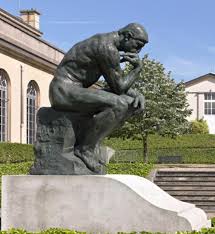
I’ve often wondered if we grow into the name given us or does our name actually determine who we become. Chicken or egg? If I had a child now I think I would use Keagan (somewhat gender neutral). It is Irish for Thinker. If a name makes the person then I would like my son or daughter to be thoughtful. I would like them to aspire to grow up to be one of the world’s great thinkers: another Plato, Da Vinci, Galileo, Darwin, Einstein, Hawking. Philosophy, at its heart, is the science of thinking and I think the world is in need of more philosophers right now.

Ideology has been given a bad name. Ideologists are considered to be rigid and narrow minded. Ideology has merged with dogma or doctrine and in the minds of many the term suggests a political platform. Too bad really, because if philosophy is all about thinking then ideology is more rightfully described as the science of ideas. And what’s not to like about ideas?

My father loved ideas and one of the most fun things we would do together was play variations of “What if?”. Nothing was out of bounds in this game of suppose. My dad encouraged me to think for myself in an imaginative way. He loved reading to me excerpts from Plato’s Republic. Looking back, I imagine myself as Aristotle on my father’s Plato-like lap. He would often remind me by words and action of Socrates, the founder of Philosophy who suggested that; “The unexamined life is not worth living.”

Parallel to this thought based strategy of child rearing, my more practical mom would be forever watchful to see if I was using me noggin. One of the worst things I could do as a child, in my mom’s eyes, would be a result of a thoughtless action. “What were you thinking?” I can still hear her saying as she rained disappointment down on me. If she caught me in the process of carrying out something suspicious she might warn/advise/rebuke, “If that’s your plan, then you’ve got another think coming.” Building yet another layer of responsibility onto the skin of her son, my mom would insist that whatever I intended; “It must be the thought that counts.”

I maintain that erring on the side of sharing a thought is my best bet. Yet sometimes it is wise to keep a thought to myself at least until I’ve had those all important second thoughts. I believe thinking before an event creates well conceived plans. Sharing my thoughts with someone is the greatest gift I can give. Only listening ranks higher as an offering.

Re: Birthday

Since I don’t like drawing attention to myself, I’m bashful about my birthday. How I feel about my age has nothing to do with the annual day, although I do appreciate the reminder of these milestones of life. The actual day when we are born is so momentous that it does deserve a retelling in whatever context.

Recently I became a grandparent for a third time. This birth had the usual moments of concern, drama and anxiety, all in the context of love. There were hospital worries and some recovery is required. Friends of the parents, two sets of grandparents, co-workers and many acquaintances all were involved in some way as the ripple effect of a new life spread. This little guy had to elbow his way into the world and that may become the favourite anecdote to his life as his future unfolds. Life is about the stories we tell and a birthday is one of the building blocks to our understanding of ourselves.

To me a Birthday after the actual day of birth is really an anniversary. Being an introvert, I prefer to have quiet time to reflect, revisit and categorize my life journey. Sometimes I don’t want to celebrate each of my years on one specific day. I like the silliness portrayed by the Mad Hatter in the Disney animated production of Alice in Wonderland. He’s on to something when he declares that every day NOT a birthday can be called an ’Unbirthday’. I like the notion that each day can be recognized for what it can bring and is just as important as the next in one’s development towards becoming human. https://www.youtube.com/watch?v=RdsZT7WKjW8

Our traditions of cake, balloons and birthday greetings are sometimes a distraction from the significance of one’s birth. I can’t begin to understand all of the forces at work to bring a human baby into the world. So many things can go wrong and so much can go right. A lot of effort is put in, just to get the newborn to its first official Birthday. Hurray! You are one year old!
People gather to mark that first event in what often strikes me as a comical time, since the one year old person can’t possibly take in what is going on.
But hey! It’s a party!

I travelled to see my newest grandchild and coincidentally spent time with my mother in law who had just turned 90! It was a time spectral visit! One life begun and another nearing its end. A ninety year span covering so many historical events made my mind spin. In many ways my special mother is exhibiting signs of returning to her youthful roots of expression. She insisted on ice cream for her birthday celebration and she shouted,‘Tada!’with arms held aloft, after successfully stepping off the city bus near her apartment after her party.

Time is precious. Our lives are precious. Each day is special; from birth to beyond. https://www.youtube.com/watch?v=GibiNy4d4gc