Re: Owl

The owl has several attributes that show up in my personality. Firstly, the animal’s patience is astounding. I’ve seen one in a tree, shoulders hunched up, barely moving, perched on a branch waiting, waiting, and waiting some more. Their feathers are so soft looking, almost furry, and patterned to make themselves blend into their surroundings. Owls are the quietest birds, with wings specially designed to make almost no sound so that wary mice don’t even know they’re around until it’s too late. Owls seem secretive to me. All knowing! They aren’t for show. They mean business, have places to go, and a need to survive.

When I was an elementary school teacher, I would often discuss animals to start the children on a creative train of thought. A simple question like, “If you could be another creature, which would you be?” might occupy an entire afternoon of discussion, art, and even environmental studies. In those days I refused to choose my own kinship animal, because I felt connected to so many interesting species who share the planet with me. Disney films and author A.A. Milne probably directed my lasting amusement with owls. I can relate to Winnie the Pooh’s friend Owl when he pontificates and, also, when he goofs by spelling his own name as Wol!

I chose a coded version of the word Owl for my social media avatar name, wh0n0z, which graphically shows two owl-like eyes. I like the immediate reference to intelligence (folks can be know-it-alls and still err in judgement). Also implied with this pseudonym is the shrugging attitude of ‘Who really knows eh?’ (an introvert’s go-to). Or, more aggressively, “I’m slightly bored so leave me alone.” Owl people may get a bad rep for being picky, having their head in the clouds or appearing seriously snobbish. I think of my owl persona as though it were a horoscope sign. Owls are curious. Ergo, my favourite question is How, which is a delightful anagram of Who, which is the sound that owls in cartoons make.

Even a wise old owl like me can show contradictions. When I served on several organizational Boards I used to be called a stealth director because I preferred to be quietly working behind the scenes, making contacts and connections that may have been considered controversial. You see I didn’t want to draw early attention to myself until the cat was in the bag (or the mouse was in my beak, so to speak).

The cliché for the owl archetype was probably set in ancient Grecian times since the goddess Athena advertised the Value of Wisdom. She even had a pet owl. In the 1981 film Clash of the Titans, Perseus is assisted by a mechanized version of Athena’s owl named Bubo. This FX creature was actually an animatron that didn’t always work convincingly in its scenes with the real life actors. And its name suggests something clownish, which is great if you consider that no one’s character can be one dimensional. In other words; A bird is more than just feathers.

Re: Coat

My dad owned a heavy dark camel hair overcoat when I was a teenager. During those times of pride and prejudice, he cut an impressive figure. He once came to give me a message while I was in the school cafeteria. My friends murmured, as adolescents do, when he walked towards me looking very official. To this day, I regret feeling embarrassed by his presence; when I chose to exchange only the necessary few words of acknowledgement with a man deserving of the distinguished aura he created. 

Reality can’t be disguised with a metaphorical coat of paint. But we try don’t we, with the things we go into debt buying, with the ways we choose to adorn ourselves, with the people we fawn over while ignoring those who matter most. Charades. Facades. A bit of bunting might hide the pretence. What we wear is still considered an indicator of ascendence. The clothes still denote the wealth of the man/woman who wears them. We all strive for and feel we deserve our own coat of many colours.

There was a folky English tradition amongst my parent’s generation to acquire a family Coat of Arms. You would send your last name and any details you could remember of your ancestors to some company. Weeks later you would receive a fancy printing of a heraldic emblem befitting your royal station. We four Thompsons of Canada, newly immigrated from the mother country, were distinctly lower class. Any chance to raise our status, to coat us with a veneer of respectability, was a challenge to be accepted. My dad accomplished this by behaving in the ways of a kind British Gentleman. My mother sought to climb the social ladder in ways that made me doubt her sincerity and question her motivation. 

These two hosted many parties. When my sister and I were young we lived in a small two bedroom apartment where our folks found space to entertain hoards of scary adults in various states of revelry. The noise would keep us awake, so we would wander between the legs of dancers in the living room. We might venture onto the balcony to find people kissing or saluting the moon. We saw frowns, heard swears, and recognized tears from the serious ones talking dramatically in the kitchen. My sister had the ability to fall asleep curled between guests on the couch. I would venture wearily down the narrow hallway to find my parents’ bed, covered with a mound of coats. Predictably, in the absence of adequate closet space, coats were tossed here at the moment of greeting. Fur coats, trench coats, leather jackets, satiny shoulder wraps, knitted, woven, quilted and stitched items smelling of tobacco, perfume and sweat, all flung in a heap and mysteriously reclaimed at the end of a night’s celebrations. I would squirrel my way into this fragrant mass of fabric escaping the mayhem while finding comfort in the arms, collars, buttons, pockets and belts. I would wake in my bunk next morning wondering of the magic of adulthood.

Re: Anecdote

My dad was a great story teller. It took patience to listen to his picturesque anecdotes about his day at work, his thoughts on clover, his belief that we all mattered. He rarely repeated a story. Each new day brought new material for him to wonder over. Each tale was embellished beyond practicality. For my father, the act of storytelling was the most important thing. He once held my sister and me captive as he dramatized his amazement over the amount of condensation he had had to wipe from a bathroom window after he had taken a shower.

His presence in my life was undervalued when I was young. His legacy remains however, as I have recorded that joy of the awesomeness of life by journaling. I have kept anecdotal thoughts on the events of my life in diaries, on note pads, in newspaper columns and internet blogs. I’m not alone, nor unique really, since anecdotes are the history of humankind.

Society can dismiss information that comes from others as not being accurate or not science based. Yet we do love to gossip. Often evidence in a trial is invalidated if it is anecdotal but get a large enough group to say they believe in something then fiction becomes truth. Old wives have been shamed for hundreds of years just because their tales were considered suspiciously held. Stories that are passed down from one generation to another may lack documentation but that doesn’t necessarily make them untrue. An oral history can indeed be worthy of note.

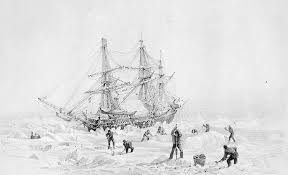
Indigenous peoples of the world have taught us colonizers that stories from our elders can be genuine. We can trust what our mom or dad or grandparents tell us. Take the recent discovery of the two ships from the Franklin expedition in 1813 as an example of the value of anecdotal evidence. Searches using various scientific methods were conducted on many occasions but it wasn’t until oral heritage descriptions from Inuit stories were analyzed that the search narrowed to the location of discovery. Now the area is a Parks Canada Historic sight.

https://www.pc.gc.ca/en/lhn-nhs/nu/epaveswrecks

Speaking or writing anecdotally is sort of an analogue version of history. We may not need to gather around the tribal campfire anymore but family gatherings always enable experiences to be shared in an informal way. At the family level or nationally this is heritage talk. Inevitably there are paper trails to be followed when one is researching antiquity. There are legal documents, court reports, death notices, registries of births. The pages will sit in some file, or listed in a computer data base, maybe even laminated and framed for posterity.  My eldest son is a historian. He does painstaking research through various archival sources but the final product he creates reads like one of my dad’s stories.

Tales of where we have come from or who we were can act as a guide for us to discover our own lost wrecks.