Re: Television

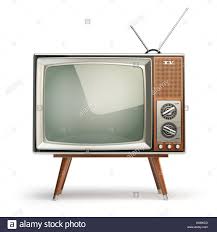
I think many people my age can say their childhood was influenced by what they saw and heard on television. For several hours before and after school the characters I watched on that old TV set provided childcare and I did feel nurtured by them all: Captain Kangaroo, Mr. Green Jeans, The Friendly Giant, Romper Room’s Miss Molly, Buffalo Bob. They were as real to me as if they lived down the dirt road I walked to get to school. Combined, they were like a third parent; offering advice, a quiet moment together. They gave me ideas to explore when I was out on my own.

As I got older I would plan my after school time with the scheduling calendar in the mini magazine, TV Guide. The white lettering on a square TV screen of their logo became as familiar to me as the CocaCola brand. I studied the pages each week using a pen to circle my favourite shows. I read insider info about the actors and learned about things like ‘Prime Time’ and ‘Soap Operas’. I remember one September when the networks were announcing their Fall lineup I pounced on that Preview edition, cutting and pasting the show titles onto a Bristol board display for a grade five art assignment. I was just approaching adolescence when NBC announced that they were programming a new space series. I’ll fully admit to the state of my pubescent hormones at that moment by declaring orgasmically that Star Trek was the seminal TV program of my life.

Who would think that a telecommunication device would offer so much enjoyment to the viewer; young and old alike. The four years leading up to my mom’s death in a nursing home included regular doses of programming through the Turner Classic Movie channel. In conversations about the films she viewed, it was clear the plot had become melded with her own life memories. Some at the extended care facility even suggested that TV watching was becoming too intense for my mother and therefore ill advised.

Such comments reminded me of the early days of television when it was forecast that viewing could not take place too close to the set, or too much viewing would dull the mind or distort your perceptions of the real world. Parents often questioned me about the advisability of television quality and quantity for their children during parent/teacher nights. Many were shocked that I allowed my own children to watch The Simpsons. My view has always been less about censorship and more about using whatever is televised as an opportunity for discussion. I would teach my children the difference between watching Television and watching a Program. If I felt suspicious of the content of an episode or series I would ask that I be allowed to join them in the viewing.

It is safe to say that television has contributed to my development just as novels have done to previous generations. The characters and incidents I have witnessed on the smaller screen have made a lasting impression and continue to inform my being.

Re: Disruption

Most people can handle being interrupted. Perhaps you’re a shift worker trying to sleep and a neighbour starts mowing the lawn. You’re on the freeway and your progress is interrupted by some construction. Disruption, however, is another matter. It means your world is turned upside down and will never be the same. We have been faced with this disorientation for several decades as the world of politics, communication, finance, transportation and commerce appear to be working to a different beat, perhaps even a different standard.

Trump was voted in because he promised to “drain the swamp”. As a disruptive force he has few peers. In my lifetime I have no one to compare to his total disrespect for convention. His campaign slogan ‘Make America Great Again’ can be ironic in this context. Comfort can be found in old ways of doing things, even when it’s not healthy. I don’t think of myself as an old fogey, prone to complaining about the way things used to be. I can embrace change and enjoy looking towards the future with hope not trepidation. I think most people can handle change well, especially if they are invited to be part of the change process.

Change makers were once referred to as innovators. Existing technology or infrastructure was modified, not razed. A societal advancement or some new product became brighter, faster, stronger, longer lasting but not foreign to our senses. Now change can be so dramatic it startles. No human cashiers at the 24hr store, what are you talking about? A phone that can take a picture, are you nuts? A transport truck without a driver, are you kidding me? Paying to sleep in someone’s house, you’re joking right? I text for transport to the airport and my neighbour arrives, for a fee, it’s Uber easy! Yet, when the motivation behind disruption appears to be all about the money, cynicism grows while the potential enthusiasm for something new diminishes.

Disruption is like exponential change, like having a baby, like a forest fire that clears acreage making way for fresh growth. Disruption can be beneficial. It can be revolutionary! Yet too much fire can seem apocalyptic, immobilizing and devastating. With manufactured change, those born before this new millennium knew another way, so some of us may feel out of touch.

Power comes from feeling part of the revolution. Hope is knowing in our hearts and minds that things will work out eventually. Humour allows us to all catch a breath from the stress of it all. Poetry has always been a people’s choice and voice when times get messy. I like to be silly with my poems so I’m going to be disruptive and suggest a whole new literary genre: Non-Fiction Poetry. In our present push to challenge existing structures, we must not lose sight of facts. So my poems will be purely factual; not opinions, neither musings nor reflections. Joe Friday used to say: https://www.youtube.com/watch?v=v4LPkmGO5Cc

Here’s my first, titled, “100%”.

A slice of pie
Is 100%
Pie.