Re: Freak

My intention with this blog is to puzzle through, while writing, what a word signifies to me. As I get feedback I’m finding I’m not alone in being confused by the different interpretations of a word. I find it interesting how some words produce an emotional reaction. These triggers can send our thoughts rushing to unintended conclusions. We lose sight of the original intent of the conversation and dialogue ceases to be productive.

I sent a Twitter message recently, saying that I was ‘freaking out’ about an upcoming event. It was interpreted in a negative way. Often, that is the way it is for me: I find myself exclaiming (out of wonder or joy) and someone is always there trying to explain my wonderment as a way to cover for me. I suspect some fail to understand why anyone could just be enthusiastic about things. I get that context matters, but funny why we so often jump to the negative connotation as a matter of course.

A headline in my city’s newspaper described our Prime Minister as ‘Freaking Out’ over a heckler’s comments at a political event. Watching the video clip in question I didn’t find that he behaved extraordinarily freaky but he was sure passionate about his desire for an inclusive immigration policy.

Everyone can name some classic bad words that we are taught not to use. Usually they have a racial, religious or body part implication. For example the N-word is clearly a mistake racially speaking. The C-word is particularly disturbing to women. In Quebec I wouldn’t use the T-word. Even in our progressive age it’s considered impolite to drop the F-bomb.

I taught a student whose surname was Freak. She never got teased about her name that I was ever aware of during her time in my classroom. It would be great to ask her about her perception of this word now that she has grown. A male named Richard must guard the long form of his name carefully as the shortened version is cringeworthy. As with any word, particularly if it’s your name, you must make amends with yourself. Any perception of our difference is often considered freakish, yet we all have oddities within us. I tend to like the freaky part of me even though I am shy to show it. This positive value of respecting diversity is a regular theme in the Arts. Two examples:
On Broadway; Shrek, The Musical https://www.youtube.com/watch?v=nSDetuag6zU
On Vinyl; CSN&Y ‘Deja Vu’ https://www.youtube.com/watch?v=4Lk2KHajp4Y

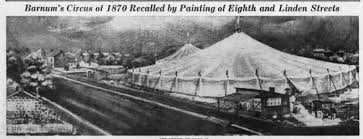
I’m old enough to have gone to a circus to see odd people. One of my favourite movie musicals of late is The Greatest Showman. P.T. Barnum hires “freaks” to be put on display to a paying audience. https://www.youtube.com/watch?v=CjxugyZCfuw

The characters in this film found a common connection and some felt that within the circus they had a place they could finally call home.

Embracing our freakiness might actually save us.

Re: Generosity

In the column of values that define me, Generosity is low on the list. I can be very selfish when it comes to my material possessions: My belongings are just that, my belongings. I think of my house the same way I think of my clothes: I wouldn’t want anyone to put their hands in my pockets. It’s almost a question of privacy. I like to provide for people when they are my guests, but I can’t seem to use the phrase ‘make yourself at home’. I do envy those with such big hearts they can shout, “Mi Casa Su Casa”. These folk likely believe that what you give comes back to you. And I believe that too. However, being an introvert by nature also makes me timid about opening wide too many doors at once.

I’ve been told I am a good host. I’m attentive and often a good listener.
My dad taught me that the best thing you can do for someone is to make them feel they are special. When someone is in my company I try to keep the focus on them. I’d actually call myself bashful if the focus turns to me so I’m more comfortable asking questions that lead to storytelling.

I once got an evil eye for commenting about a heaping plate of salad, “That’s a generous helping you have there”. I can certainly be generous with my opinions. I try to appreciate that being opinionated can be construed as being judgemental yet I so often find that life is just such a big, sometimes overwhelming, bag of curiosities. I don’t have the time or desire to proclaim judgement, just to comment.

I wonder if one can be generous in receiving? If so then I can do that. I think that’s what makes me a great audience member. I have the utmost respect for performance, which is in itself, an act of giving generously. I get such a thrill after a show, if I can speak to the artist personally about what their effort has meant to me. Certainly I am one who is generous with praise. Some would say lavish and others might say I am too gushy. No matter, my generosity extends to cheering on my fellow citizens whenever I see the merit, and I refuse to hold back. Those who are willing to make themselves seen; either in politics, sport, art or as a citizen concerned with justice, deserve to be acknowledged for their effort and leadership. I do not wish to wait to sing someone’s praises after their death.

One of the quickest ways to feel a part of a new community is to volunteer. Giving generously of your time and talent gives a boost to you and others. Since retiring I have found great value in volunteering. I have enjoyed working in this way with several groups who have shown respect for my generosity by inviting me into their special world. This in turn has made my world larger and more beautiful than I ever could have imagined.

Re: Condition

My mother set conditions for me. She left me chores to be completed before she got home from work. The moment I got home from school it was a race to avoid a confrontation. If the tasks weren’t done she would deliver a cold shoulder that felt like a biblical shunning.

Consequently, as an adult, I think of conditions as a way to avoid consequences. When I set a condition for myself then I feel I’ve prepared the way for fewer avoidable consequences. For example when I ride my motor scooter I have a sensible condition that I can’t ride unless I wear my helmet. I’d love to not wear my helmet for the feeling of the wind in my hair. However the consequence of me not wearing my helmet is painfully obvious. Similarly, I see what the weather conditions are like before I plan what to wear. The activity I choose to do in my day is conditional on my state of health or mood. Determining what condition your condition is in might be a good start to everyday. https://www.youtube.com/watch?v=Gfa6umSlR8A

When I became a parent of young children the rules (conditions) I set for them were all about avoiding the probability of consequences. Those rules were not always about safety. For example, when they were old enough to have an allowance, this payment was conditional on an amount set aside for giving to others and saving for a rainy day. When they grew older there was an expectation that they would contribute to the family well being by helping out around the house. At one point when they were all teens, I wrote a ‘family manifesto’ and taped it to their bedroom doors. It outlined the conditions of residence (open to further discussion) that could be considered ground rules to avoid conflict.

I guess it’s clear I don’t believe unconditional love exists for me. Certainly I would never set conditions for loving a baby and I know most societies hold unconditional love as inviolate. But really? Don’t we set conditions for our romantic partners, our elders in nursing care, our preschoolers, our spouses, our pet, our bank advisor? My love is too valuable not to set conditions, for myself or for others.

Conditions are a part of love. I may be disappointed in others, as they may be with me. It doesn’t stop me from setting conditions, at least in my head. I value contribution as well as love. They are both part of the condition of our existence. Everyone is unique and we all have a responsibility to share our talents.

If unconditional love does exist it was practised humbly and consistently by Fred Rogers. On television and real life his message was simple: He told children he loved them just the way they were.

Some suggested this credo takes away the need for individual effort. Nonsense! Love is a powerful thing and is conditional for the building of responsible human beings.

Re: Matter

The study of physics tells us that Matter is what makes the universe and all things in it, including us. The atomic particles that were first born of the Big Bang are part of our being.

We are made of matter yet how do we decide what matters to us? That comes from an examination of our values. What we care about and who we care for is fundamental to our existence. I have a need to understand what matters in the present context and then I set about prioritizing things accordingly.

What matters to you is totally up to you. It may relate to what you decide to eat, to wear, to read, to say, to own, to binge watch, or to march for. You can hand over this task to governments, to churches, to teachers or to neighbours but until you make your values matter to you personally you might find your self adrift in uncertainty. Determining what matters is what creates the uniqueness that is you.

My late wife took several courses on Philosophy and each time she came back from a lecture at the university where we met, she swore she was going to live the way she had just been taught. She had seen the light. She was raised in a church going family. Her religious convictions sometimes coincided and sometimes conflicted with her intellectual nature. We had some great discussions. From the content of her classes and these debates we drew closer to a philosophy of life that was consistent with our unity as a couple. We made plans using these discovered values to embark on the adventures of life.

Matter’s opposite is anti-matter. Does that fact suggest that, philosophically, everything matters and nothing matters concurrently? I’ve enjoyed examining the yin/yang nature of life. There are a lot of isms to ponder. Existentialism, we exist but why? Nihilism is too pessimistic for me. I have spent way too much time in my life trying to answer the why questions. I prefer now to seek out the how of living. That puts me leaning more towards a Zen way of thinking, if I am correct in that interpretation. I want to be more presently focussed so that I can understand what matters now.

The song Bohemian Rhapsody by poet Freddy Mercury, has meant different things to me since I first heard it. I often hum the ‘nothing really matters’ part to myself when I have no control over a situation. It helps me to detach from any outcome. Head banging aside, I find peace.

I wish to resist labels for myself and others. If you build your self concept by picking and choosing from the philosophical tree, so be it! That doesn’t make you wishy washy. More likely you will feel well rounded, not boxed in by a particular way. I don’t believe anyone has found THE WAY.

Being devoted to the creation that is you is not selfishness. You are showing respect for what matters.