Re: Resistance

Tales of the resistance movement during WWII continue to fascinate me. Such bravery from those Partisans I can only imagine. They chose to move in the space between compliance and defiance. They were examples of people devoted to helping themselves and others overcome tyranny. Throughout the world in modern times there continue to be regimes/policies/governments/corporations that challenge us to choose between acceptance or rejection.

Resistance may be underground, subtle or go unnoticed, yet it is not a form of giving up. To resist is to take purposeful action. In human behaviour I see a Resister as someone who chooses to actively refuse something that doesn’t hold true to their value system. In electrical circuitry, a Resistor is a device that controls the flow. I find it curious how those two words, for only the difference of a vowel, can be similar in concept.

Consider for a moment that a Resistor’s unit of measure is an Ohm. Another Om is considered by Buddhists to be the first sound. I have often used that sound to control my anxiety. When I chant using that word I feel grounded and my thoughts cease to speed in whirlwinds about my head. In that moment of meditation I am a Resister and a Resistor, holding thoughts at arm’s length so that I can interpret them more clearly.

I met a Resister the other day at the grocery store where I shop. We were both in a line to have our purchases scanned by a clerk. We chatted about voluntarily waiting when we could have checked out faster by stepping one aisle over to scan our items via a robot cashier. We agreed that AI was taking over the world and we were determined to resist.

Cliches are worthy of resistance. I appreciate that a commonly used term may be easier to say while engaging in small talk, however a serious discussion deserves a more careful choice of words. For example, a well known celebrity recently announced his terminal cancer and was quoted as saying, “I’ll fight this.” Cancer talk is often filled with warlike terms. I find it upsetting that if the patient doesn’t want to fight the disease they are somehow deemed to be giving up on life. My late wife chose to resist the pull of death after her diagnosis by filling each day with amusements. June Callwood, a noted Canadian author, who died of cancer in 2007, resisted the common call to ‘fight on’ by refusing treatment for her disease. Her wonderfully watchable interview on CBC television aired mere weeks before her death is a testament to the term ‘dying with dignity’. https://www.youtube.com/watch?v=Duif0tGZ4pc

When it comes to death, to quote from The Borg in the Star Trek universe, “Resistance is futile” https://www.youtube.com/watch?v=rtEaR1JU-ps . The irony, perhaps, is that resistance can sometimes empower us to be an active participant of change. To rebel or to acquiesce may not be options. Resistance may be the middle ground where we can assert our unique individuality.

Re: Polyglot

Some words are so weird you don’t know what you are hearing. When I first heard this one I thought someone had made it up just to be funny. And silly is my favourite style of humour. In the tradition of the party game Balderdash, let’s do some guessing. Polyglot is: A) a rare breed of goat, B) a bunch of discarded plastic, or C) someone who knows three or more languages. Who knew that C was the right answer? I didn’t when it first came to my attention so I did some research and voila!

To my ears Polyglot still sounds like something you might read in a Dr. Seuss children’s book. That aside, I have an enormous amount of respect for someone who has mastered a poly amount of anything. I may aspire to the notion of being a Jack of All Trades, but that generally signifies I’m a master of none.
A dentist I saw for regular checkups told me all about his life while I was wired, probed, drilled, filled and/or dental dammed. My teeth may be in good shape but I couldn’t help but feel diminished by this one man’s list of supplementary skills acquired over his lifetime; Orchestral Trombonist, Black Belt Karate, World Bridge Federation Member. Not to mention, he was also a Polyglot; fluent in Polish, German and English.

Hanging out with members of my home town symphony orchestra made me very aware of people who exist in a multi-hyphenate world. Many of these highly talented individuals work as doctors, lawyers, accountants or professors during the day and compose or interpret music in their off hours. As a teacher I was familiar with research that suggests there are many examples of areas where a crossover of skills is complementary and not necessarily layered. The music-math crossover is often touted as an example in people who may be considered of genius intellect. Einstein comes quickly to mind, yet so does Steve Martin the comedian/banjo picker/writer/director/actor/producer/magician.
Is Mr. Martin a genius or a polymath? Phewff! Take a bow already.

I enjoy watching artists challenge themselves in different media or venues. You must have talent to skip around artistic disciplines for sure. You also have to make the time to do it. Imagine being able to say you have won an Emmy, Grammy, Oscar and Tony award. Only fifteen multitalented artists have been able to accomplish that laudable goal. As of the posting of this blog page the following are in the esteemed EGOT Club: Richard Rogers, Helen Hayes, Rita Moreno, John Gielgud, Audrey Hepburn, Marvin Hamlisch, Jonathan Tucker, Mel Brooks, Mike Nichols, Whoopi Goldberg, Scott Rudin, Robert Lopez, Andrew Lloyd Webber, John Legend, Tim Rice.

Someone once flattered me by calling me a Renaissance Man. That compliment as much as I loved the taste of it, made me embarrassed. If I cut out television, reading the newspaper, tweeting about stuff and staring lazily out the window I may discover the time I need to be better. Another Leonardo Da Vinci, I’m not.

Re: Resilience

If I am resilient I can survive change. I may not completely bounce back from the trauma nor will I necessarily become stronger simply by dodging a proverbial bullet. My experiences may make me better able to cope the next time a challenge arises. Trouble is, there may be enough difference in the new situation as to make my response difficult. I must rely on my belief that, given time and adequate support, things will get better.

One of the best things teachers, parents and coaches help us discover is our personal resilience. I can credit my years as a Boy Scout with teaching me a lot about resilience. I was instructed to hope for the best and prepare for the worst, to seek shelter when confronted with a storm, and to try one more time. I remember one portage in particular during a canoe trip through Algonquin Provincial Park. I had felt a head cold starting the morning of the third day into the trip. The paddling part was a blessing as the breeze cooled the fever my body was developing. Once out on the land and weighed down by packsack and canoe the going got tough. Biting insects could not be swatted and our path was through boot sucking mud. Each step was agony. I was young and wanted to cry. I faltered briefly and looked up as my Akela now stood near me. Quietly he asked, “Can you go to the next tree?” I repositioned my load and said yes I could. He walked beside me until the tree and said, “Can you make it to the next hill?” Somehow I could and just past the hill was the location of our camp for the night.

I recall having my meal that night in one metal bowl; a ground beef mixture, cookies and chocolate pudding. I tagged out of the next activity to get some rest in my tent, quickly falling asleep. Much to my surprise, my Sixer came to wake me for Mug-Up. My body still aching, I was persuaded by this familiar before-bedtime tradition of a warming tin mug of hot chocolate, so I rallied myself. The next morning I felt like I could canoe forever, no matter what might lay ahead on the trail. I was a modern day voyageur. I was invincible!

A resilient attitude is elastic. It bends like the marsh reed to the wind’s insistence. Rigidity can cause us to snap under pressure. Sometimes we can only respond to the change that blows our way. Other times we can make a change that will bring us closer to who we want to be. We can build resilience in mind, body and spirit by being watchful for opportunities that test us to be better.

What Akela had taught me that day was that I had more resilience than I ever imagined. By shrinking my goal I could continue. By sometimes taking baby steps I wasn’t diminishing myself. By trying one-more-time I found I could discover something new about the person I was becoming.

Re: Television

I think many people my age can say their childhood was influenced by what they saw and heard on television. For several hours before and after school the characters I watched on that old TV set provided childcare and I did feel nurtured by them all: Captain Kangaroo, Mr. Green Jeans, The Friendly Giant, Romper Room’s Miss Molly, Buffalo Bob. They were as real to me as if they lived down the dirt road I walked to get to school. Combined, they were like a third parent; offering advice, a quiet moment together. They gave me ideas to explore when I was out on my own.

As I got older I would plan my after school time with the scheduling calendar in the mini magazine, TV Guide. The white lettering on a square TV screen of their logo became as familiar to me as the CocaCola brand. I studied the pages each week using a pen to circle my favourite shows. I read insider info about the actors and learned about things like ‘Prime Time’ and ‘Soap Operas’. I remember one September when the networks were announcing their Fall lineup I pounced on that Preview edition, cutting and pasting the show titles onto a Bristol board display for a grade five art assignment. I was just approaching adolescence when NBC announced that they were programming a new space series. I’ll fully admit to the state of my pubescent hormones at that moment by declaring orgasmically that Star Trek was the seminal TV program of my life.

Who would think that a telecommunication device would offer so much enjoyment to the viewer; young and old alike. The four years leading up to my mom’s death in a nursing home included regular doses of programming through the Turner Classic Movie channel. In conversations about the films she viewed, it was clear the plot had become melded with her own life memories. Some at the extended care facility even suggested that TV watching was becoming too intense for my mother and therefore ill advised.

Such comments reminded me of the early days of television when it was forecast that viewing could not take place too close to the set, or too much viewing would dull the mind or distort your perceptions of the real world. Parents often questioned me about the advisability of television quality and quantity for their children during parent/teacher nights. Many were shocked that I allowed my own children to watch The Simpsons. My view has always been less about censorship and more about using whatever is televised as an opportunity for discussion. I would teach my children the difference between watching Television and watching a Program. If I felt suspicious of the content of an episode or series I would ask that I be allowed to join them in the viewing.

It is safe to say that television has contributed to my development just as novels have done to previous generations. The characters and incidents I have witnessed on the smaller screen have made a lasting impression and continue to inform my being.

Re: Recognize

A former girlfriend of mine, after several months of cohabitation, recognized that she had been in love with the idea of me, not the real, flawed person who stood before her. That act of recognizing the truth set us both free to move on from a relationship that had become difficult. It can take a hard look in the mirror to re-establish what we know about ourselves. Sometimes we count on another to reveal what we fail to see.

Knowing myself is very important to me. Self-Cognition and Re-Cognition have been ways I have checked in on myself since my adolescent years. I was a geeky introvert in my teens, often taking myself off to ponder things by a nearby creek. That shifting body of water gave me sound solace when things were puzzling me. I could dramatize further and say I gazed into those waters looking for the reflection of the real me and that might be a step too far, even though I did watch a lot of television drama in those days. That creek was a sanctuary where time, and space alone, allowed me to keep track.

When I have let my emotions take over me and my temper gets lost, I do not like who I am. In those heated situations someone might say to me, in words or facial expression, “Who are you?” At those times I feel wretched, less than, and very contrite. It takes time to rebuild the person I thought I was after such a loss of self. For me, even a few moments of self-reflection can make the restorative difference. Sometimes I have sought out others to verify that I have not changed, just experienced a speed bump of growth. The benefit others can bring to the situation may be no more than an assurance that everything will be okay. That sounds so wonderful to hear.

These others we turn to, may be those through whom we recognize ourselves. These people aren’t necessarily our family. They have traits that remind us of who we’d like to be and we adopt them, in a way, because then we can associate with a collective of similar thoughts and attitudes. Birds of a feather do indeed flock together. They become our clan or tribe. They become as familiar as family portraits in our hallways. They provide a picture that is not unlike a mirror, revealing the truth as well as triggering memories that ground us.

Sometimes I have been so lost that finding myself has taken a military style reconnaissance. Regular re-con missions are easier, keeping me abreast of changes and quickly calling me to account. The best thing I can bring to any relationship is the gift of me. Personal knowledge is powerful because it brings clarity and a map into the following day. I can rely on others for guidance, yet most of the time I navigate the various challenges of life whilst on my own recognizance.

Knowing I am bound by myself means I must respond when summoned.

Re: Enthusiasm

At this stage of my existence I refer to myself as a witness. I enjoy being that fly on the wall. It’s a safe vantage point, less messy than open engagement on the field of life. I show my enthusiasm for this role by sharing my opinions in a cheerleading fashion. There is a lot of the Rah, Rah in me still.

My enthusiastic side comes out at surprising moments. I once started exclaiming excitedly over a colourful bird while attending a lesson for a summer job. The instructor of the youth assembled gave me a disdainful look, saying dismissively that there were lots of that species in the area. Another time as a young father I rallied my son to hurry and see ‘the coolest car’ that had just parked near a store my wife was taking us to. My poor little guy got troubled when his mother didn’t share my interest and proceeded with her shopping, leaving our son not knowing where his loyalties should lie.

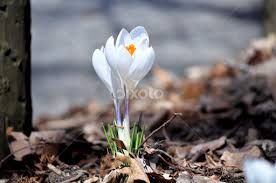
It’s a treat to see others go public with their enthusiasm. I once happened upon a colleague, new to our city, scampering about unashamedly in a small park within a busy intersection. She was fascinated to find cherry blossoms in the tree above her head and crocus bulbs bursting through green grass. This, on a February day while the rest of the country was still gripped in an icy grasp. I felt her joy.

Hope springing eternal will make me enthuse over what I’m seeing. First moments, signs of promise, a young person earnestly playing a musical instrument or actors skillfully inhabiting their characters may bring tears of rapture. My eagerness sometimes comes in a rush of emotion that can be startling. A few bars of music may stimulate me to remember a time gone by and I’ll want to share the memory with someone, anyone, and right now!

Based on these occasional inspired outbursts I might think of myself as an Enthusiast. What an exulted title! It would be fun to be introduced as such with appropriate fanfare at the entrance to a black tie event. Enthusiast implies you might be an expert in your chosen field or have exceptional talent, neither of which would be true for me. I know a few people who might be deemed bird enthusiasts, jogging enthusiasts or film enthusiasts. When I was a boy I maintained a stamp collection that earned me a scouting badge but like the character in the film Adaptation, I lost interest. https://www.youtube.com/watch?v=y410SQD2mz8

Thing is, my rhapsodies come in spurts. My passions never last long enough to acquire sporting trophies, fitness goals, artistic excellence or any sort of public acclaim. I just love feeling enthused, however long it lasts.

That’s the heart of the word for me: Enthusiasm is an expression of my love.

Re: Settle

I settle into my favourite chair as I write this. I like the fact that I chose to settle in this part of the world. My journey, both geographical and metaphorical, was not unlike the first western white folk who settled into their covered wagons to look for newness in a promising land. I wasn’t nearly as bold as the First Peoples who ventured across the Bering Straight either, but I like to think I share their curiosity.

Sediment settles to the bottom through a fluid. That’s a movement that is the result of gravity not of willpower. And that may be why the notion of settling has gotten such a bad rap. I could have had that job, relationship, friend, pet, apartment, lifestyle or meal but I settled for this one instead. The implication is that you took the lazy way out and ended up with something less. Yet those people who seek out a new place to live or think, do so for very definite reasons. It’s a very willful decision to leave what you know for the risk of the unknown. To find a new place to settle requires a gravitas that only comes when options are weighed and hope is filed for another day.

I remember a discussion with my parents regarding my decision to marry. My mother and father had different questions to ask. I brought them comfort with my answers. I felt they basically wanted to know if I was going to find comfort with the woman I had chosen to be my wife. Comfort, security, love, promise, and the idea that I was going to settle down didn’t sound boring to me; it sounded like heaven. I clearly remember my mother rising from the discussion table with resolve, declaring, “That’s settled then.”

Settlements come in all forms and figurations. They can involve formal contracts or the wink of an eye, they can be held in a moment or transcend lifetimes. They can include a subtle willingness to go along for now, or acknowledge a deep acceptance of something that will never change.

The other day after a meal at a restaurant I asked the waiter, “Can I settle the bill please?” My wife always teases me about my formal nature and even this archaic phrase, slipping out of my mouth so fluidly, surprised me. After the meal is eaten, after the words have been spoken, when the party is over, there is an accounting that must take place. Ultimately, things must be settled before a decision to move on can be made.

Sometimes it feels that we are weighed down so much by our grief or our wishful thinking, that sinking to the bottom is guaranteed. Yet a person is not a speck of sediment. We are a complex mix of our past, with desires for the future, trying to make something of our present. We are dealing with daily memories of loss while maintaining a confidence that we can continue to make valid, positive decisions.

Despite the fact of gravity, I believe we can always choose to boldly go.

Re: Satisfaction

When do you feel satisfied? Some people are never satisfied. Wow! How terrible that must be. The only Rolling Stones song that I ever really liked was ‘Satisfaction’. It may be no accident that this song is the second most covered title in history. https://www.youtube.com/watch?v=nrIPxlFzDi0

Can you live with a normal level of satisfaction? I used to feel content as a teen if two out of four aspects on my life score card were judged by me to be satisfying. School life? Check. Part time work? Check. Family? Not so much, grounded this week. Social life? Disabled due to previous aspect.
I got a natural high when all four entries on my life score were not just ticked but starred! If I let that level of feeling pleased with myself become noticeable, I would soon have hell to pay from my mom who would tell me to wipe that smug look off my face. “Pride cometh before a fall” she stated, leaving me realizing that my brief record of 4 checks on my life score card was now reduced to three. This quirky version of ‘Satisfaction’ seems appropriate to my angst filled teen years. https://www.youtube.com/watch?v=jadvt7CbH1o

The kid in me feels dissatisfied when I can’t get my way. The adult has to intervene in such situations, hopefully before I cross my arms and stamp my feet. We like to get what we want, when and how we want it. But that selfish sentiment, over time and if our adult selves don’t speak up, can lead to a sense of entitlement. This unsatisfied sense and the sense of outrage, are two senses best muted for our own social development and the happiness of those around us. At some point we must learn that we can’t have everything. The world can only be our oyster until we find a foul one; if that makes any sense.

It’s true that when we lack satiation, we feel disappointment. I count myself lucky when I feel satiated. In my childhood, after Halloween night, it was never difficult for me to put away the candy, while my sister ate herself sick. I don’t relate this in a smug, or self-satisfied way, just as fact. Much later, when it was clear my sister was an alcoholic, I wondered if there was a connection between slowness to feel satiated and addiction. If you can’t get no satisfaction or if it doesn’t come quickly enough, do you double down and risk everything to find it?

Coming to grips with getting a satisfactory grade in school, being a satisfactory player on a team, having a satisfying relationship or satisfactorily accomplishing any task will help us to not feel down about life or about ourselves. We can sing the blues on occasion and then we must get up and move on. https://www.youtube.com/watch?v=H9NijFed0dI

Oh! But the times I have sung out my dissatisfaction, like this, in a long hot shower. https://www.youtube.com/watch?v=HRve0Nh9_uE

Re: Relate

Learning how to relate to another person is tough. We can be advised to ‘walk a mile in their shoes’ or be asked the question; “How would you feel if they were you?” We have to be open to the idea that we are not the only person in the world. We must learn that others may have a different view yet still require our respect.

This learning about relationships takes time and can be distorted by conflicting messages or misguided influence. In my growing up time I learned early to question my mother and follow my father. These two dominant relatives were responsible for helping me decide the kind of person I wanted to be. I would often avoid my mom because of her inconsistencies. Her standard instruction to me was, “Do as I say, not as I do.” Whereas my father, man of few words, would lead by quiet example. I learned by watching his response to the world’s pressures.

It was easy to relate to my father. I watched what he stood for in life. He was good at relating aspects of his life journey through story. I adopted some of his philosophies of life into the pattern that was to become me. Relatively speaking I have found it easier to relate to one of my sons over the other two. It’s not a question of picking favourites. It has more to do with recognizing life style and the behavioural choices that go along with daily living. It’s also not about judgement, since my relationships with my sons requires a recognition of time and place factors. It may be easier to relate when a son is doing it my way (the familiar way) yet I’ve come to enjoy being introduced to other, equally satisfying, solutions to problems. I enjoy opportunities to update our relationship within current contexts so I can rediscover my sons. I hope I continue to be relatable to them.

My first wife instituted a bedtime prayer with our wee sons that ended with, “God Bless Mommy, Daddy and all our friends and relatives near and far away.” She was a fan of A.A. Milne and may have formed her opinions of the value of honouring friends and relatives from one of his books. https://www.youtube.com/watch?v=gkr4E1Q1Dds

Relating to relatives isn’t easy. In-laws get the brunt of relationship jokes mainly because they lack history with us. Gatherings can quickly become shouting matches because, without a sufficiently long context, we have fewer ways to counter thoughts of ‘How can you think like that?’ or ‘You just don’t get me.’

There are ways we can make ourselves more relatable. Being consistent in our behaviour can be a start for people to recognize the patterns within us. Allowing someone else to know through our words that we have experienced some of the same life adventures can help open the door to a relationship. Until you hear the multitude of life stories you can’t really grasp the reality of all things being relative.

Re: Map

Through my grade school years I did my homework on a desk that had a world map on its top surface. Oh the dreaming I did, the places where I vowed I would travel, the adventures I would have while trekking from country to country.

Last week I was at a symphony concert when, to my amazement moments before the maestro was about to appear, a woman took a folding paper map out of her purse to show her friend where they were going next. I’m not the only one to whom paper maps matter. Indeed there are reports that cartographers are still in need to create that tangible passport to adventure.
https://www.theguardian.com/travel/2019/jan/08/off-the-chart-the-big-comeback-of-paper-maps-stanfords-print-any-map?

My wife presented me with a small world atlas after I complained that the hotel we stayed at had a Bible in the bedside drawer, but no book of maps. A planner like me enjoys mapping things out before venturing into the great beyond. Maps provide a great visual for the places I’d still like to explore, if not in reality then at least in my imagination. That grand desk map of my youth gave me all I needed to picture a train trip across the vastness of the U.S.S.R. or a sailing adventure to the Galapagos Islands or an exploration of the icy realm of Antarctica.

These days, both Google Maps and GPS systems are helpful as long as the power is on and you can remain plugged in. I like to check a photo or video map on my device so I can have a virtual view of the area where I’m intending to visit. I get the sense of already being there (which mystics will tell you is 90% of the trip). My son once gifted me with a TomTom directional device for my car. It made some trips easier, however I wish the automated voice would congratulate me, just once, for making a correct turn.

Natural world maps have rivers, mountains or oceans for borders. I enjoyed teaching my students to use topographical maps and compasses while orienteering. They learned that their environment was filled with intersections. Places where fields become forest, land becomes water, hillside becomes pasture. These ecotones, riparian and littoral zones have an abundance of life, shelter and sources of food, yet danger may lurk. Travel in these areas is both rewarding and risky.

Political maps have borderlines. A country is conquered; draw a line. A region is colonized; draw a line. A government changes hands; consult (maybe), draw a line, build a wall even. When I’m crossing these borders I take satisfaction in feeling that I am stepping over an arbitrary margin. Line in the sand eh? Life at the edge eh?

All borders have intersection points. Any confluence can suggest both challenge and opportunity. My finger traces my route on that tactile paper map. I put my feet on the ground. And I go.