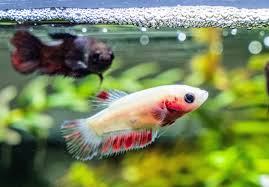
I kept an aquarium when I was in my early teen years. In several tanks in my bedroom I cared for neon tetras, gouramis, siamese fighting fish, angelfish, varieties of suckerfish and zebrafish. Those were the sorts of tropical fish available in the late sixties for someone on a limited budget like me. One of my friends had a saltwater aquarium which I envied for its exotic assortment. I made a deal with the local pet shop owner to provide him with the products of my fish breeding program in return for supplies. Most lucrative to sell were the Betta’s fry. I was able to coax this combative species to mate and produce eggs which were beautifully kept safe in bubble nets, not unlike the jelly masses of tadpole creatures, until they matured enough for market.
If something smells fishy, it probably is. The whole trade of popular aquarium species has a shady history. The practise of capturing and shipping constituted appalling loss to the local populations of fishes as well as contribute to habitat degradation in many parts of the world. I feel guilty to have been part of that capitalist agenda and yet through my exchange of home-grown fish I suppose I limited some of the need to get specimens from the wild.
During those years my hobbies revolved around fish. I spent endless hours during adolescence peering at my aquarium, cleaning the glass, separating the sick or pregnant fish to a hospital tank. I dedicated one tank to hold a collection of pond-life species that I captured from a nearby creek. I took notes, feeling like a young scientist, and later presented my findings to my high school biology teacher. This work and the resulting A+ grade was an encouragement to apply for university studies in Marine Biology. I also spent memorable leisure time sport fishing in rivers, streams, and lakes. I always had my rod and reel handy when the opportunity arose to hop in a boat or hunker on the shore. I felt a bit like Tom Sawyer on those occasions.
The natural resource industry is a big part of Canadian history. The early years of this country contain stories of greedy resource extraction of all kinds. For the famous fishers of Newfoundland this poorly managed industry would ultimately result in the great cod moratorium of 1992. This was a change of biblical proportions to a culture dependent on fish. Similar tales can also be told of other countries where the fishery was once never expected to be depleted. In the west coast current realities of salmon stock reductions due to over-fishing and poor habitat conditions make my heart ache for what bit of nature might still be left for my grandchildren.
I don’t earn money from working with fish like I used to, but I still go fishing when I need to change my lifestyle. Not fishing in the literal sense but as a metaphor for searching for possibilities. I’ll ask questions with baited subtext to see if the response brings a rewarding strike on my lure. Opportunities abound! It’s all how I cast my line.

 Catch My Drift?
Excellent post, one I truly appreciate. Salmon fishing is closed here in Northern California. We used to go fishing faithfully, and now it’s all about magnet fishing. Just as fun! Thank you for sharing and hope you find “fishing” for new possibilities more rewarding. 😀
LikeLike
What a wonderful response! Thank you. My heart goes out to those who have made salmon fishing a way of life, only to see it disappear through no fault of their own. I encourage you to watch Returning Home for further insight. https://www.youtube.com/watch?v=C8WjHKiqTns
LikeLike